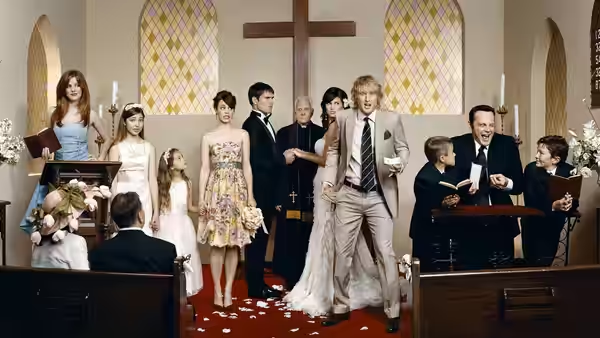
Owen Wilson and Vince Vaughn make this uneven comedy worth an evening, with Rachel McAdams bringing warmth to the romance. The script is less nimble, especially when it grows sentimental.
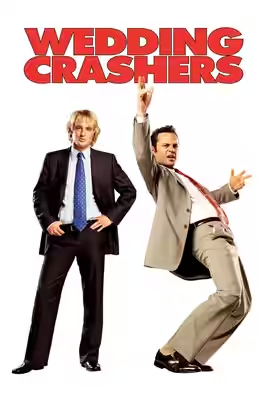
David Dobkin’s Wedding Crashers is a funny, uneven romantic comedy carried by two actors who understand exactly how to annoy one another. We recommend it for that partnership, with a warning about the patience its sentiment requires. The film wants the freedom to be rude and the reassurance of being liked. Its cast usually makes that combination work, though the script by Bob Fisher and Steve Faber takes too long to make its more conventional points.
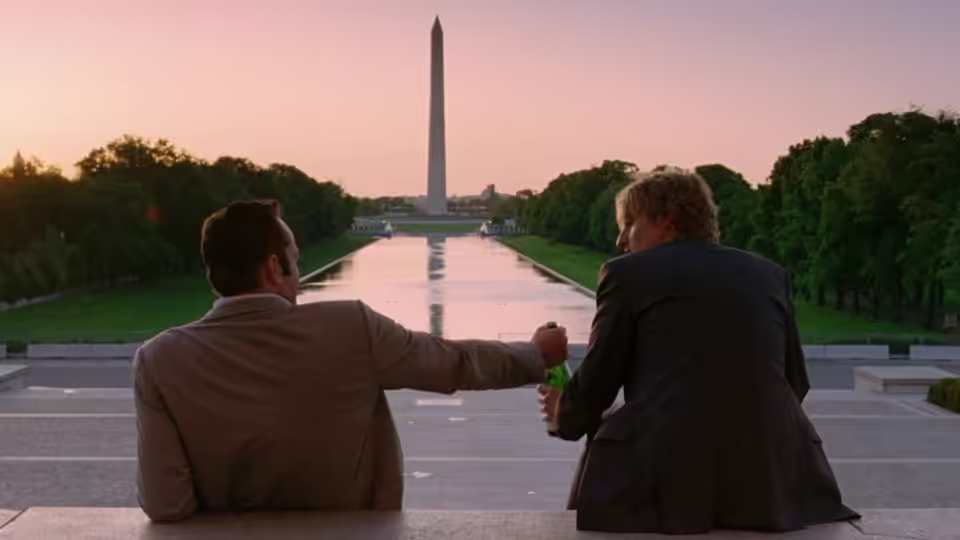
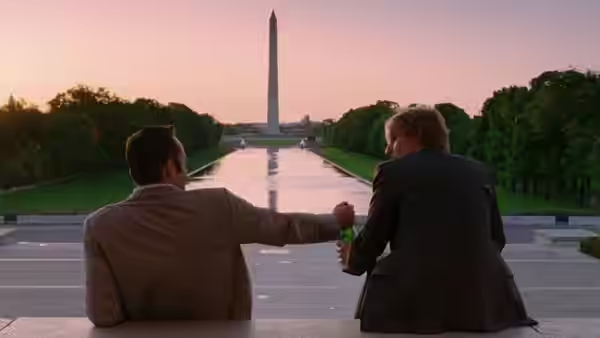
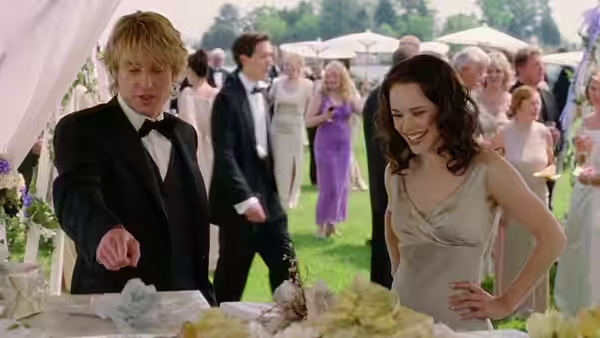
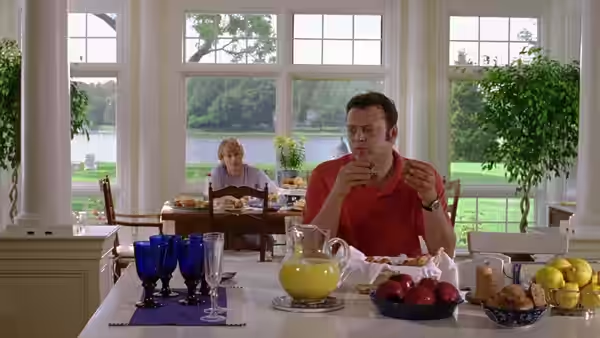
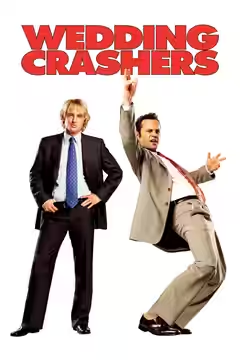
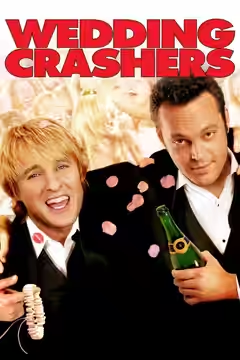
Owen Wilson gives John Beckwith a persuasive ease, while Vince Vaughn makes Jeremy Grey seem incapable of leaving a thought insufficiently argued. The contrast gives their exchanges a rhythm that survives some ordinary writing. We laughed at how hard Vince Vaughn works a sentence while Owen Wilson sounds reluctant to expend the energy. The pleasure comes from watching friends who know each other’s habits too well to be impressed by them. Neither actor needs a particularly good line to make the other look funny, which is fortunate in places.
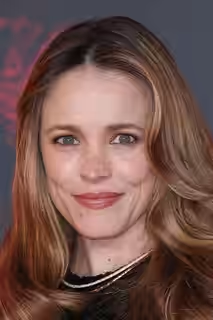
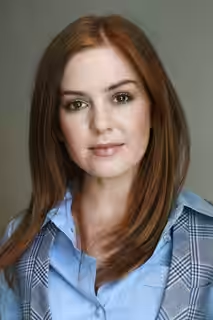
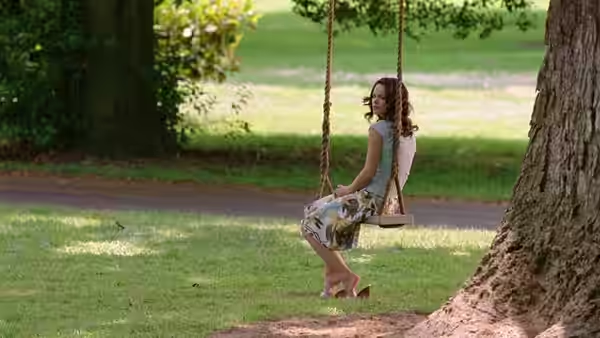
Rachel McAdams gives Claire Cleary the sense of an existence beyond the requirements of the romance. She makes the emotional scenes feel less mechanical than their writing, and gives us a reason to care when the comedy eases off. Isla Fisher’s Gloria Cleary supplies a different pleasure, with an appetite for broad comedy that suits the eccentric family around her. We could have used more of the attention paid to Claire Cleary in the other supporting characters; too many remain types, however enthusiastically played.
Julio Macat’s cinematography serves the performers without distracting from them, keeping the comedy readable rather than busy. That is a useful choice for actors whose differing responses supply so much of the amusement. Barry Robison’s production design is similarly supportive, although the surroundings seldom provide a joke as memorable as the people. David Dobkin is sensible enough to let the cast hold our attention without constantly demanding that the camera compete.
Mark Livolsi’s editing is less successful at disguising how much longer the film feels once it starts insisting on its warmer feelings. At 119 minutes, it has room for more repetition than the material deserves. Rolfe Kent’s score helps the romance retain some lightness, but cannot make its familiar movements surprising. As the emphasis shifts towards romance, the exchanges lose some of the speed that made them enjoyable.
Bob Fisher and Steve Faber are better at giving the leads opportunities than at making the wider story convincing. The romantic obstacles feel arranged, and the film sometimes relies on charm to get past questions the writing ought to answer. That is hardly unusual for this kind of comedy, but the performers make the shortcuts more noticeable by suggesting how much sharper it might have been. It remains funny through most of that uneven writing.
There is enough warmth here to welcome viewers who would ordinarily avoid bawdy male-bonding comedies, provided a predictable romance is not a deterrent. The leads earn their company, and Rachel McAdams gives their film a steadiness it needs. Choose it for an evening when comic timing matters more than a tidy script. Allow a little patience for the stretches when everyone wants to be taken seriously.