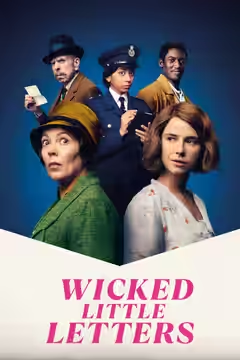
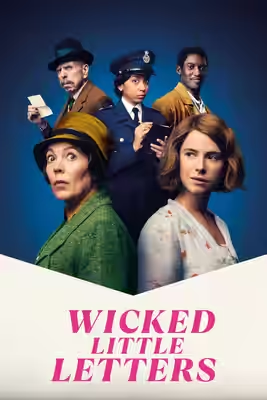
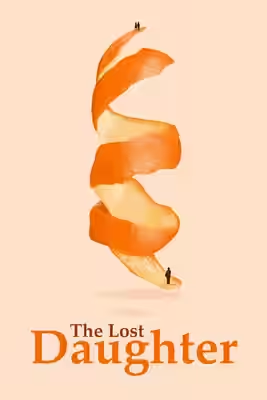
Thea Sharrock’s poison-pen comedy has Olivia Colman, Jessie Buckley and a script that swears like a docker, and for half an hour that is enough. Then the joke wears thin, the mystery solves itself and the film backs away from the sadder story it keeps glimpsing.
Thea Sharrock’s film takes a real poison-pen scandal and plays it as a comedy of manners with the manners removed. A respectable household starts receiving letters of astonishing obscenity; the disreputable woman next door is blamed; a policewoman nobody listens to smells a rat. Jonny Sweet’s script has one big joke, those words in those mouths in that town, and for the first half hour the joke works. Then it has to carry a plot and a mystery for another seventy minutes, and it struggles.
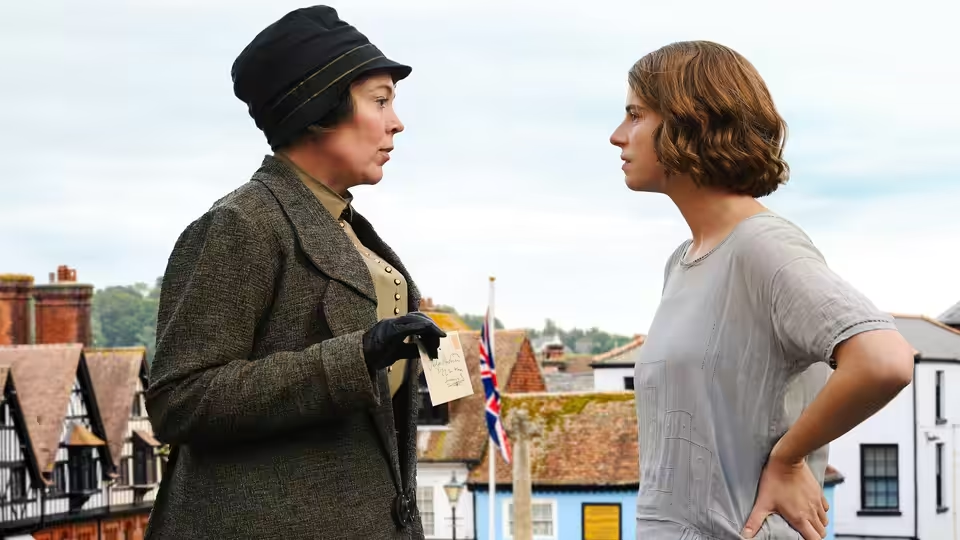
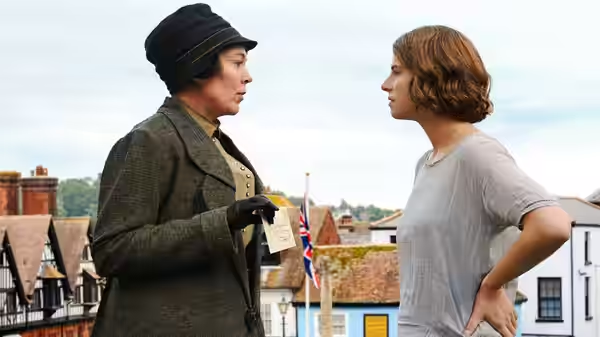
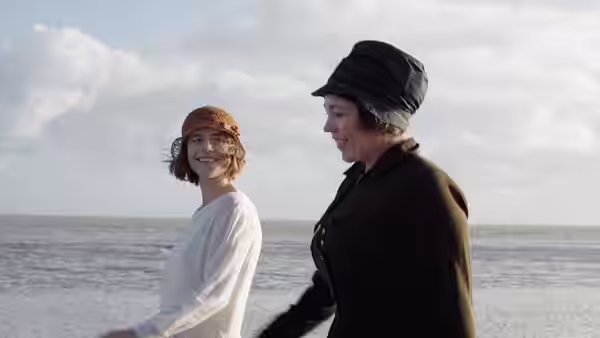
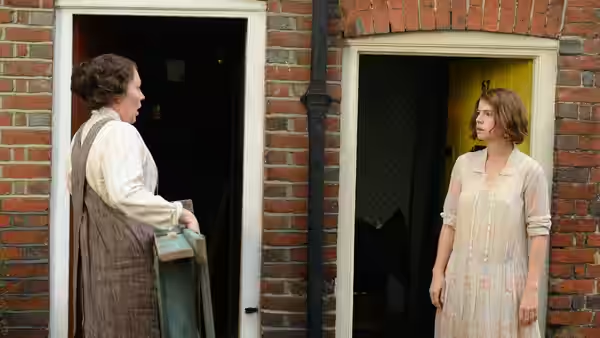
Colman plays Edith Swan as a woman who has been good for forty years and has begun to suspect it was a mistake. She reads each letter aloud with her eyes down and her colour rising, and Colman gets a laugh from the pause before the worst word. Buckley’s Rose Gooding is the opposite proposition: loud, drinking, swearing at the constabulary and adored by her daughter Nancy (Alisha Weir). The two women share a wall and a brief friendship, and the film’s best scenes are the early ones where Edith watches Rose live and cannot work out whether she is appalled or jealous.
Timothy Spall is the reason to take the film seriously. Edward Swan runs his house by scripture and small humiliations, and Spall plays him without a wink: a man who corrects his grown daughter’s posture at the table and calls it love. We laughed a great deal in the first act and then, in one scene at the Swans’ dinner table, went quite still, because Spall had shown us what forty years in that house would do and the film had, for a minute, stopped joking. Gemma Jones, as his wife, says almost nothing and lets us see what compliance costs. Cristina Casali dresses the Swan house in brown paint, lace and closed curtains, and Rose’s next door in whatever was cheapest and brightest.
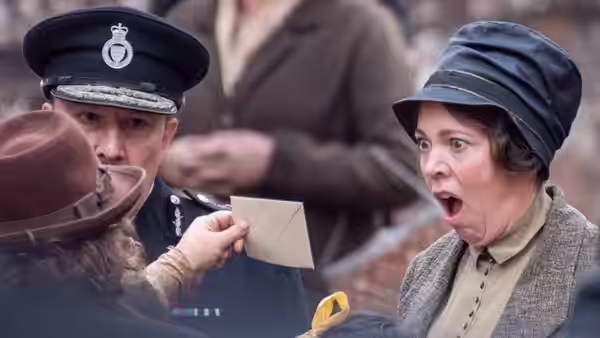
Anjana Vasan walks off with the middle of the film. Gladys Moss is a Woman Police Officer, a title her colleagues pronounce as though it were a medical condition, and Vasan plays her with a stiff back and the face of someone doing the arithmetic while everyone else shouts. Hugh Skinner’s Constable Papperwick is a fool and Paul Chahidi’s Constable Spedding is a bully, and both outrank her. Joanna Scanlan, Eileen Atkins and Lolly Adefope form an unofficial investigation over tea; their scenes are the film’s warmest and its most familiar. Ben Davis shoots the town in bright seaside light and the police station in the colour of weak tea, and Charlotte Walter puts Edith in buttoned grey and Rose in a man’s jacket and a red scarf.
The trouble is the swearing. The letters are read, then read again, in court and in the pub and at the station, and Melanie Oliver’s editing strings the readings into montage as if quantity might do the work of wit. By the hour mark we had stopped hearing the words, and a film built on shock had become a film built on repetition. Isobel Waller-Bridge’s score, all plucked strings and jaunty nudges, keeps telling us this is frightfully naughty at moments when the material is closer to frightening. The mystery, meanwhile, is barely one. The film shows its hand before the halfway mark, and the final third becomes a caper about proving what everyone watching already knows, with women hiding behind hedges.
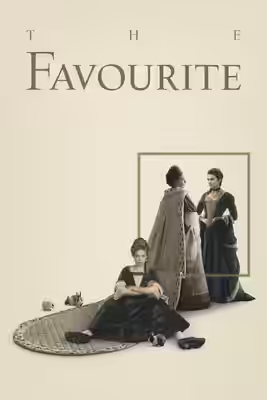
Underneath is a sadder film about what a woman does with rage she is not permitted to feel, and about a town that would rather punish the loud woman than look at the quiet one. Sweet and Sharrock keep glimpsing it and then reaching for another rude word. Set beside The Favourite (2018), where Colman’s swearing came out of a character’s pain and stayed there, this is a film that has learned the words but not the reason for them.
It runs 100 minutes, carries a 15, and is easy company at home, where the repetition matters less and Spall matters more. Go in for Colman, Buckley and Vasan, and leave the title’s promise of wickedness at the door; this is a cosier film than its language.