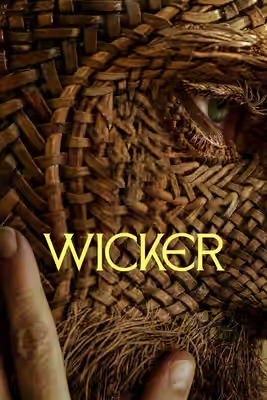
Eleanor Wilson and Alex Huston Fischer’s fable about a lonely fisherwoman and the husband woven for her out of wicker is rude, tender and better built than its premise suggests. It overstays its ending, but Colman and Skarsgård make the marriage believable.
Eleanor Wilson and Alex Huston Fischer, writing and directing together, have made a fairy tale for adults about a lonely woman who has a husband made for her out of wicker, and about what a village does when she turns out to have the happiest marriage in it. Wicker is filthy in places, soft-hearted in others, and for most of its 105 minutes it knows which it is being and why. We liked it more than most critics, whose reviews split between delight and irritation; the delighted ones have the better case.
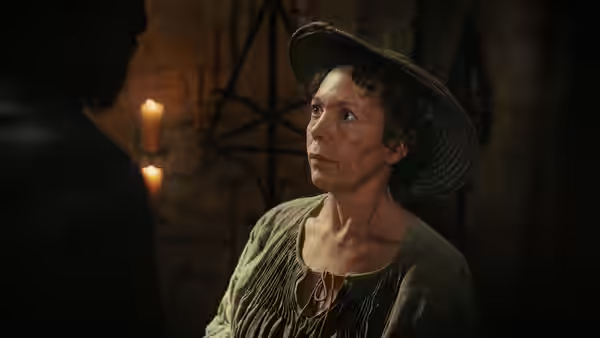
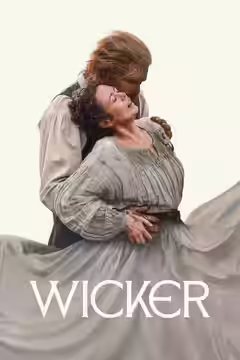
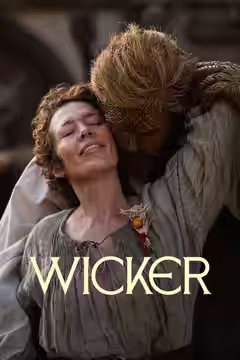
Colman plays the fisherwoman as someone who stopped expecting things long ago and made her peace with it. She does not play lonely; she plays busy, mending and gutting and rowing, and lets us see the loneliness in how she receives kindness, warily, as if it might be a trick. When the husband first speaks to her she looks round to see who he means. There is almost no self-pity in the performance, and that is why the film can be as sentimental as it is without going soft.
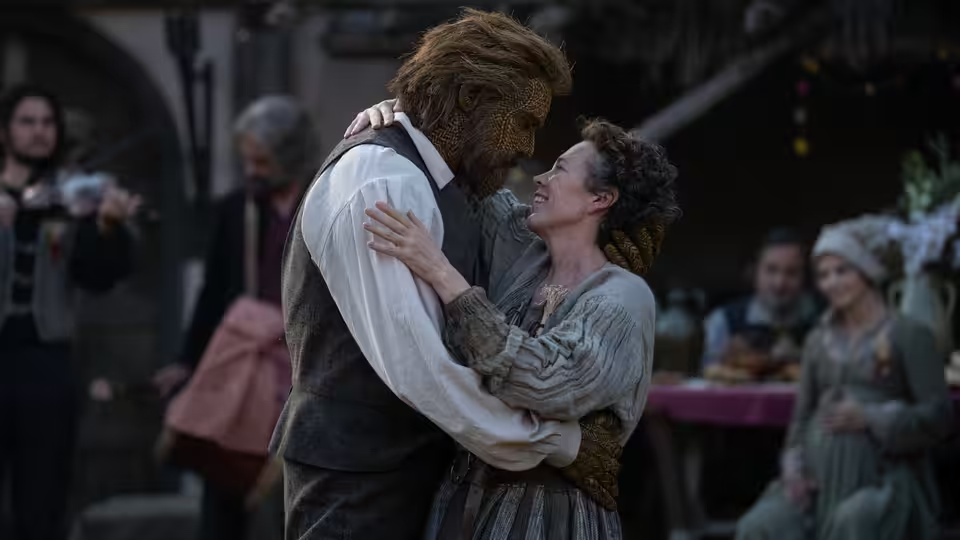
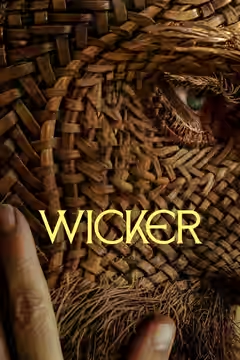
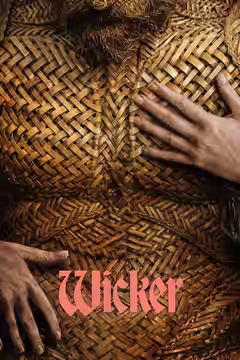
Skarsgård plays the husband inside a practical wicker body, and what he does with it is the film. He moves like a man just told how joints work, a half-beat late on every gesture, and he creaks when he sits. His one setting is kindness, and it never gets dull, because he plays it as curiosity rather than virtue: he wants to know what bread is for, why the tailor’s wife is unhappy, what his own face looks like. He says he was made to be with her flat, without pleading, as a statement of manufacture. It is funnier and sadder that way.
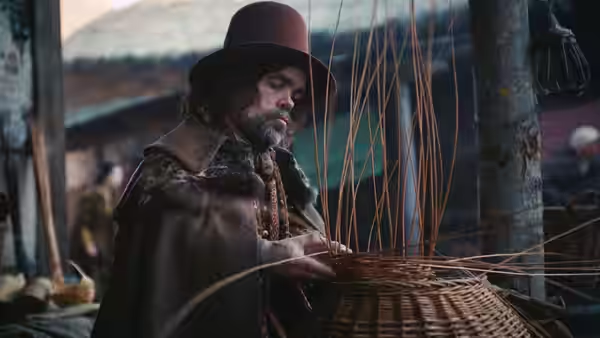
The village is where the comedy lives. Dinklage’s basket weaver is dry, proud of his work and slightly appalled by what he has done with it, and he steals his scenes without trying. Debicki plays the tailor’s wife as the woman everybody envies, in a marriage to Rizwan’s tailor that looks better from outside than in, and the film is sharp about how envy moves through a small place: through the bakery, through the surgery of Grant’s doctor, who has an explanation for everything and understands nothing. Marli Siu, as the weaver’s sister, is the one person who sees the fisherwoman clearly.
Lol Crawley shoots it in grey daylight and candle, with low skies and water the colour of slate, so the wicker is the warmest thing in the frame. Renátó Cseh’s village is close-packed and damp, all stone and rope and hung fish, and the costumes by András Dániel Tóth and Attila Godena-Juhász put the villagers in heavy wool and the fisherwoman in the same oilskin throughout, which tells us her income. Anna Meredith’s score is the surprise: brass and stamping rhythm, closer to a village band than a romance, and it stops the film sounding like it is asking for sympathy. Sofi Marshall cuts the first hour tight, and the jokes land on the cut.
There is a scene involving a bed that does not survive the wedding night. We laughed, loudly, and then felt slightly ashamed of ourselves, because the camera stays on Colman across the wreckage and her face is not a joke at all; it is a woman who has just discovered she is allowed this. That is the film in one scene: a rude gag with a tender thing underneath, and the tender thing is the point.
The second half takes a turn we will not describe. It is handled with less confidence than the first half, the tone lurches twice where it had been steady, and the ending goes on past the moment it should have stopped. The moral is spelled out after it has been shown. None of this undoes what came before, but it is why the score is not higher.
Fables about the outsider who is better than the town usually fail because the town is a cartoon. Here the villagers have reasons, which is harder and rarer. See it with an audience, where the filth gets laughs and the quiet gets quiet. It carries a 15, and earns it.