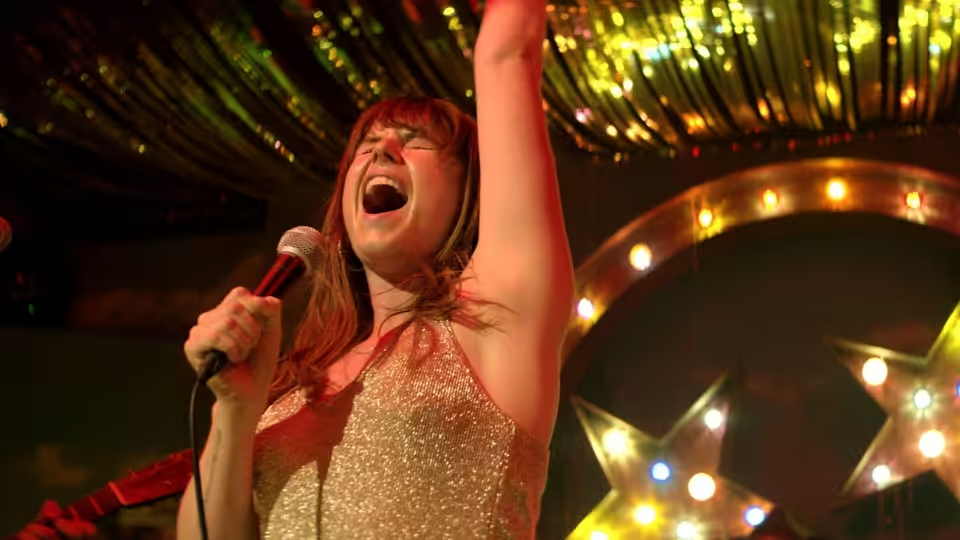
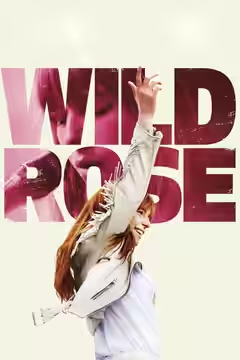
Jessie Buckley makes Wild Rose a moving, funny account of musical ambition and the work of being a mother. The plotting is familiar and the middle drifts, but we recommend it for the singing and the women.
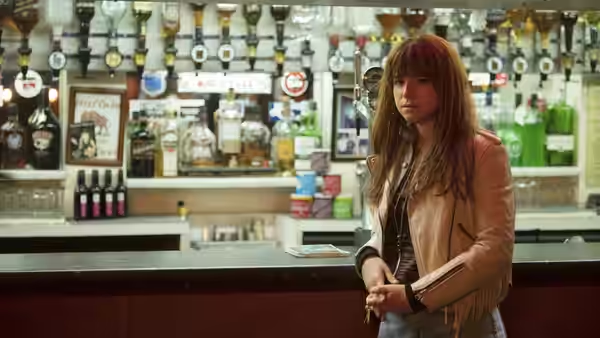
Tom Harper’s Wild Rose is a warm, persuasive musical drama whose familiar plotting is worth accepting for Jessie Buckley. She plays Rose-Lynn Harlan, a Glasgow mother who wants a life in country music. Nicole Taylor’s script takes that wish seriously, including the inconvenient business of having people who need her while she is trying to build a career. We are encouraged to want her success without having to approve of every choice she makes.
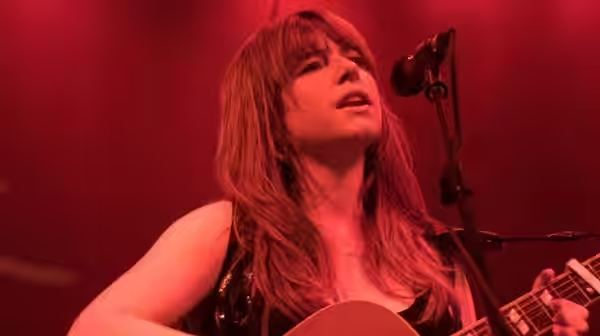
Buckley gives Rose-Lynn the sort of confidence that makes listening to other people an effort. Her acting keeps us aware of how much she needs this to work, even when Rose-Lynn seems certain of herself. We were moved by her singing: the strength of the voice makes her need to be heard feel painfully credible. It is easy to understand why she might organise her life around this ability, even when other people have reasonable objections.
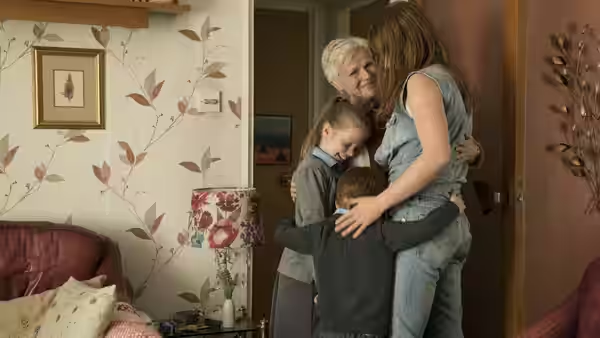
Julie Walters is essential to keeping that sympathy honest. As Marion, she gives the family side of the story enough weight that it cannot be dismissed as the dull interval between songs. Her scenes with Buckley have a friction that feels earned; affection does not make these women agree about what should happen next. Taylor understands the unfairness of asking a mother to put every desire aside, and also understands that having a gift does not settle questions about responsibility.
George Steel’s cinematography and Lucy Spink’s production design help Glasgow feel like a place where people have lives to get on with. That everyday quality is effective because Rose-Lynn’s responsibilities need to feel as substantial as her musical hopes. Harper does not make a searching account of working-class life, but the sense of place gives the story enough weight to keep the songs from settling every difficulty on their own.
Jack C. Arnold’s music works best as support for Buckley’s singing, which needs little help telling us how Rose-Lynn feels. Country music suits someone whose confidence can give way to hurt so quickly, and the songs make sense without requiring an existing enthusiasm for the genre. Editor Mark Eckersley cannot quite disguise a slack middle stretch, where the drama takes too long over difficulties we already understand. At 101 minutes, the film is hardly overlong, but there are passages when its pace fails to match its leading performance.
The larger weakness is that Taylor’s plotting can be easier to predict than her people. Some turns arrive with a tidiness that sits awkwardly beside Buckley’s unruly performance. We can see the familiar show-business story being assembled, and occasionally wish Harper would leave an uncomfortable question open for longer. Still, the attention paid to motherhood gives those conventions a useful complication: pursuing a vocation has consequences for people who have had no say in choosing it.
Buckley makes Rose-Lynn worth spending time with, including when she is difficult. Walters ensures that the people around her remain worth hearing too, which matters in a film so dependent on our sympathy for its lead. If country music usually sends a hand towards the remote, give this singer a chance.