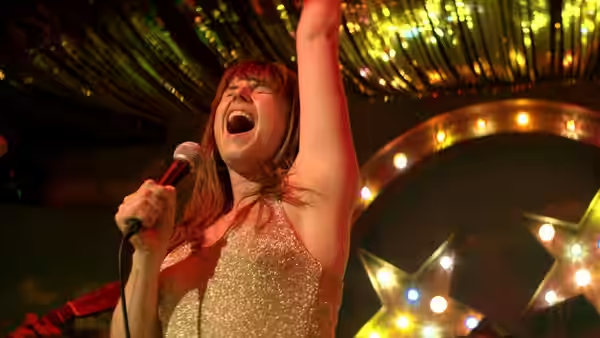
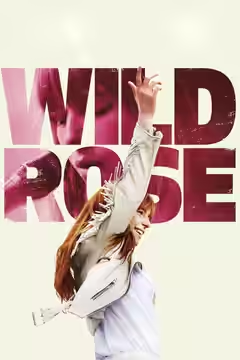
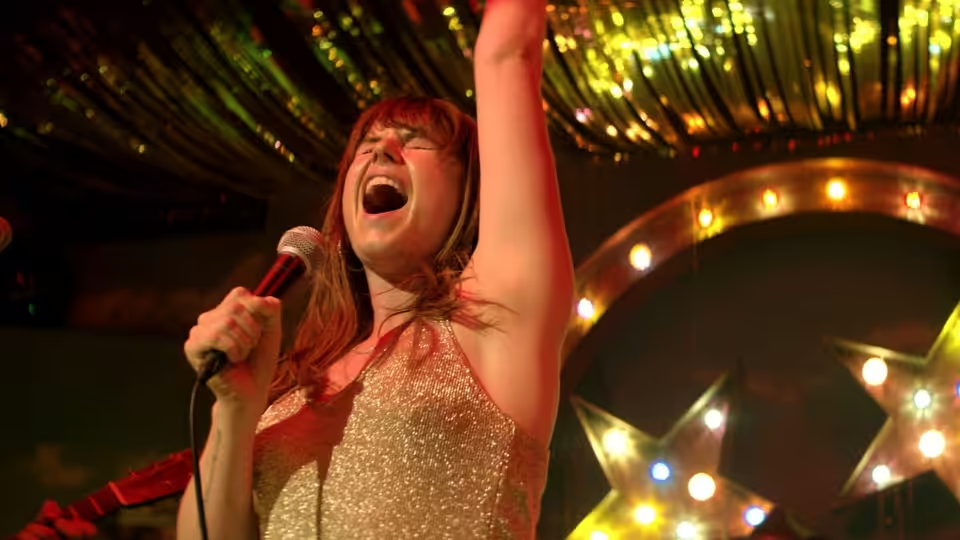
Rose-Lynn (Jessie Buckley) sings into a microphone beneath stage lights, one arm raised
Film review

Wild Rose

2019 · Directed by Tom Harper · 1h 41m · BBFC 12

In a sentenceA voice big enough to make us briefly forget the childcare

In Glasgow, Rose-Lynn Harlan (Jessie Buckley) wants to build a life around country music while raising a family. Marion (Julie Walters) and Susannah (Sophie Okonedo) are among the people around her as she tries to make room for that ambition. Rose-Lynn has the confidence to put herself forward as a singer, but her responsibilities as a mother cannot wait for a career to take shape. Pursuing music means confronting what other people need from her, as well as deciding how much of herself she is prepared to set aside.

Plays from YouTube when you press play; nothing loads from them until then.

Fi1m review

Jessie Buckley makes Wild Rose a moving, funny account of musical ambition and the work of being a mother. The plotting is familiar and the middle drifts, but we recommend it for the singing and the women.

Tom Harper’s Wild Rose is a warm, persuasive musical drama whose familiar plotting is worth accepting for Jessie Buckley. She plays Rose-Lynn Harlan, a Glasgow mother who wants a life in country music. Nicole Taylor’s script takes that wish seriously, including the inconvenient business of having people who need her while she is trying to build a career. We are encouraged to want her success without having to approve of every choice she makes.

Buckley gives Rose-Lynn the sort of confidence that makes listening to other people an effort. Her acting keeps us aware of how much she needs this to work, even when Rose-Lynn seems certain of herself. We were moved by her singing: the strength of the voice makes her need to be heard feel painfully credible. It is easy to understand why she might organise her life around this ability, even when other people have reasonable objections.

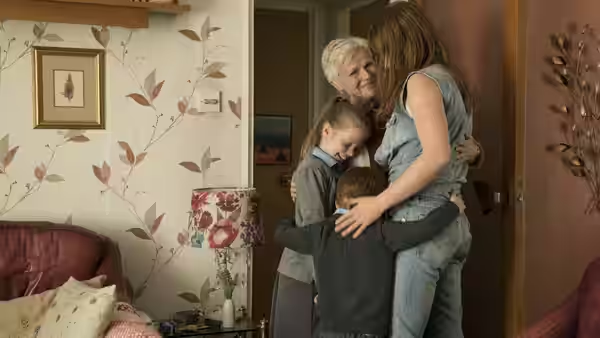
Julie Walters is essential to keeping that sympathy honest. As Marion, she gives the family side of the story enough weight that it cannot be dismissed as the dull interval between songs. Her scenes with Buckley have a friction that feels earned; affection does not make these women agree about what should happen next. Taylor understands the unfairness of asking a mother to put every desire aside, and also understands that having a gift does not settle questions about responsibility.

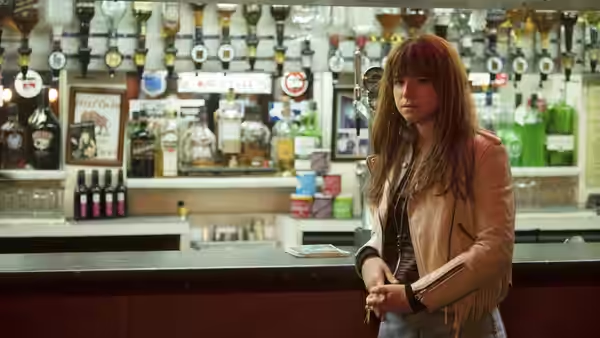
George Steel’s cinematography and Lucy Spink’s production design help Glasgow feel like a place where people have lives to get on with. That everyday quality is effective because Rose-Lynn’s responsibilities need to feel as substantial as her musical hopes. Harper does not make a searching account of working-class life, but the sense of place gives the story enough weight to keep the songs from settling every difficulty on their own.

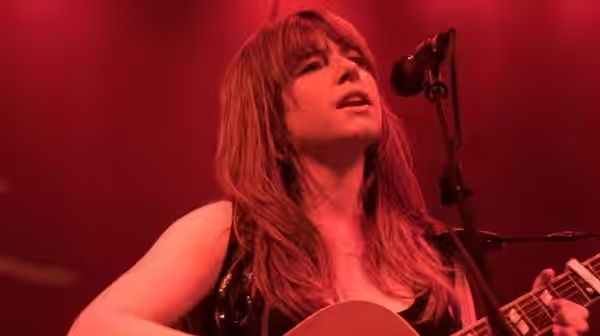
Jack C. Arnold’s music works best as support for Buckley’s singing, which needs little help telling us how Rose-Lynn feels. Country music suits someone whose confidence can give way to hurt so quickly, and the songs make sense without requiring an existing enthusiasm for the genre. Editor Mark Eckersley cannot quite disguise a slack middle stretch, where the drama takes too long over difficulties we already understand. At 101 minutes, the film is hardly overlong, but there are passages when its pace fails to match its leading performance.

The larger weakness is that Taylor’s plotting can be easier to predict than her people. Some turns arrive with a tidiness that sits awkwardly beside Buckley’s unruly performance. We can see the familiar show-business story being assembled, and occasionally wish Harper would leave an uncomfortable question open for longer. Still, the attention paid to motherhood gives those conventions a useful complication: pursuing a vocation has consequences for people who have had no say in choosing it.

Buckley makes Rose-Lynn worth spending time with, including when she is difficult. Walters ensures that the people around her remain worth hearing too, which matters in a film so dependent on our sympathy for its lead. If country music usually sends a hand towards the remote, give this singer a chance.

Critical consensus AI synthesised

78
Positive
21
Mixed
3
Negative
0

Most critics welcome Wild Rose as a warm, emotionally satisfying drama about musical ambition and motherhood. Praise centres on Jessie Buckley: the reviews repeatedly connect the force of her singing with her ability to make Rose-Lynn’s bravado and vulnerability convincing. Julie Walters also earns praise for the mother-daughter relationship, while several critics value the attention paid to family responsibilities and the pressures facing working-class women. The music is widely credited with making those feelings immediate.

Reservations cluster around the familiar rise-to-stardom story, with some reviews finding the plotting schematic or occasionally clichéd. The disagreement concerns how much that familiarity matters: Slant Magazine finds an unpredictable, empathetic variation, while The New Yorker considers the film uneven despite Buckley’s compelling presence. The spread is largely positive rather than polarised, with no negative verdicts in the supplied tally. Even the more qualified responses tend to find Buckley persuasive.

The Hollywood Reporter
10 September 2018 · festival review · Leslie Felperin
90*

Felperin finds the film entirely delightful and fresh, with a predictable structure that adds to its appeal. She especially praises Jessie Buckley’s magnetic singing and acting performance.

Read the full review →
Los Angeles Times
19 June 2019 · Justin Chang
85*

Chang finds the film a deeply satisfying, nuanced crowd-pleaser about ambition, family, and self-discovery. He especially praises Jessie Buckley’s performance for making Rose-Lynn’s confidence and vulnerability feel emotionally coherent.

Read the full review →
The AV Club
19 June 2019 · B+ · Katie Rife
83

Rife finds the film standard as a show-business fairy tale but special as a character study. She singles out Jessie Buckley’s commanding performance and expressive singing for praise.

Read the full review →
Evening Standard
12 April 2019 · ★★★★ · Charlotte O'Sullivan
80

O'Sullivan gives the film a warm, strongly positive review, while noting that some plot turns feel too Hollywood. She especially praises Jessie Buckley's singing and performance, along with the film's female talent.

Read the full review →
Little White Lies
8 April 2019 · 4/4/4 · Beth Webb
80

Webb gives the film an enthusiastic verdict, praising Jessie Buckley’s energetic performance and the spirited supporting cast. She especially highlights the film’s musical performances and closing song.

Read the full review →
Radio Times
★★★★ · Emma Simmonds
80

The review says this funny, touching musical drama mostly hits the right note. It singles out Jessie Buckley as sensational in the lead role.

Read the full review →

Straight answers AI written, from our review

Is Wild Rose worth watching?
Wild Rose is worth watching for Jessie Buckley’s singing and its warm, funny treatment of musical ambition and motherhood; we score it 82 out of 100. We find the plotting familiar and the middle slack, but Buckley and Julie Walters make the family tensions matter, even if country music is not usually your choice.
How long is Wild Rose, and what is it rated?
Wild Rose runs 1h 41m and is rated 12 by the BBFC in the UK. It is a music and comedy film.
Where can I watch Wild Rose in the UK?
Wild Rose is available to rent from Apple TV and Amazon Prime Video from £3.49. Availability is checked daily; the links above go straight to each service.
How violent or frightening is Wild Rose, and is it suitable for children?
Wild Rose carries a UK 12 certificate and a US R rating, so we would not recommend it for younger children. Those ratings warrant parental judgement for older children and teenagers, but we cannot offer specific assurances about violence or scares: its focus on music and motherhood is not itself a guide to potentially upsetting content.
How does Wild Rose compare to The Commitments?
Wild Rose is our choice for a moving story about a singer balancing ambition and motherhood, while The Commitments better suits an evening built around band friction and ensemble comedy. Both make their music matter through persuasive performances. We find Wild Rose predictable and occasionally slow, while a little too much polish creeps into the otherwise unruly Dublin soul-band story.
What should I watch after Wild Rose?
After Wild Rose, try The Commitments (1991, Fi1m 82): Another forceful ensemble finds both pleasure and friction in making music together. Then Billy Elliot (2000, Fi1m 81): Working-class ambition meets family resistance, with enough feeling to justify the familiar turns.

Cast

If you liked this, try…

  1. The Commitments (1991, Fi1m 82)Another forceful ensemble finds both pleasure and friction in making music together.

  2. Alice Doesn't Live Here Anymore (1974) · not reviewed yetA mother pursues singing while everyday responsibilities keep interrupting the dream.

  3. The Singer (2006) · not reviewed yetA working singer’s private disappointments matter as much as his public performances.

  4. Linda Linda Linda (2005) · not reviewed yetA school band’s rehearsals make room for friendship, nerves and small musical victories.

  5. Billy Elliot (2000, Fi1m 81)Working-class ambition meets family resistance, with enough feeling to justify the familiar turns.