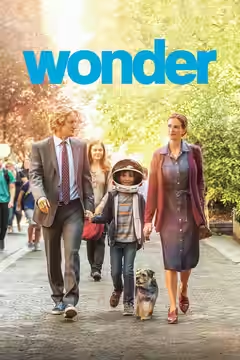
Stephen Chbosky’s adaptation of R.J. Palacio’s novel is warmer, funnier and better acted than its reputation for tears suggests, and it is never for one moment in doubt about anything. Worth an evening with children; adults will see every turn coming.
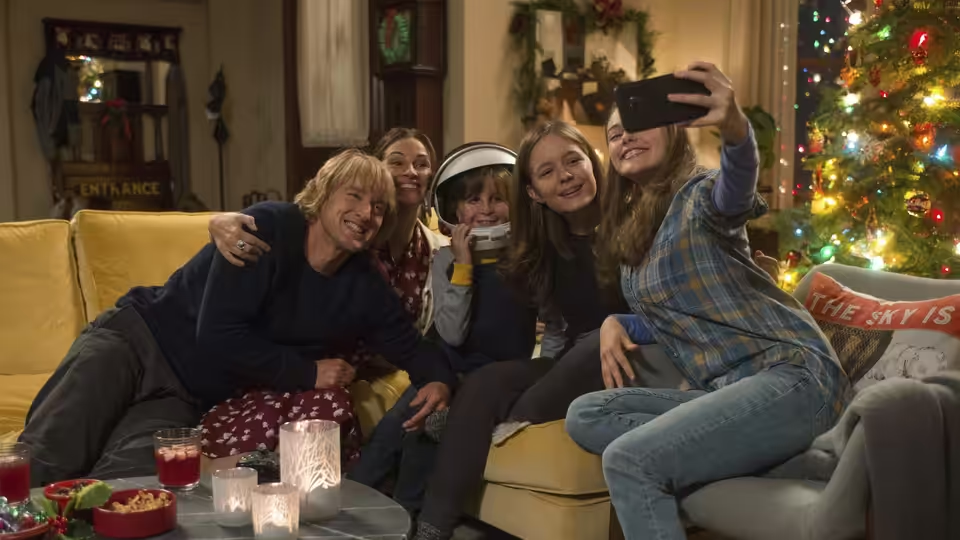
Stephen Chbosky, who made The Perks of Being a Wallflower (2012), takes R.J. Palacio’s children’s novel and does roughly what the book asks. Auggie Pullman is ten, has had twenty-seven operations on a face that still makes strangers look twice, and is going to school for the first time. The film means to make us kinder, and it says so, on a blackboard, inside the first twenty minutes. It is a decent, warm, well-acted family picture that is better than its lessons and never once unsure where it is going.
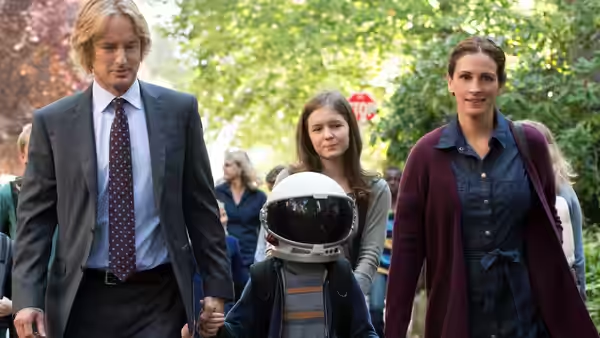
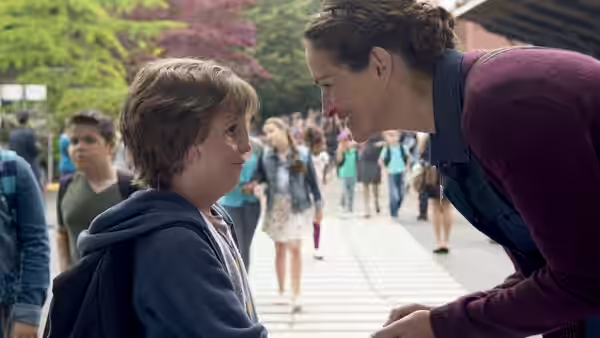
Jacob Tremblay plays Auggie under prosthetics that take a minute to read and then stop being the point, which is the whole trick, and he manages it. The performance lives in the eyes and in a quick, dry voice that gets the script’s best lines; Auggie is funnier than anyone around him and knows it. Julia Roberts gives Isabel, who put aside a thesis to teach him at home, a tiredness the script by Chbosky, Steven Conrad and Jack Thorne never spells out, and the morning she walks him to the school gate and lets go of his hand is played with almost nothing said.
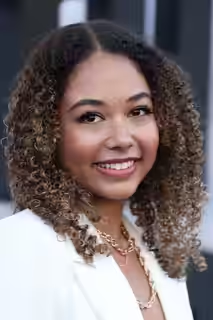
The film’s best idea is borrowed from the book. Every so often a name appears on screen and we go back through the same weeks with someone else. Via (Izabela Vidovic), the older sister, describes Auggie as the sun and the rest of the family as planets, and starts high school to find her friend Miranda (Danielle Rose Russell) will not look at her. Jack Will (Noah Jupe) turns out to have reasons of his own. Vidovic is the discovery, playing a girl who has learnt never to ask for anything and is starting to resent it, and these chapters let the supporting cast be people rather than examples.
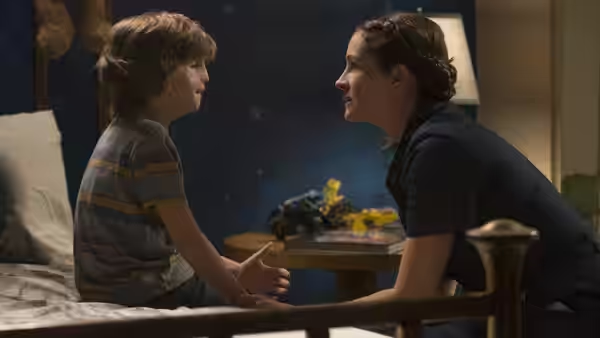
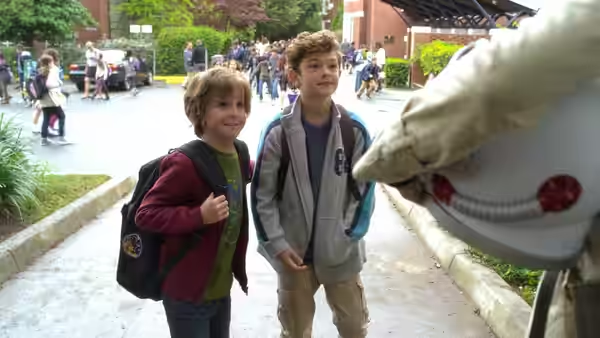
Don Burgess shoots the Pullmans’ brownstone and the school in warm autumn browns and golds, and keeps the camera at Auggie’s height in the corridors, so what we see is what he sees: chests, rucksacks, a lot of turned heads. Kalina Ivanov fills his bedroom with NASA and Star Wars, and when he is frightened Chewbacca appears in the school hall, a joke the film is confident enough to play straight.
We cried, and we had not planned to. It was the lunch scene: Auggie alone at a table in a full room, and Summer (Millie Davis) putting her tray down opposite him and talking about nothing in particular, as if the question of whether to sit there had never come up. Nobody makes a speech. The piano, as usual, got there first, and we were a little annoyed by that even as our eyes went.
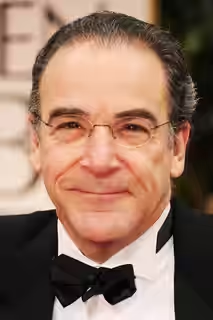
What the film will not do is let anything stay difficult. Julian (Bryce Gheisar), the class bully, is cruel the way children are cruel in school plays; he says the obvious thing and nobody says the unspeakable one. Mr. Browne (Daveed Diggs) writes a precept on the board each month and the film treats each one as an instruction to itself. Mandy Patinkin’s Mr. Tushman makes a joke about his name and is wise, and that is the character. Every adult means well, every child who does not learns to, and by the last act we had stopped wondering what would happen and were waiting to be told how to feel about it.
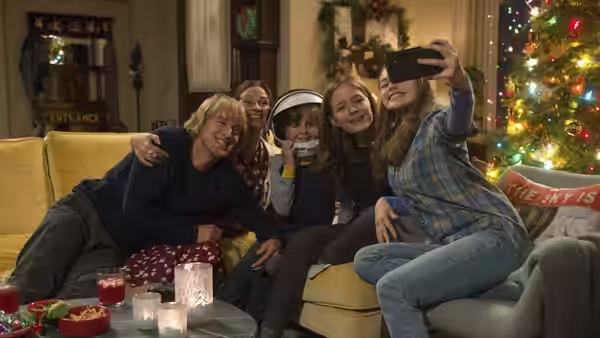
That is the complaint most critics have made, and we share it, though we think the film survives it. Perks knew that teenagers lie to themselves and let them get on with it. Wonder is for a younger audience and does not trust them with much. But it is careful with its small cast, funnier than its trailer lets on, and honest about one thing in particular: how tiring it is to be the family’s good news.
Take children of eight to twelve, who will not mind seeing the turns coming, and sit at the back if you would rather not be seen crying at a school lunch. It carries a PG and nothing in it will frighten anyone except the first look at Auggie’s face, which is the point.