Dušan Makavejev’s collage of interviews and acted episodes is funny, abrasive and occasionally too fond of explaining itself. Its restless editing makes the ideas worth following, even when the preaching becomes tiresome.
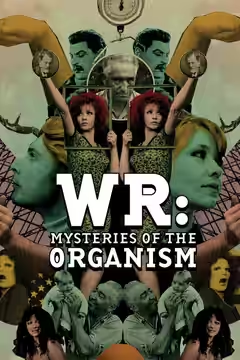
WR: Mysteries of the Organism asks us to follow a discussion that keeps changing its speaker and its form. Dušan Makavejev puts Wilhelm Reich’s ideas into a collage of interviews and acted episodes, with comedy interrupting the serious business. It is funny, demanding and worth an evening if tidy storytelling is not the requirement. Some of the preaching wears thin. The pleasure comes from watching the editing complicate statements that might otherwise sound rather pleased with themselves.
Ivanka Vukasović’s editing is the chief reason this works: the move from interview to acted episode changes how we listen as well as what we see. A speaker can hold our attention without acquiring the authority to explain everything that follows. We laughed at the interruptions of earnest discussion, because the changes of form make solemnity difficult to sustain. The humour depends on where a passage stops and what comes next, rather than simply on somebody delivering a funny line.
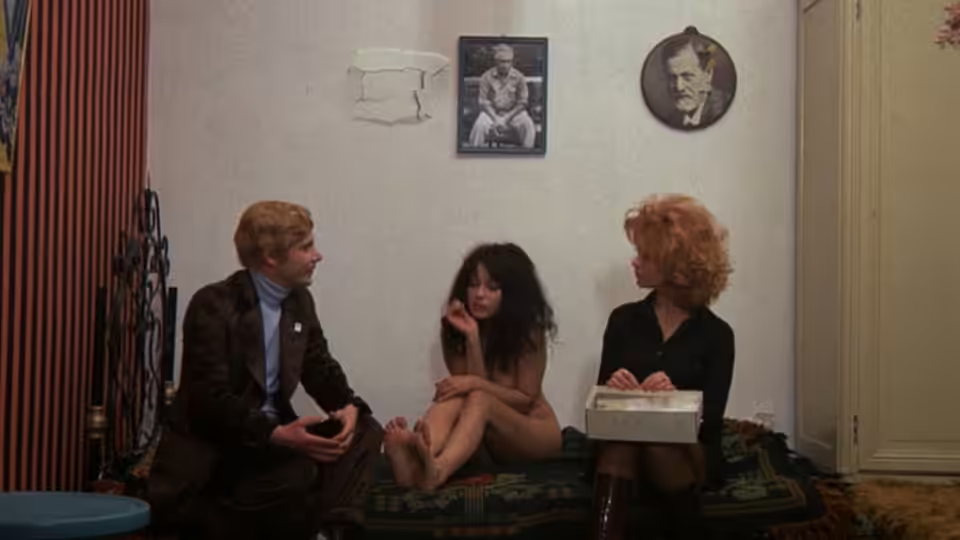
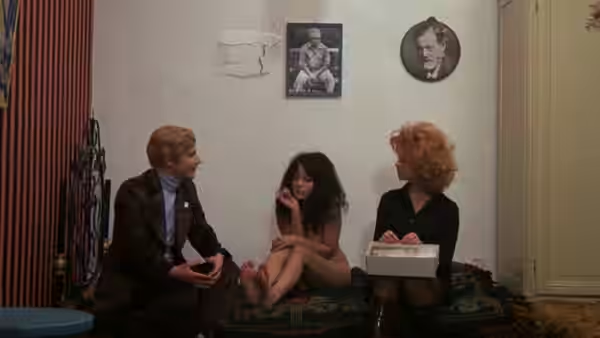
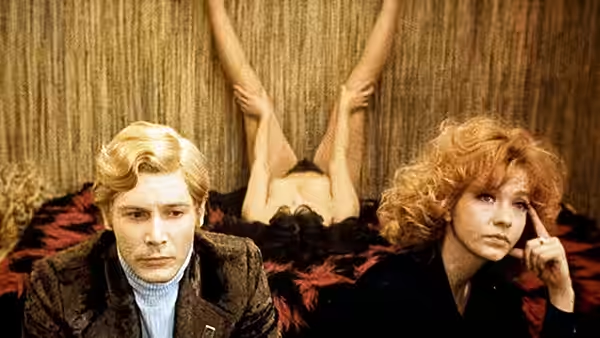
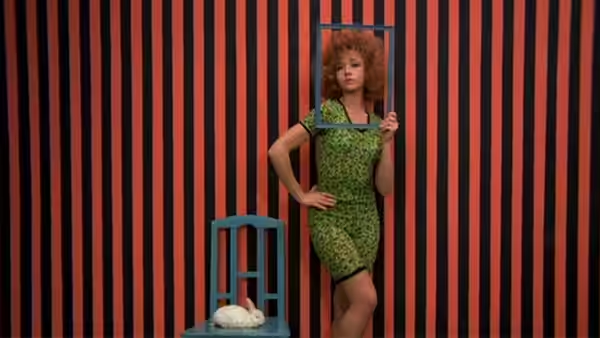
Aleksandar Petković’s cinematography serves the acted episodes well, though their place within the collage matters more than any single image. The images need to survive abrupt changes of context, and they do. Milena Dravić, Ivica Vidović and Jagoda Kaloper give us people to attend to when the discussion threatens to become all propositions. The constant interruptions make sustained attachment difficult, however, and we sometimes want to stay with someone just when the film is ready to move on.
Dragoljub Ivkov’s production design is less memorable than the way the material is assembled, though that is hardly a serious failing here. The fictional scenes need enough substance to hold their own beside interviews; they have it. Bojana Marijan’s music helps sustain the unruliness, but does not give the disparate passages quite the momentum of Ivanka Vukasović’s cuts. The editing remains the strongest reason to keep watching, particularly when a passage has begun to exhaust its welcome.
The weakness is that Dušan Makavejev does not always trust the connections between passages to be enough. The discussion can become insistent, as if the force of a proposition should excuse hearing it at length. There are stretches where the film seems satisfied simply to have introduced a radical idea, leaving us waiting for it to do something more. Then the next comic interruption has to recover attention that the talking has lost, and the effort occasionally shows.
As a comedy, it makes useful space for uncertainty: an idea can be worth listening to and still be funny. That keeps the mixture from becoming a procession of worthy statements, despite the stretches of preaching. The documentary passages give the comedy something to push against, while the fictional episodes stop the interviews dictating the whole film’s pace. We need not find every proposition persuasive to enjoy the way it is presented, and the film is better company when it allows that freedom.
At 85 minutes, this is a manageable demand on an evening, although its abrupt changes do not prevent some slow patches. We recommend it for the humour, with a warning that the talking occasionally gets ahead of the jokes. Its strongest passages justify following a film that will not explain every change of direction. Choose it when there is still enough energy left in the evening for an unruly argument.