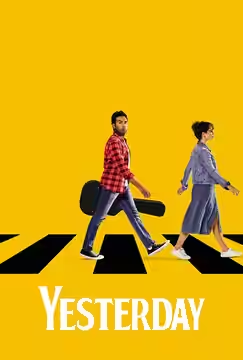
Himesh Patel’s singing keeps this amiable fantasy afloat. Danny Boyle and Richard Curtis do too little with the forgotten Beatles, and the thin romance makes it one for listeners with modest expectations of the story.
Yesterday is an amiable musical comedy that does too little with a premise worth arguing about. Jack Malik remembers the Beatles in a world that has forgotten them, which ought to leave a singer with more to worry about than getting noticed. Danny Boyle gives the music enough energy to keep us listening, but Richard Curtis’s screenplay settles too readily for a familiar romance. We can enjoy the songs and still wish the film were more interested in what it means to sing them.
Himesh Patel is the strongest reason to stay. We were moved by Jack’s performance of “Yesterday”: the unforced singing makes a familiar song sound as though it matters to the person performing it. There is no need to pretend we have never heard it; hearing someone attend to it this closely is enough. Himesh Patel also gives Jack an awkward, approachable manner that makes the improbable situation easier to accept. The trouble comes when the film expects that likeability to answer questions about what he is doing.
Christopher Ross’s cinematography and Jon Harris’s editing give the musical passages a brisk, uncomplicated ease. That helps when Himesh Patel is singing; it is less useful when the film needs to make us pause over how strange this situation is. Daniel Pemberton’s music struggles to register beside the familiar songs, leaving the Beatles to supply much of the emotional persuasion. The film moves along happily enough, but the music rarely makes us think differently about what we have just watched. A little more space around the performances might have let us question Jack’s good fortune, rather than simply enjoy another familiar tune.
Lily James brings warmth to Ellie Appleton, but the romance gives her too little beyond being someone we are expected to want Jack to choose. Himesh Patel and Lily James are pleasant company together, and that counts for something in a romantic comedy. Yet Richard Curtis leans on their appeal when he needs to give their relationship more substance. We understand that they matter to each other without being given enough reasons to care about the obstacles between them. The fantasy ought to put unusual pressure on this couple; instead, their difficulties could sit comfortably in a story without a single forgotten song.
The missed opportunities extend beyond the couple. The production design by Moin Uddin and Patrick Rolfe offers little sense of how the loss of the Beatles might have changed everyday life; we wanted the world around Jack to provoke questions of its own. The screenplay seems content to assume that these songs would work in much the same way wherever they appeared. That is a convenient way to get a comedy going, but a poor reason to stop thinking about its central idea.
We do not need a lecture on musical history, or a set of rules explaining the fantasy. A few sharper jokes about how people hear music would have done more than another assurance that the songs are wonderful. Danny Boyle finds some of the bounce a musical comedy needs, yet the film seldom risks making its affection awkward or its romance surprising. Once the initial novelty wears off, there is too little comic friction between Jack’s extraordinary advantage and the ordinary business of wanting to be liked. The premise promises more mischief than the screenplay is prepared to allow.
Himesh Patel makes the songs worth hearing again, which is no small achievement. We are less persuaded that they needed this story built around them. Give it an evening only if the singing is enough.