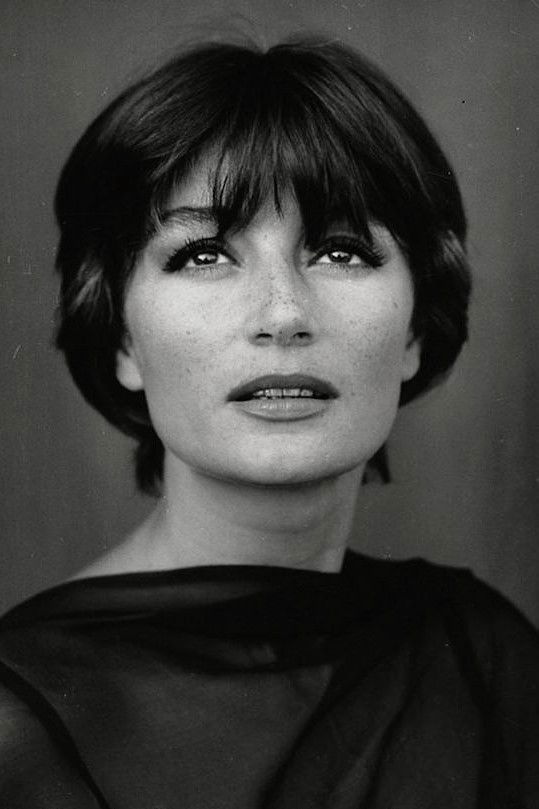
Anouk Aimée gives guarded women a vulnerability that makes us keep watching. We admire her most in 8½, where she makes a self-absorbed man harder to indulge; elsewhere, the same reserve can leave us too far away.
Fi1m perspective
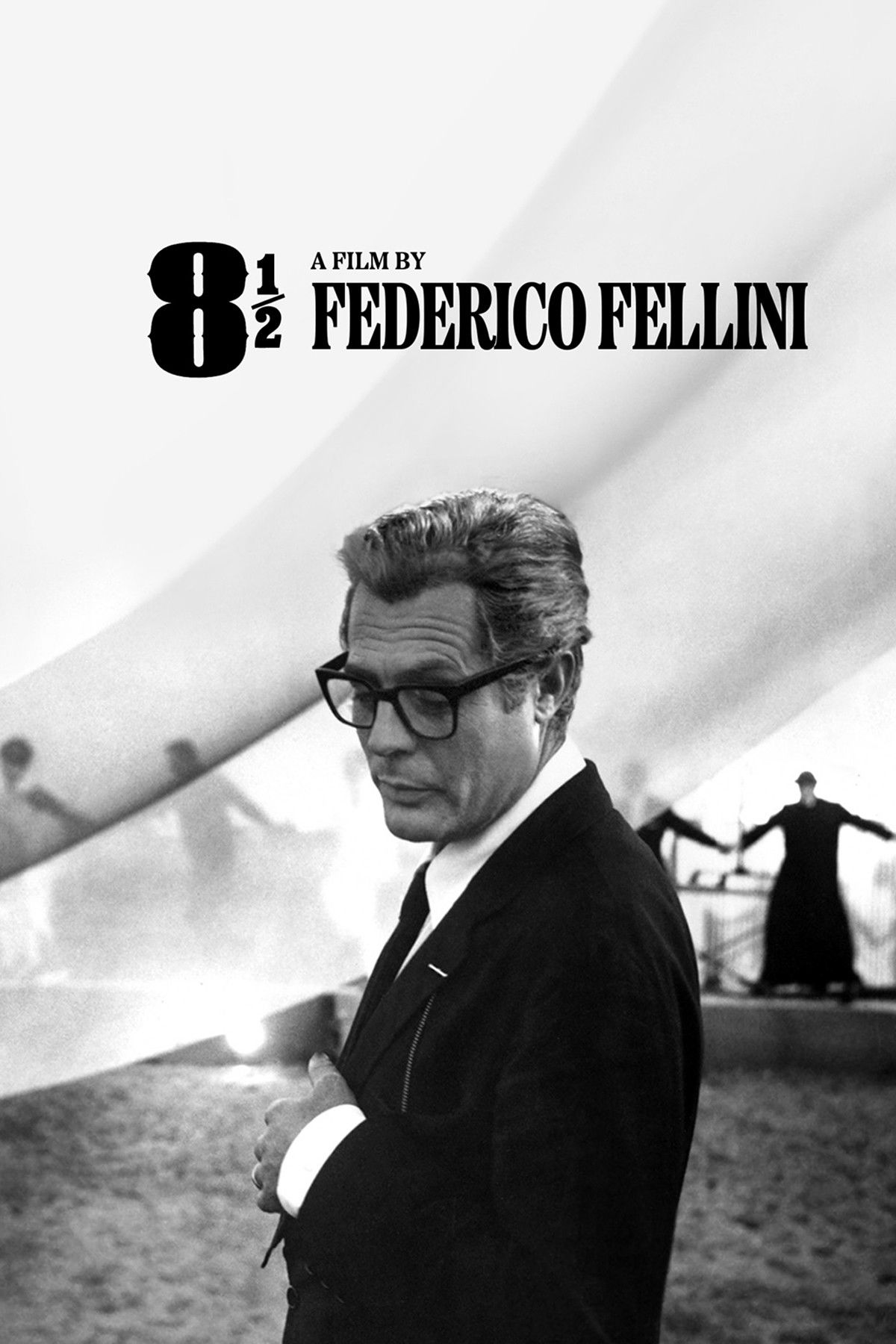
In 8½ (1963), a director gives his uncertainty more attention than he gives the women around him. Anouk Aimée’s Luisa Anselmi makes us question how much of her Marcello Mastroianni’s Guido actually sees. We were relieved to have her there: his self-absorption is funny, but spending time with it can become tiring. Aimée helps us keep looking beyond him, even when the film seems inclined to forgive him. We rate her particularly highly here, where her reserve has something definite to do.
Her international breakthrough came with Federico Fellini’s La Dolce Vita (1960), in which she played Maddalena. Between that and 8½ came Jacques Demy’s Lola (1961), with Aimée playing a cabaret singer and single mother whose flamboyance did not remove her vulnerability. Claude Lelouch’s A Man and a Woman (1966) gave her another way to be guarded as Anne Gauthier, a widow open to romance but protective of herself. These parts make the familiar description of her as enigmatic sound rather incomplete. What interests us is the effort of keeping feeling private when there is still a wish to share it.
Demy returned to Lola in Model Shop (1969), placing the character in a more downbeat American setting. The return suits an actress so often cast as sophisticated women with a sadness they do not readily explain. There is a limit to how much we can be asked to read into reserve, though, and Justine (1969) exposes the risk of aloofness becoming a lack of engagement. We do not always find enough beneath the composure to stay interested.
Fellini gets more useful friction from her in 8½, not least because she is one of several women who complicate Guido’s account. Sandra Milo’s Carla and Claudia Cardinale’s Claudia have different temperaments, and Aimée’s Luisa does not have to represent everyone he neglects to understand. Mastroianni keeps us following Guido, while the women give us reasons to doubt his understanding of them. The film can still be too forgiving of its director, but the performances leave us free to be less so. Start with 8½, and give Luisa as much attention as Guido would like for himself.
Biography
Anouk Aimée was a French actor. Born Nicole Françoise Florence Dreyfus in Paris on 27 April 1932, she made her screen debut at the age of 14 in La Maison sous la mer (1947). The name Anouk came from that role; Jacques Prévert suggested the surname Aimée for her first lead part in Les Amants de Vérone (1949).
She appeared in approximately 70 films between 1947 and 2019. Aimée gained international recognition for her roles in Federico Fellini’s La dolce vita (1960) and 8½ (1963), Jacques Demy’s Lola (1961), and Claude Lelouch’s A Man and a Woman (1966). For the latter she received a Golden Globe for Best Actress – Motion Picture Drama and an Academy Award nomination for Best Actress. She won the Cannes Film Festival Award for Best Actress for Salto nel vuoto (1980).