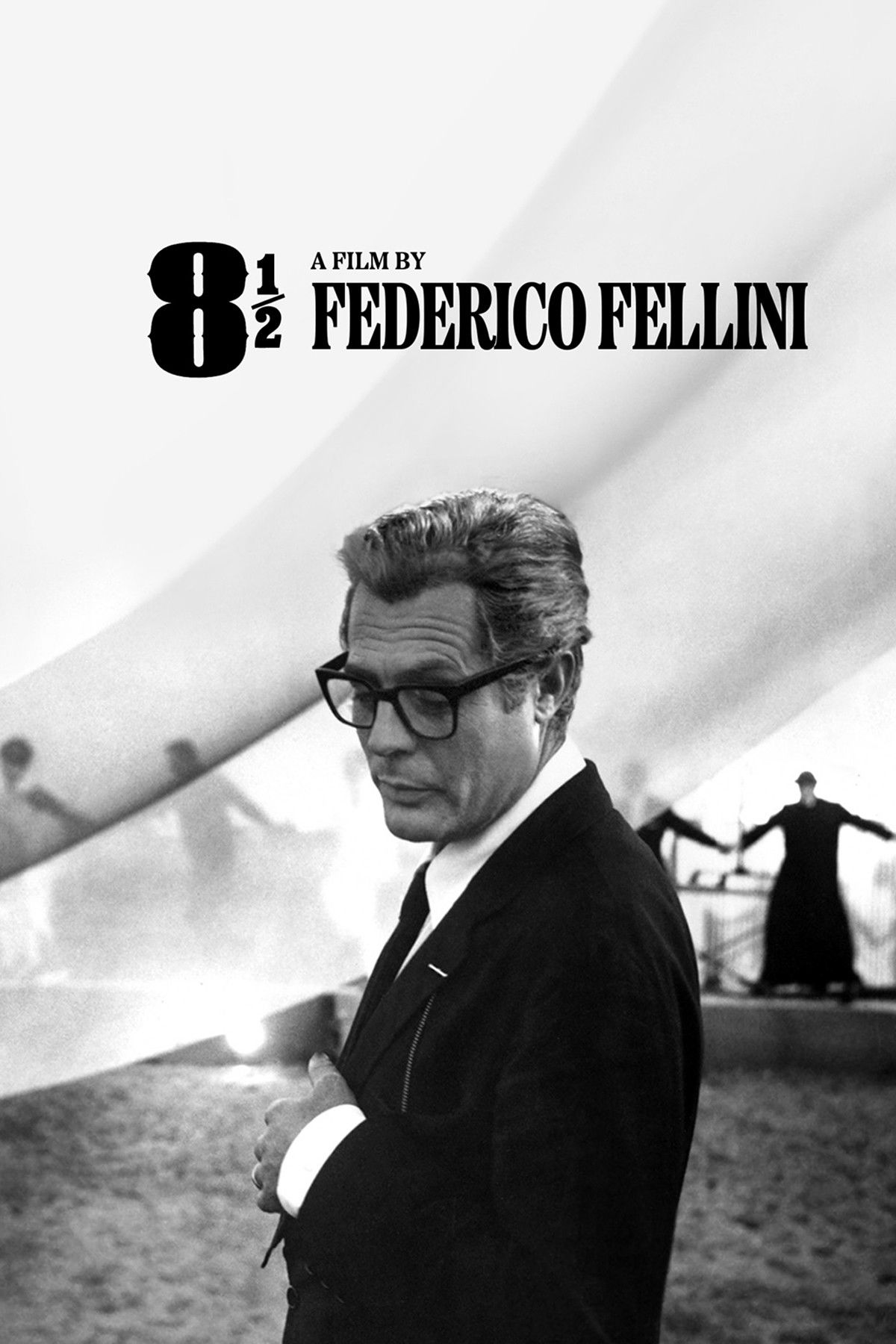
Federico Fellini turns memories and dreams into absorbing cinema, with enough humour to make confusion a pleasure. We recommend 8½ warmly, while wishing he were a little less indulgent towards its self-absorbed director.
Fi1m perspective
The opening dream of 8½ (1963) puts us inside a director’s anxiety before he has had a chance to explain himself. We enjoyed being lost there, because Fellini makes the confusion funny and unsettling rather than asking for our sympathy in advance. Marcello Mastroianni plays Guido Anselmi, whose inability to work lets memories and fantasies interrupt the making of a film. The humour gives us room to recognise Guido’s distress without treating every complaint as important.
La Strada (1954) marked a move from neorealism towards personal fable. La Dolce Vita (1960) turned to the excesses of Roman high society, with a more elaborate visual style. By 8½, he could build a film around a director who cannot get on with his work. The later Satyricon (1969), Roma (1972) and Amarcord (1973) grew more fantastical and studio-bound. The appeal is clear in 8½: even a man unable to create anything can give Fellini plenty to show us.
He likes a crowded frame, with people moving in and out and sometimes acknowledging the audience. His preference for filming at Cinecittà, using post-synchronised sound and frequent dubbing, gave him control over what we see and hear. The apparent disorder was carefully made. In 8½, the shifts into dreams and memories keep the creative crisis from becoming a series of solemn conversations.
The screenplay for 8½, written by Fellini with Ennio Flaiano, Tullio Pinelli and Brunello Rondi, is alert to the absurdity of a man who cannot stop examining himself. Some passages continue after the joke is clear, and the women deserve more attention on their own terms. Mastroianni holds the wandering thoughts together, but even his presence cannot make every stretch of self-absorption worth our patience. These are irritations in a film whose humour and invention earn most of its freedom. Start with 8½; there is no need to find Guido as fascinating as he finds himself.
Biography
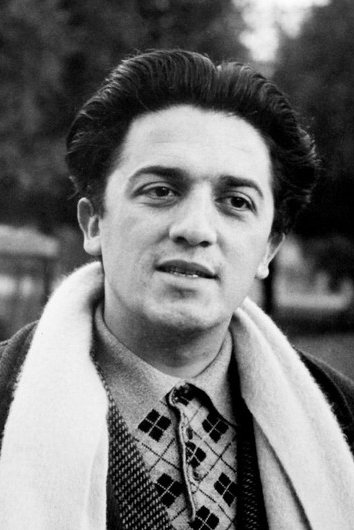
Federico Fellini was an Italian film director and screenwriter. Born in Rimini in 1920, he began his career in the 1940s as a screenwriter and assistant director, including work on Roberto Rossellini's Rome, Open City (1945). He directed his first feature, Variety Lights, in 1950.
Fellini is known for films including La Strada (1954), Nights of Cabiria (1957), La Dolce Vita (1960), 8½ (1963) and Amarcord (1973). He frequently collaborated with actor Marcello Mastroianni and his wife, actress Giulietta Masina. Four of his films won the Academy Award for Best Foreign Language Film.
He received the Palme d'Or for La Dolce Vita and an honorary Academy Award for lifetime achievement in 1993, the year of his death in Rome.