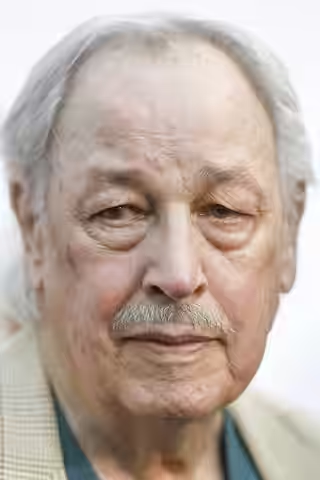
Frederic Forrest makes tense, unsettled men worth caring about. We value him most in an ensemble, where he gives us someone to worry about without demanding that everyone else get out of the way.
Fi1m perspective
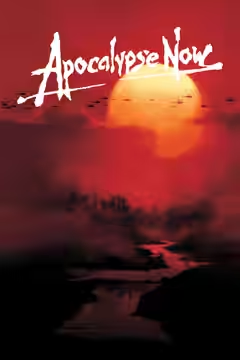
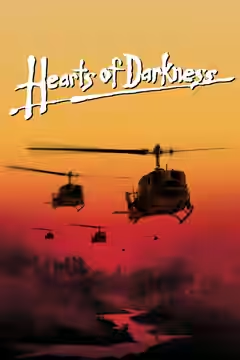
Frederic Forrest’s Chef gives us someone to worry about amid the warfare in Apocalypse Now (1979). He is an aspiring cook, a small but important detail in a film that can grow solemn about what men represent. Forrest’s anxious presence keeps our attention on the man as Francis Ford Coppola makes the world around him increasingly strange. We found the warfare upsetting, and Forrest’s ordinary, vulnerable Chef was part of the reason. His performance makes the film’s talk about damaged humanity feel earned.
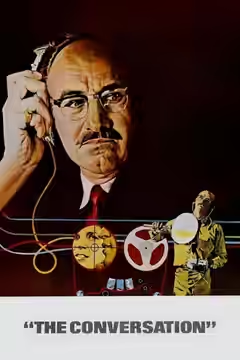
His film breakthrough was When the Legends Die (1972), in which he played Tom Black Bull. The Conversation (1974), with Forrest as Mark, began his collaboration with Coppola, which later included Tucker: The Man and His Dream (1988). There was another important part alongside Chef: Huston Dyer opposite Bette Midler in The Rose (1979). His chemistry with Midler offers a useful alternative to the high-strung characters, and a reason to look beyond the war film. He continued in supporting and character parts into the 2000s.
In Apocalypse Now, he works alongside Albert Hall, Laurence Fishburne and Sam Bottoms to give the soldiers lives beyond the officers’ concerns. Dean Tavoularis’s production design supplies the disorder around them; their performances stop the men looking like figures arranged against an impressive backdrop. Forrest belongs in that company, and our admiration for him does not require us to pretend he carries the film alone. Coppola gets something valuable from an actor who can draw attention without making the other people in the scene seem less important.
We would not claim that his presence excuses everything around him. Even Apocalypse Now, which we recommend without hesitation, sometimes spends too long explaining thoughts that the fighting has already made clear. Forrest is one of the reasons its people remain worth attending to when the film becomes more ponderous. For a second look, choose The Rose and watch how he works with Midler.
Biography
Frederic Forrest (born Frederic Fenimore Forrest Jr.) was an American actor. He appeared in more than 80 films and television productions from the late 1960s onwards.
Forrest trained in New York and began on stage in off-Broadway productions including Viet Rock (1966). His film debut came in When the Legends Die (1972). He gained attention for his work with director Francis Ford Coppola in The Conversation (1974) and Apocalypse Now (1979), in which he played Jay 'Chef' Hicks. He received Academy Award and Golden Globe nominations for best supporting actor for his role in The Rose (1979), and shared the National Society of Film Critics award for best supporting actor for that film and Apocalypse Now.
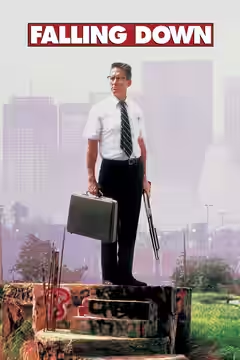
Other notable film credits include The Missouri Breaks (1976), One from the Heart (1982), Valley Girl (1983), Tucker: The Man and His Dream (1988), The Two Jakes (1990) and Falling Down (1993). He also appeared in the television miniseries Lonesome Dove (1989).