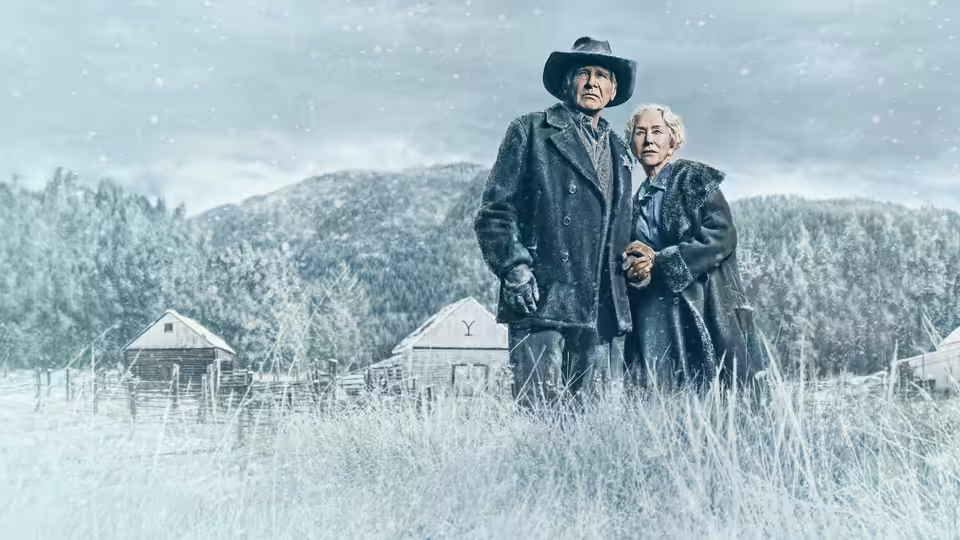
Helen Mirren and Harrison Ford make 1923 worth watching, despite its scattered storytelling. Taylor Sheridan’s Western is strongest with the Duttons, while its treatment of Indigenous suffering needs more care.
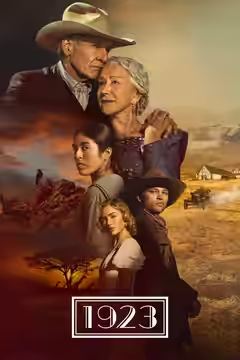
Taylor Sheridan’s Western family drama is good enough to make its scattered storytelling frustrating. Helen Mirren and Harrison Ford are so convincing together that leaving the Duttons can feel like an interruption, even when the next strand has something worth showing us. We recommend 1923 to Western viewers who can tolerate some prolonged detours. Each move away from the family needs to offer something equally compelling, and that happens less consistently than we would like.
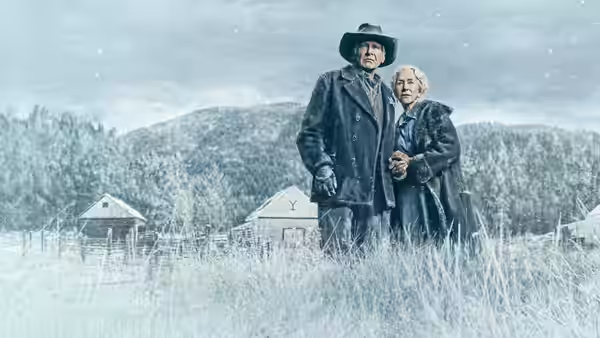
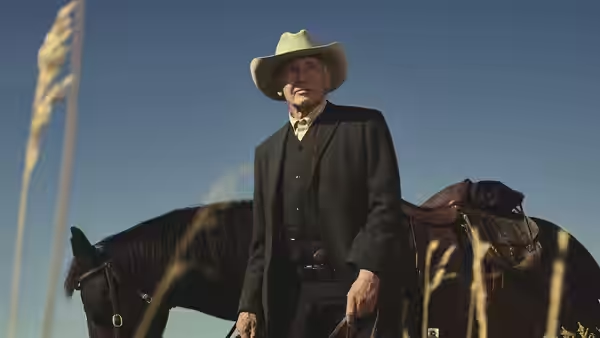
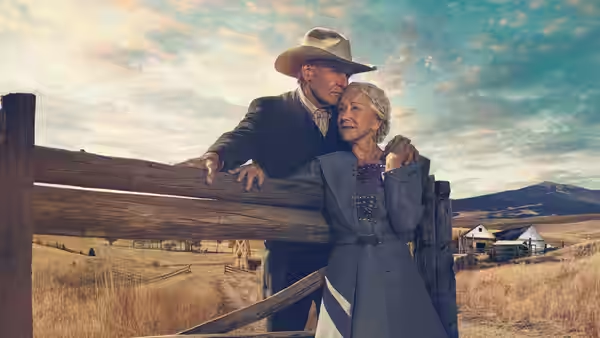
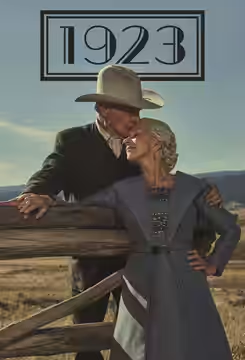
Helen Mirren gives Cara Dutton enough force to hold our attention through the familiar family rivalry. Harrison Ford’s Jacob Dutton is a convincing partner, and their chemistry does much of the writing’s work for it. We accept that these people have known one another for years because the actors seem comfortable sharing a scene. The drama can then get on with its disputes, helped by performances that make us care who wins.
The difficulty is leaving them. The African and boarding-school strands broaden the series, but the transitions can make it feel as though we have changed programmes before a scene has finished holding our attention. The editing team, which includes Todd Desrosiers and Chad Galster, has to maintain momentum across stories with different concerns, and the joins remain conspicuous. Individual stretches are absorbing; the repeated adjustment between them becomes tiring when we are still waiting for a reason to put these lives together.
Teonna Rainwater’s story makes that impatience uncomfortable, because Aminah Nieves gives it an importance that cannot be dismissed as a diversion. We were disturbed by the boarding-school violence, and uneasy about the amount of suffering the programme asks Indigenous characters to endure. The school material becomes harder to defend when another display of cruelty tells us little more about the pupils enduring it. Aminah Nieves keeps Teonna Rainwater distinct and worth following, even when the writing gives her suffering too much of the work.
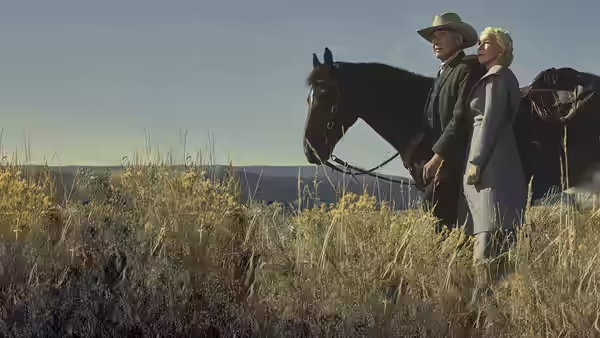
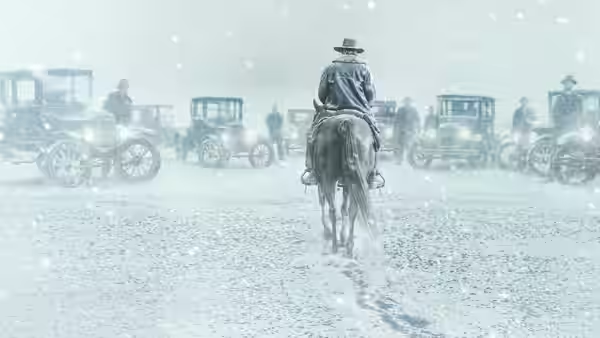
The physical production is more assured than the plotting. Cinematographers Robert McLachlan, Corrin Hodgson and Ben Richardson give the series an expansive visual scale, while production designers Lisa Ward and Cary White make its separate settings feel substantial. This matters in a drama that keeps asking us to take an interest in another set of people: the visual confidence helps us settle into their surroundings. There is pleasure in the scale even when the story is slow to justify it.
Brian Tyler and Breton Vivian’s music contributes to the solemnity, though we would sometimes welcome less insistence on the gravity of each strand. As a Western, the programme covers familiar ground with its family rivalry, and the performances do more to refresh that material than the sprawling construction does. Taylor Sheridan’s strongest scenes make us want to stay with the Duttons, which is a worthwhile achievement in a drama this crowded. Try it for the actors, with a little patience set aside for the detours.