Series review

In a sentenceNobody in this town can make a threat without giving it a second draft

WesternCrimeDrama

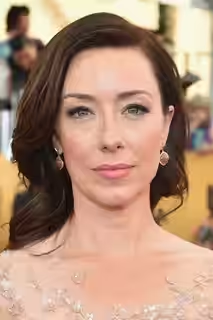
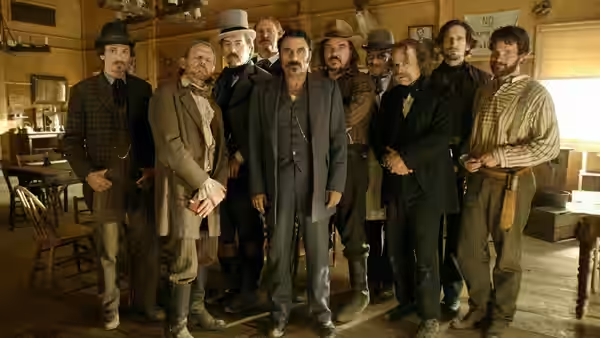
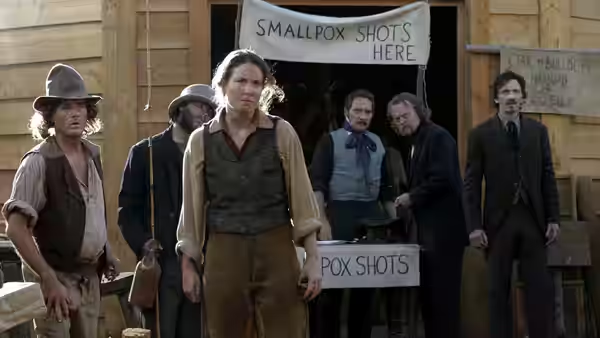
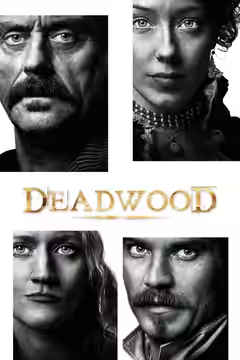
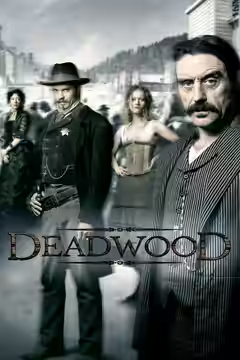
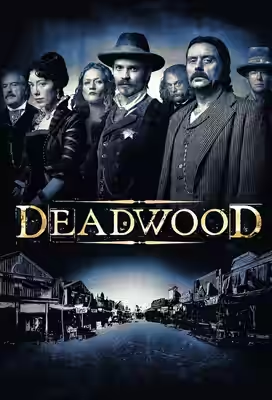
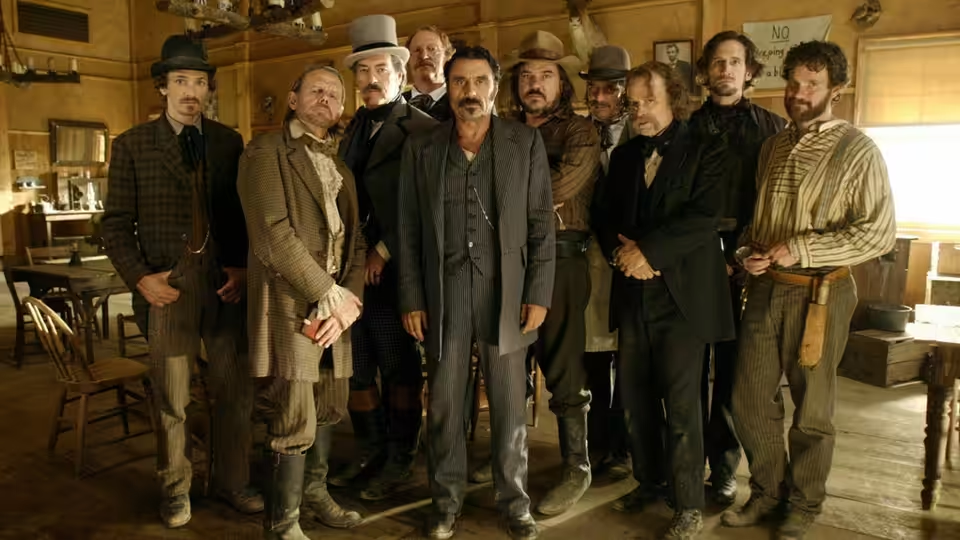
In the lawless camp of Deadwood, people compete for money, influence and a measure of security. Seth Bullock (Timothy Olyphant) and Al Swearengen (Ian McShane) are among those caught in the struggle over how the town will be run. Around them are Alma Garret (Molly Parker), Sol Star (John Hawkes), Trixie (Paula Malcomson) and Amos Cochran (Brad Dourif). Deals, threats and violence shape a community whose inhabitants have to live alongside people they cannot trust. This Western crime drama follows the competing interests that begin to turn a camp into a town with rules.

Plays from YouTube when you press play; nothing loads from them until then.

Fi1m review

Deadwood is superb television: a Western that makes the struggle to live together as absorbing as the violence. Ian McShane is extraordinary, though the elaborate speeches sometimes make us wish someone would interrupt.

Deadwood takes a question that Westerns can hurry past and spends its time worrying at it: how do people accustomed to getting their way learn to live together? David Milch and his fellow writers begin with a lawless camp and make every attempt to impose order feel suspect. Someone will benefit, and someone will have to pay. The series is superb because it lets us understand those competing interests without making the people who hold them tidy or agreeable. We recommend it even to anyone who normally avoids Westerns.

Ian McShane’s Al Swearengen is the performance to watch first. McShane treats the elaborate language as something a man might actually use while thinking, bullying and trying to get his own way. We laughed at his swearing, then felt uneasy about how readily he had won us over. The obscenities are so precisely delivered that the brutality can briefly seem like part of the entertainment. McShane keeps the danger present, even when he is funny.

Timothy Olyphant, as Seth Bullock, gives McShane something substantial to work against. His more contained performance can initially seem less rewarding, but the contrast keeps the series from becoming an exhibition of entertaining wickedness. Molly Parker’s Alma Garret and Paula Malcomson’s Trixie deserve the same close attention, especially when their scenes deny us the easy pleasure of a commanding speech. John Hawkes, as Sol Star, adds another distinct presence. We become interested in how these people listen as well as what they say.

The town is persuasive before anyone explains who controls it, and Maria Caso’s production design earns much of the credit. It matters that this looks like somewhere the whole ensemble can inhabit; the place has to sustain interest beyond a single confrontation. James Glennon and his fellow cinematographers make faces as worth studying as the town itself. We remain aware of a community around the speakers, which is essential in a series so concerned with who gets heard.

That attention to speech also sets the pace. Freeman A. Davies and the other editors are right to let the exchanges run: the pleasure often lies in hearing someone work towards a threat instead of delivering it immediately. David Schwartz is among the composers, and the music is effective without competing with the cast for our attention. The dialogue supplies much of the rhythm itself. It takes concentration to follow, but listening closely is part of what makes these people so absorbing.

There are costs to that approach, and the opening stretch is slower to repay the effort than what follows. Milch and the writing team occasionally make a speech so elaborate that we start admiring the phrasing instead of attending to the person saying it. Some exchanges need less ceremony, and the abundance of profanity can dull its force. These are real irritations, although they become less troublesome once the ensemble has settled into its rhythm.

The Western often offers the prospect of a clean decision, with somebody drawing a gun and settling the matter. Deadwood is interested in the awkward business of continuing to share a town afterwards. Its violence matters because we have been asked to pay attention to the people living with it, including those who cannot simply take charge. That gives the series a warmth its filthy language might lead us to overlook. Set aside an evening when you can hear every word.

Critical consensus AI synthesised

5 of 6
Positive
5
Mixed
0
Negative
0
The AV Club
1 March 2005 · Noel Murray
80*

The critic praises the series for its ambitious exploration of how civilization emerges from chaos through power plays and violence in a lawless camp. They highlight the strong ensemble cast, memorable dialogue with musicality, and the show's rare sense of scope after finding its rhythm midway through the season.

Read the full review →
The Guardian
20 September 2004 · Mark Lawson
80*

The critic praises the series for its foul-mouthed, nihilistic take on the western genre and its exploration of lawlessness and death. It singles out the performance of Ian McShane as Al Swearengen for praise.

Read the full review →
Variety
11 March 2004 · Brian Lowry
80*

The critic calls it a vulgar, gritty, captivating addition to HBO with dark genius from creator David Milch, a vivid living town full of profanity, corruption, and strong performances from the ensemble including Olyphant, McShane, and Carradine.

Read the full review →
The Hollywood Reporter
18 March 2004 · Barry Garron
75*

The critic describes a brutal, passionate, heroic, and fascinating Western deeply rooted in historical reality, with fine performances (especially Carradine and McShane) and outstanding production values under director Walter Hill.

Read the full review →
The Times
18 September 2004 · Barry Norman
75*

The critic describes the series as riveting with strong performances, especially from Ian McShane, and notes its brutal, lawless setting in 1870s Deadwood.

Read the full review →

Cast

Stills

Awards

SAG Awards, 2007

Nominated
Outstanding Performance by an Ensemble in a Drama Series

SAG Awards, 2006

Nominated
Outstanding Performance by a Male Actor in a Drama Series

Writers Guild of America Award for Television: Dramatic Series, 2006

Nominated
Writers Guild of America Award for Television: Dramatic Series

Primetime Emmy Awards, 2005

Nominated
Outstanding Drama Series
Nominated
Outstanding Lead Actor in a Drama Series
Nominated
Outstanding Single-Camera Picture Editing for a Drama Series
Won
Outstanding Cinematography for a Single-Camera Series
Won
Outstanding Costumes for a Series

Satellite Award for Best Actor – Television Series Drama, 2005

Nominated
Satellite Award for Best Actor – Television Series Drama

Satellite Award for Best Supporting Actor – Series, Miniseries or Television Film, 2005

Nominated
Satellite Award for Best Supporting Actor – Series, Miniseries or Television Film

TCA Award for Outstanding Achievement in Drama, 2005

Nominated
TCA Award for Outstanding Achievement in Drama

TCA Award for Program of the Year, 2005

Nominated
TCA Award for Program of the Year

Directors Guild of America Award for Outstanding Directing – Drama Series, 2004

Won
Directors Guild of America Award for Outstanding Directing – Drama Series

Golden Globes, 2004

Nominated
Best Television Series – Drama

Peabody Awards, 2004

Won
Peabody Awards

Primetime Emmy Awards, 2004

Nominated
Outstanding Casting for a Drama Series
Nominated
Outstanding Original Main Title Theme Music
Nominated
Outstanding Supporting Actor in a Drama Series
Nominated
Outstanding Supporting Actress in a Drama Series
Nominated
Outstanding Writing for a Drama Series
Won
Outstanding Directing for a Drama Series

TCA Award for Individual Achievement in Drama, 2004

Won
TCA Award for Individual Achievement in Drama

TCA Award for Outstanding New Program, 2004

Nominated
TCA Award for Outstanding New Program

If you liked this, try…

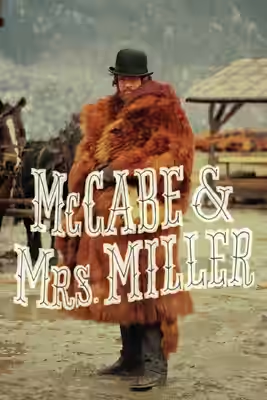
McCabe & Mrs. Miller poster

McCabe & Mrs. Miller

1971 · Another Western where money and dependence matter more than a clean conscience.

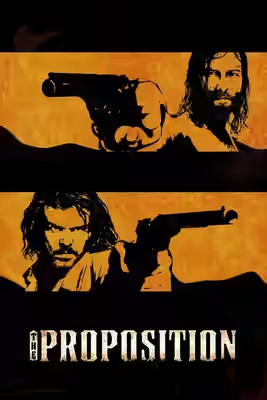
The Proposition poster

The Proposition

2005 · For frontier brutality and a similarly uneasy idea of civilisation.

The Great Silence poster

The Great Silence

1968 · A harsher, snowbound Western about the people who profit from lawlessness.

Ripper Street poster

Ripper Street

2012 · Another period crime series whose crowded streets make respectability look rather doubtful.

The Wire poster

The Wire

2002 · For patient ensemble storytelling and the damage done by institutions protecting themselves.