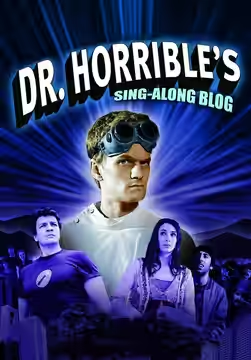
Made on a shoestring during a writers’ strike and released online in three acts, Joss Whedon’s web musical is sharper, sadder and better sung than it has any right to be. Neil Patrick Harris carries it; the woman he is singing about deserves more than a laundry basket.
During the American writers’ strike of 2007 and 2008, Joss Whedon, with Jed Whedon, Zack Whedon and Maurissa Tancharoen, wrote a musical about a supervillain with a webcam. They shot it cheaply, in three acts of about fourteen minutes each, and put it on the internet in July 2008. That explains most of what is on screen: the two or three locations, the small cast, the friends in the chorus. It is also tightly written, funnier than most studio comedies, and sadder than a piece about a freeze ray has any business being. We recommend it, with one caveat about the woman at the centre of it.
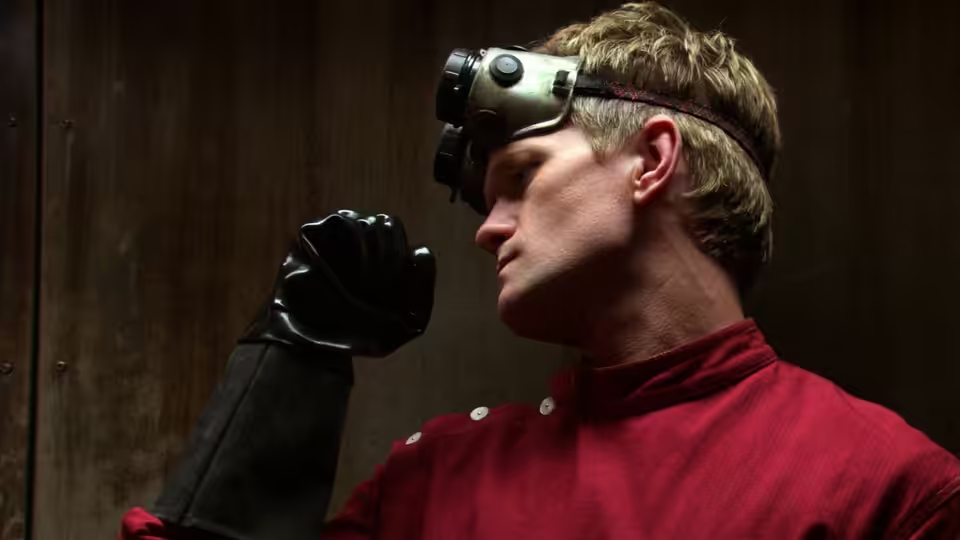
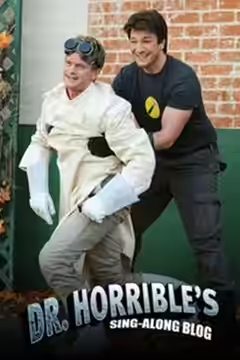
Harris is Billy, who calls himself Dr. Horrible and explains his plans to a camera in his flat with the earnestness of a man who has never had anyone else to explain them to. The joke is that he is not frightening. He is a shy, decent young man with an ambition to join the Evil League of Evil, and his villainy amounts to wanting to be noticed. Harris plays this without winking. He sings in a light tenor that cracks in the right places, and does more with a pair of goggles pushed up on his forehead than most actors manage with a speech. When he stands at the launderette next to Penny and cannot make his mouth work, we recognised him, and were not comfortable about it.
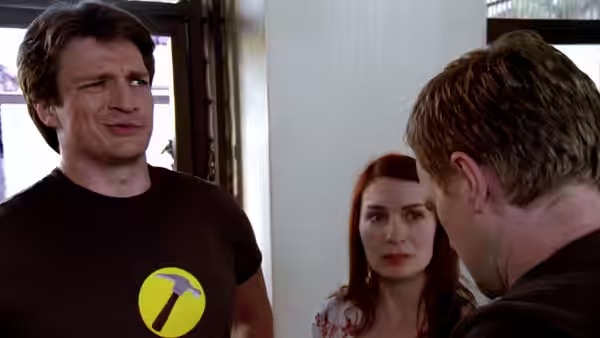
Fillion’s Captain Hammer is the other half of the joke. Hammer is the hero, and he is a boor: a man who has never been told no, who treats saving the city as a way of meeting women, and who cannot understand why the little man in the lab coat resents him. Fillion has a large, handsome, untroubled face and uses every inch of it. His entrance, interrupting the heist to sing about what a man’s gotta do while Horrible fumes behind him, is the funniest three minutes in the piece, and we laughed out loud at nothing more than the way he holds his chin. Helberg’s Moist is given about four lines and lands all of them.
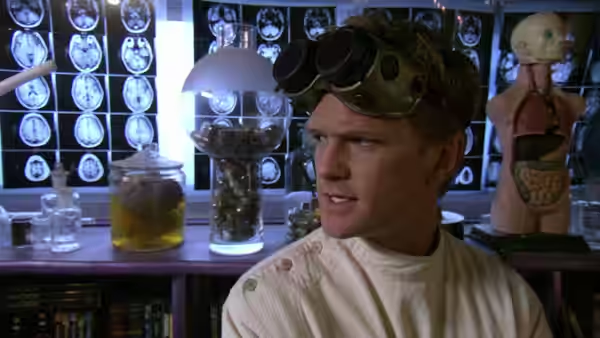
Ryan Green shoots it plainly, in a handful of rooms and one street. Billy’s flat is lit the way a webcam would light it, flat and greenish; the launderette is fluorescent and slightly grubby. Shawna Trpcic gives Horrible a white coat, white gloves and welding goggles, so that he looks like a dentist who has been reading comics, and puts Hammer in a black T-shirt with a hammer on it. Lisa Lassek cuts between the blog, where Horrible tells us what happened, and the scenes where we watch it happen, and the two rarely match, which tells us more about him than his songs do. Jed Whedon’s music, written with Joss, is the real surprise: proper melodies, including a second-act duet in which Billy and Penny walk the same streets singing about two cities, one getting worse and one getting better, and the tunes fit together exactly while meaning opposite things.
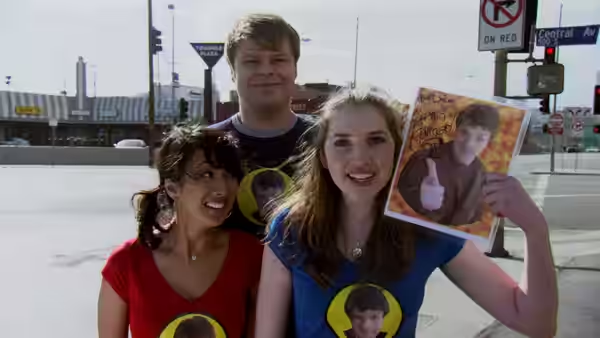
The caveat is Penny. Day is warm and sings sweetly, and the part is a wish rather than a woman. She is kind to the homeless, kind to Billy, kind to Hammer, and the script never lets her want anything that is not a shelter or a boyfriend. The first act also takes a while to catch; the jokes in the opening blog are ones Whedon has told before, and it is not until Hammer arrives that it finds its pace. And the seams show. A crowd scene has about eleven people in it.
Whedon had done a musical before, the Buffy the Vampire Slayer episode Once More, with Feeling, and this is the same trick played smaller and harder: people who cannot say what they mean are made to sing it. The third act takes a turn we will not describe. We had settled in for a comedy and were not given one. It caught us off guard, and then it seemed the only honest place the story could have gone.
Watch all three acts in one sitting. It takes forty-two minutes. Bring someone who will sing along to the horse.