Flight of the Conchords is a warmly funny musical comedy whose songs make its deadpan performers even funnier. Bret McKenzie and Jemaine Clement are worth the patience, though the ordinary plots sometimes leave rather too much waiting between numbers.
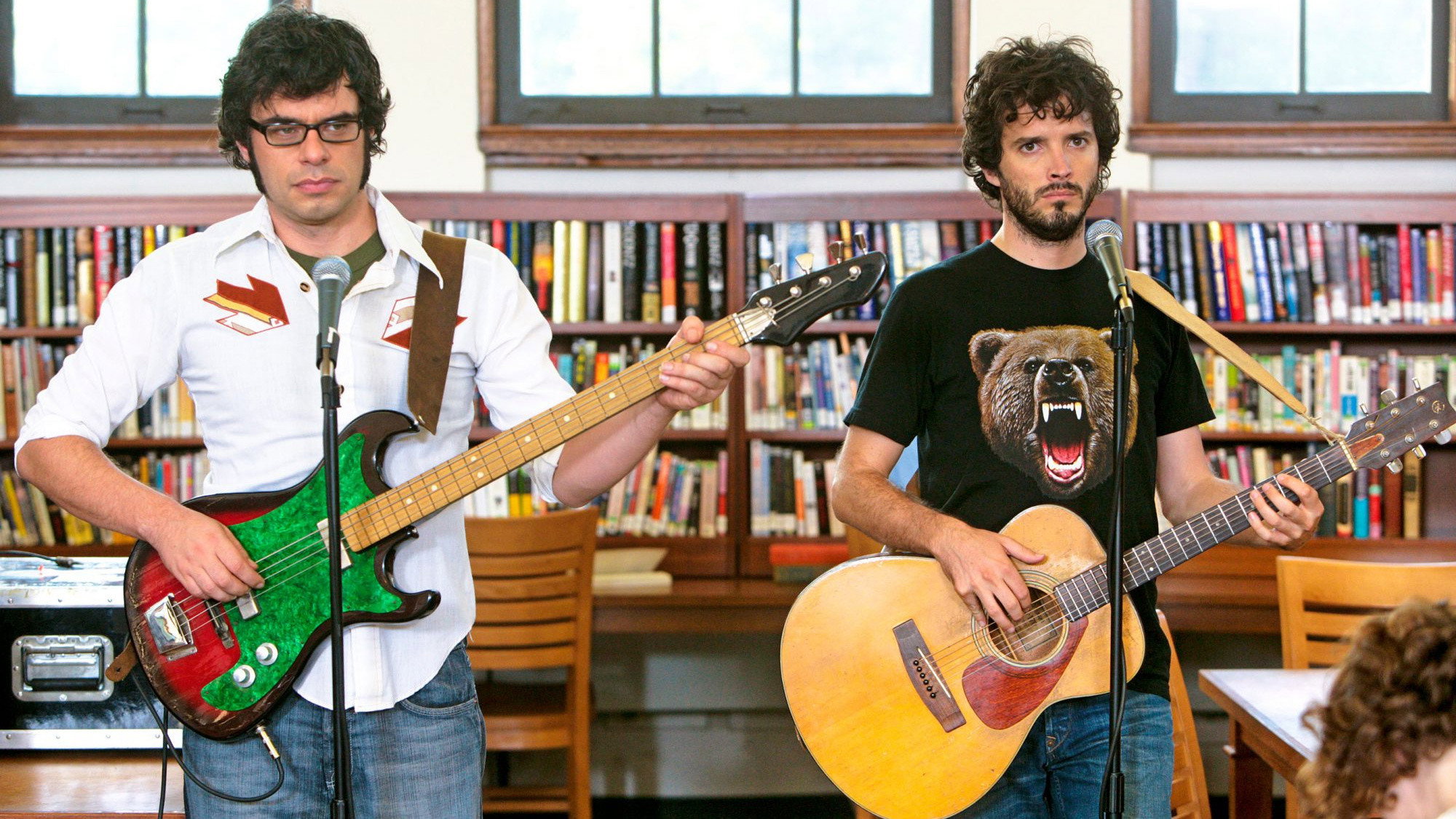
Flight of the Conchords is good company, especially when its two leads stop trying to get anywhere and start singing. Created by James Bobin, Bret McKenzie and Jemaine Clement, it follows struggling New Zealand musicians in New York whose dependence on each other is more convincing than their prospects. The comedy asks us to spend time with them at their own slow pace. For much of the series that is an easy invitation to accept, although the gaps between songs can test our patience.
McKenzie and Clement play Bret and Jemaine with an absence of strain that is harder to achieve than it looks. They leave us to notice the absurdity rather than announcing when it has arrived. Their co-dependence gives the quieter scenes something to work with, because neither looks likely to improve the other’s situation. Rhys Darby, as manager Murray Hewitt, offers welcome company without upsetting the low-key tone. We grew fond of the pair because their limitations are allowed to be funny without requiring us to despise them.
The music, credited to Clement, makes that restraint pay off. Everyday life gives way to songs drawn from widely different genres, and the change of scale is funny before the number has properly begun. We laughed when the everyday scenes tipped into song, because McKenzie and Clement’s unshowy performances make the musical fuss seem so unnecessary. The songs are accomplished enough to reward listening beyond the jokes, which matters when a programme asks us to stop following a story and hear one through.
Patrick Alexander Stewart’s cinematography keeps the non-musical comedy on the same quiet footing as the acting. Dan Butts and Christine Stocking’s production design also works best when it lets everyday life look unremarkable. That gives the songs something ordinary to interrupt. The visual restraint is welcome in a programme that could easily spend its entire half-hour signalling how peculiar it is.
Casey Brown’s editing is most persuasive when the comedy breaks into song; away from the music, the pace can become a problem. The plots are slight, and some stretches give the pair too little to do beyond being themselves. Bobin, McKenzie and Clement, who are also among the writers, sometimes seem too content to let a small comic idea occupy the available time. We enjoy their company, but that does not make every pause productive. This is where the half-hour format occasionally feels longer than it should.
Anyone who finds musical comedy exhausting may be surprised by how little these two demand that we join in. There is no sense of being bullied into cheerfulness, and the range of musical styles gives the programme room to keep changing. Its two series amount to 22 half-hour episodes, a manageable commitment for a comedy with such an unhurried manner. Give it one episode, and judge it after the singing starts.