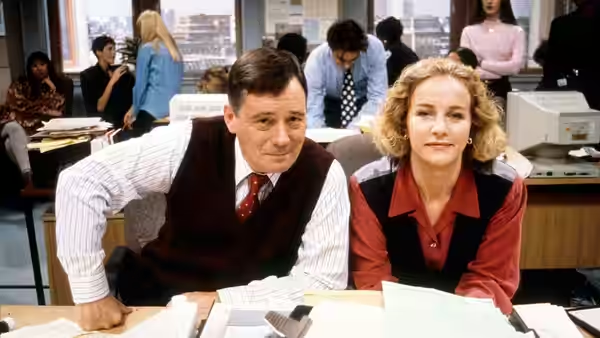
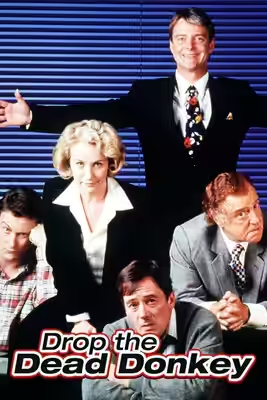
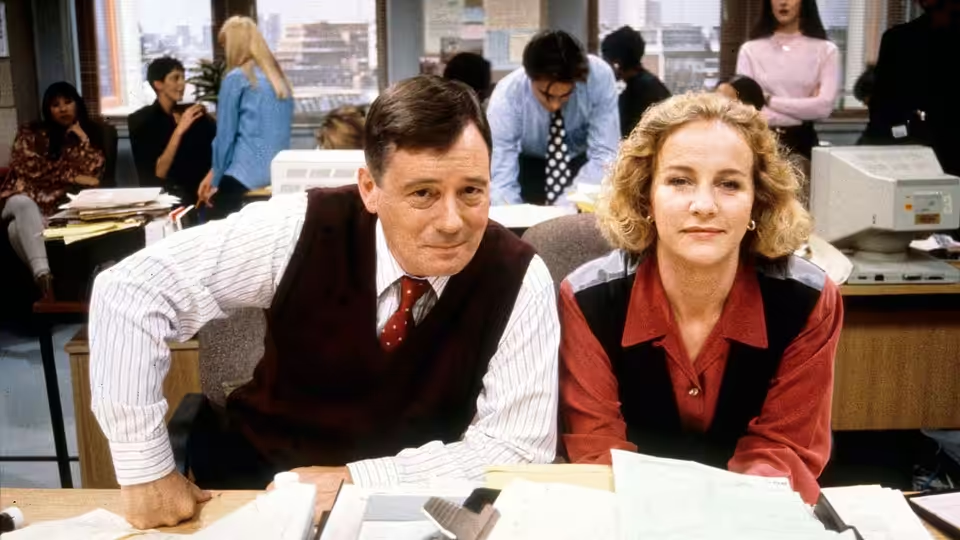
Henry Davenport (David Swift) and Alex Pates (Haydn Gwynne) seated at an office desk
Series review

Drop the Dead Donkey

1990 · Created by Andy Hamilton, Guy Jenkin · Series · 24m

In a sentenceOld news, good company, and several people we would avoid in the office

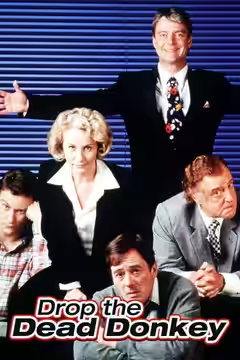
A newsroom provides the setting for Drop the Dead Donkey, a topical comedy created by Andy Hamilton and Guy Jenkin. Dave Charnley (Neil Pearson), Sally Smedley (Victoria Wicks) and George Dent (Jeff Rawle) feature alongside Henry Davenport (David Swift) and Damien Day (Stephen Tompkinson). The ensemble also includes Gus Hedges (Robert Duncan) and Alex Pates (Haydn Gwynne). The programme brings its characters together around the news, in 24-minute episodes, with the first of its six series beginning in 1990.

Fi1m review

Drop the Dead Donkey is worth an evening for its carefully drawn newsroom ensemble. The topical material is the caveat: the characters are good company, but an appetite for old news helps.

Drop the Dead Donkey is a good workplace comedy whose characters are its strongest reason to watch. Created and written by Andy Hamilton and Guy Jenkin, it uses a newsroom to bring a sizeable ensemble into regular contact. That setting is useful for comedy: the work is important, which gives personal shortcomings plenty of opportunity to become somebody else’s problem. We recommend it for the company, with a reservation about how much pleasure there is in returning to yesterday’s topical material.

Its first series began in 1990 and its sixth in 1998, so those topical ambitions come with an obvious difficulty. News stories lose their urgency, and a reference can need explaining before a joke has a chance to land. We would not choose this programme chiefly for its relationship with the headlines; reconstructing why something once mattered is not how we generally want to spend an evening. The attention to character is what makes the recommendation possible without requiring an enthusiasm for that period’s news.

Neil Pearson’s Dave Charnley, Victoria Wicks’s Sally Smedley and Jeff Rawle’s George Dent give the ensemble much of its appeal. David Swift as Henry Davenport and Stephen Tompkinson as Damien Day make the casting feel equally well considered beyond those central names. We warmed to these people more than we expected, because the care given to their individual personalities makes them worth following beyond a topical gag. There is pleasure in having several performers worth attending to, without needing one favourite to justify the next episode.

Andy Hamilton and Guy Jenkin deserve credit for giving the cast characters with enough definition to support that interest. A newsroom sitcom could easily reduce its staff to competing opinions about the news, with somebody assigned to deliver each side of a debate. Their writing gives us a better reason to pay attention to the people involved. We would still be cautious about recommending the programme chiefly as satire: the strength of the ensemble should not be used to wave away the limitations of topical humour.

Liddy Oldroyd’s direction deserves a share of the praise for that ensemble. Keeping performances compatible without making the characters interchangeable is a substantial part of directing comedy, and the balance here serves the programme well. The 24-minute episode length is also an advantage for an evening’s viewing, allowing an introduction to the company without demanding a large commitment. The modest length suits a comedy whose principal attraction is spending time with its cast.

Measured against workplace comedy, character and casting are sound reasons to give this a try. Our caveat matters more for anyone attracted primarily by the promise of topical jokes, especially if revisiting old headlines already sounds like homework. We would take it an episode at a time, allowing the ensemble to establish itself without treating six series as a task to be completed. Give the staff an episode before committing to the archive.

Critical consensus AI synthesised

1 of 6
Positive
1
Mixed
0
Negative
0
The Times
25 June 2005
70*

The first series of the topical newsroom sitcom makes a belated debut on DVD. Its real strengths were impeccably drawn characters and as good an ensemble cast as has been seen in a British comedy series.

Read the full review →

Straight answers AI written, from our review

Is Drop the Dead Donkey worth watching?
Drop the Dead Donkey is worth watching for its well-drawn newsroom ensemble, and we scored it 74. The caveat is the topical humour: its six series ran from 1990 to 1998, and jokes built on old headlines can need explaining before they land. Come for the company of Neil Pearson, Victoria Wicks and Jeff Rawle rather than the satire, and take it an episode at a time.
How long is Drop the Dead Donkey, and what is it rated?
Drop the Dead Donkey has episodes of about 24m. It is a comedy series.
Where can I watch Drop the Dead Donkey in South Korea?
Drop the Dead Donkey is not on any streaming or rental service in South Korea at the moment. It is available in 6 other countries; change your country at the top of the page to see where. Availability is checked daily.
How does Drop the Dead Donkey compare to Network?
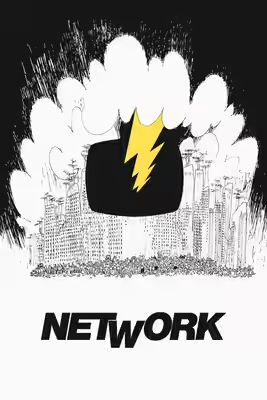
Drop the Dead Donkey is a warm 24-minute workplace comedy about a newsroom, where Network is Sidney Lumet's angry feature-length satire of television and the people selling it. The sitcom is the gentler and more companionable of the two, built on characters rather than argument; Lumet's film is the more disturbing and more ambitious, though its speeches can crowd out its people. Choose the series for company, the film for fury.
What should I watch after Drop the Dead Donkey?
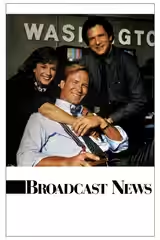
After Drop the Dead Donkey, try Network (1976, Fi1m 86): For a much angrier account of television and the people selling it. Then Broadcast News (1987, Fi1m 84): For newsroom loyalties, professional vanity and people who cannot leave work alone; and The Thick of It (2005, Fi1m 94): For institutional panic and language designed to prevent anyone accepting responsibility.

Cast

If you liked this, try…

  1. Network (1976, Fi1m 86)For a much angrier account of television and the people selling it.

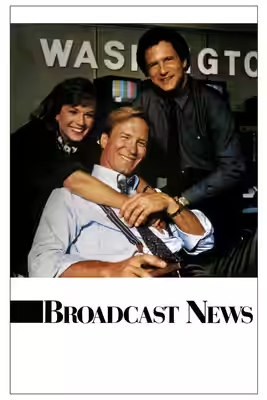
  2. Broadcast News (1987, Fi1m 84)For newsroom loyalties, professional vanity and people who cannot leave work alone.

  3. The Thick of It (2005, Fi1m 94)For institutional panic and language designed to prevent anyone accepting responsibility.

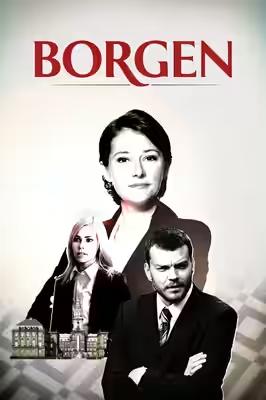
  4. Borgen (2010, Fi1m 84)For a Danish drama equally interested in politics and the newsroom.

  5. W1A (2014) · not reviewed yetFor a gentler workplace comedy about broadcasting and the avoidance of decisions.

Free account

Know what to watch tonight

Two lists that know where things are streaming, collections you can share, your own score beside ours, and Discover that remembers what you have seen.

  • Want to see, sorted by what is streaming now
  • Seen, with your score out of ten
  • No adverts, ever