Series review

Borgen

2010 · Created by Adam Price, Camilla Hammerich · Series · 1h 00m · MPA TV-MA

In a sentenceEveryone is reasonable, everyone is compromised, and nobody has been home for dinner since the election

Drama

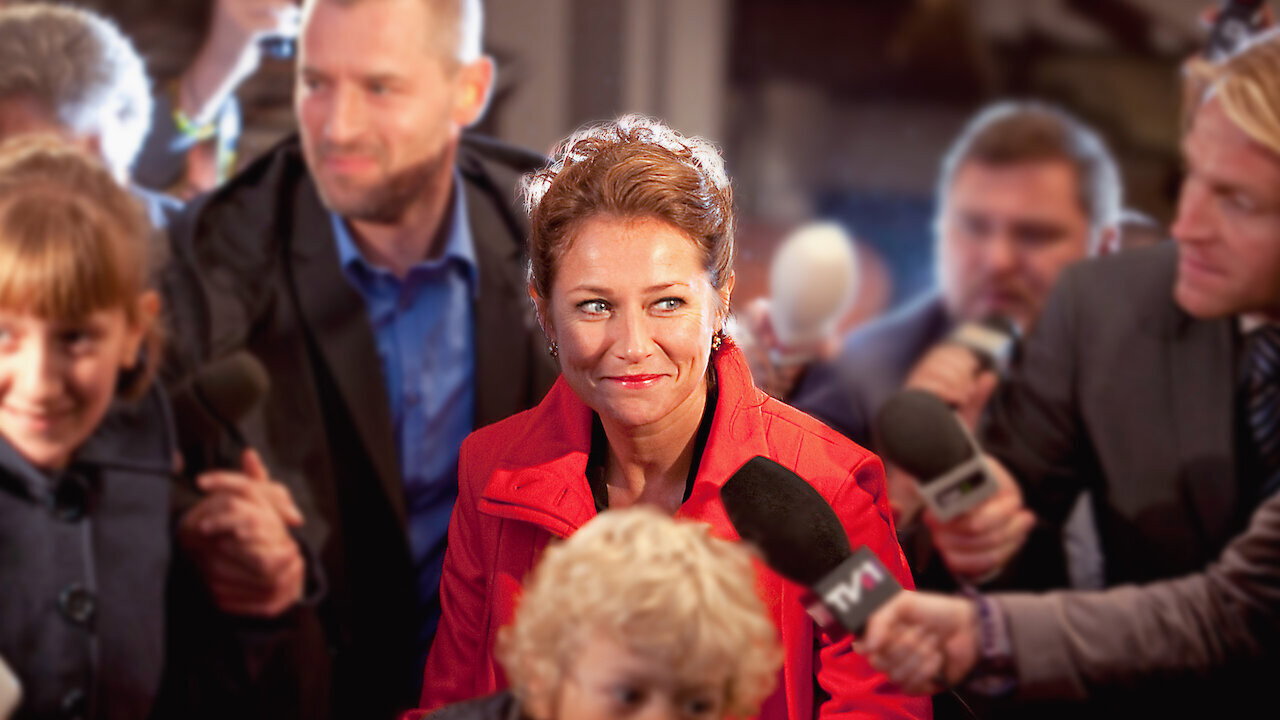
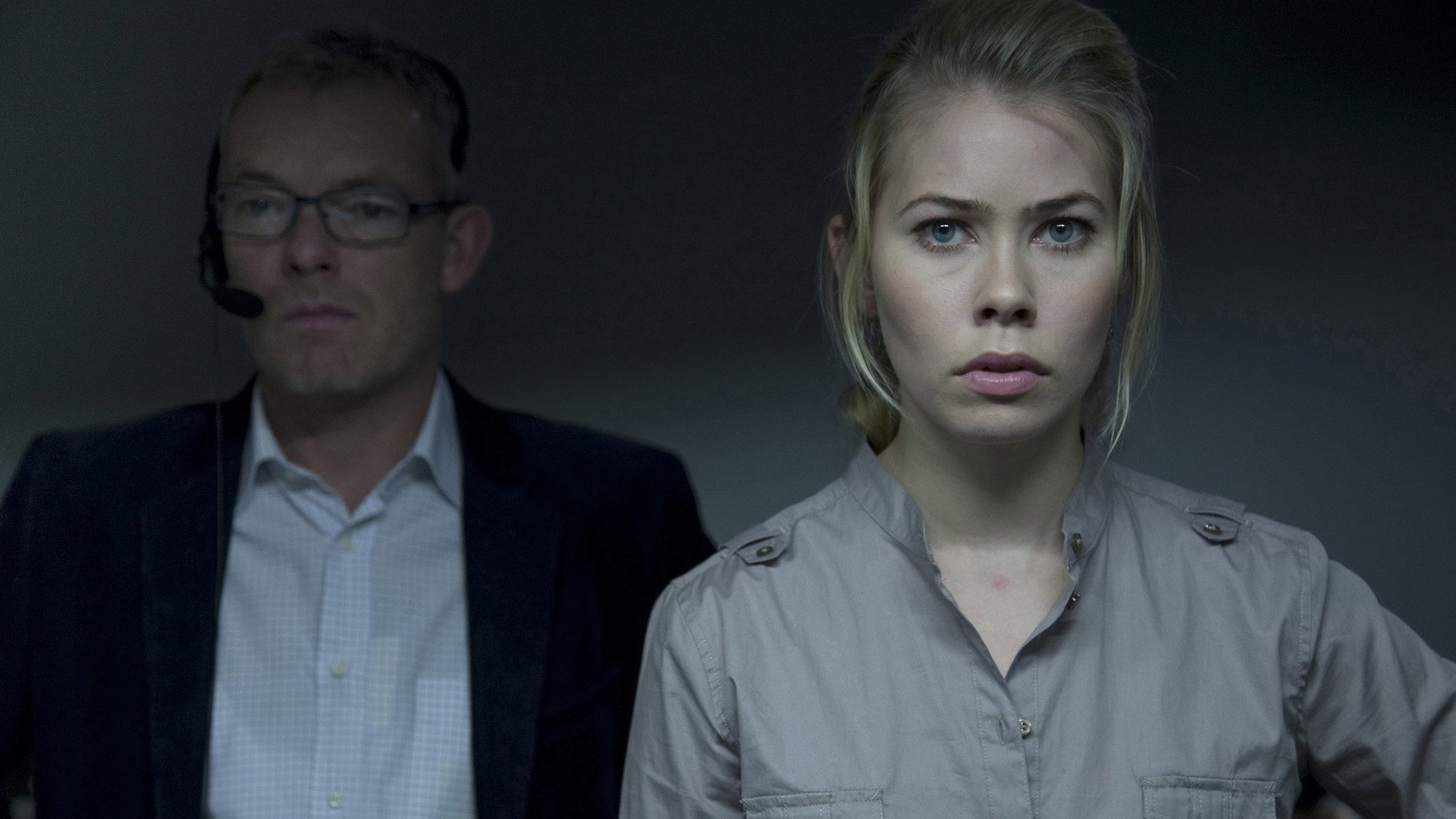
Copenhagen, the last week of a general election. Birgitte Nyborg (Sidse Babett Knudsen) leads a small centre party and is not expected to win. The sitting prime minister, Lars Hesselboe (Søren Spanning), is damaged by a scandal over his expenses, and in a televised debate Nyborg puts down her prepared notes and speaks plainly to the studio. The result leaves her in a position to form Denmark’s first government led by a woman, if she can hold a coalition together with her old mentor Bent Sejrø (Lars Knutzon) at her side. At the TV1 newsroom, anchor Katrine Fønsmark (Birgitte Hjort Sørensen) and her editor Torben Friis (Søren Malling) chase the story. At home, Nyborg’s husband Philip Christensen (Mikael Birkkjær) has agreed to put his own career second.

Fi1m review

Adam Price and Camilla Hammerich’s Danish political drama is as intelligent and as well played as its reputation, with Sidse Babett Knudsen holding the centre of it. It is also tidy: every week a problem, every week a lesson. We recommend it warmly, with that caveat.

Borgen is the nickname for Christiansborg, the palace in Copenhagen where the Danish parliament sits, and the series Adam Price and Camilla Hammerich created treats it as an office block that happens to contain a throne room. Birgitte Nyborg (Sidse Babett Knudsen) leads a small centre party. In the first episode the sitting prime minister, Lars Hesselboe (Søren Spanning), makes a mistake in the last week of the campaign, and Nyborg finds herself able to form a government. She takes the job. The thirty episodes that follow, across three seasons between 2010 and 2013, are about what it costs her, and most of them are as good as the reviews said.

The shape is weekly. Each hour hands Nyborg a problem: a minister who has said the wrong thing, a bill one vote short, a favour owed to Svend Åge Saltum (Ole Thestrup), the leader of the populist right, who plays the plain farmer and is cleverer than his opponents give him credit for. Bent Sejrø (Lars Knutzon), her mentor, sits at the end of the table and tells her what she would rather not hear. By the end of the hour she has found a way through, and it is nearly always a compromise she would have refused at the start. The writers, Price, Jeppe Gjervig Gram, Tobias Lindholm and others, make her sound right when she gives ground and right when she does not.

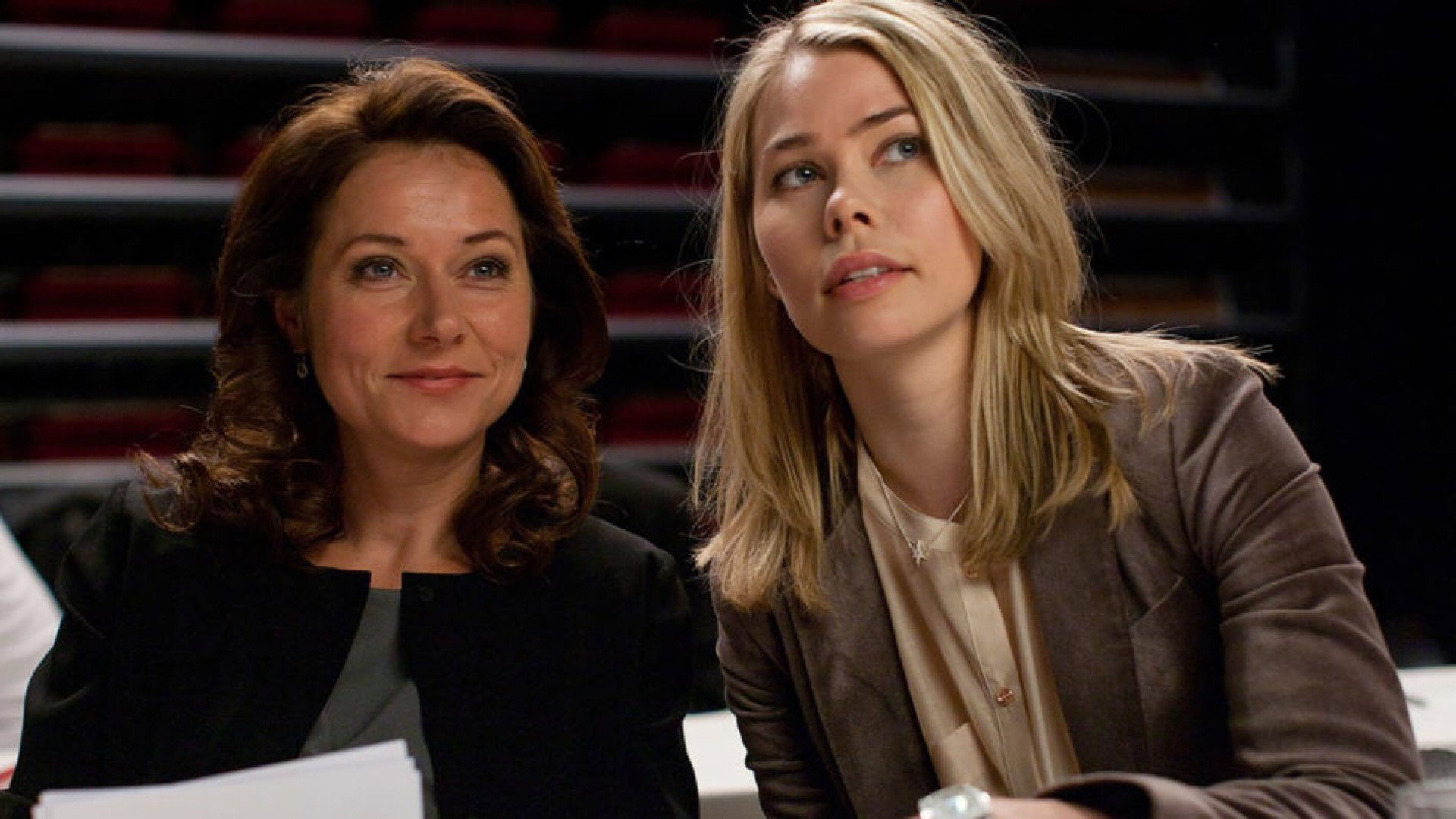
The other half is television. Katrine Fønsmark (Birgitte Hjort Sørensen) reads the news at TV1 under an editor, Torben Friis (Søren Malling), who wants the story tonight, and beside Hanne Holm (Benedikte Hansen), a veteran reporter. Malling is the quietest asset here. He never raises his voice, and he makes the newsroom feel like the building where the real power sits. The editors, a long roster of them, cut between palace and studio so that a decision taken in one becomes a headline in the other before the scene is over.

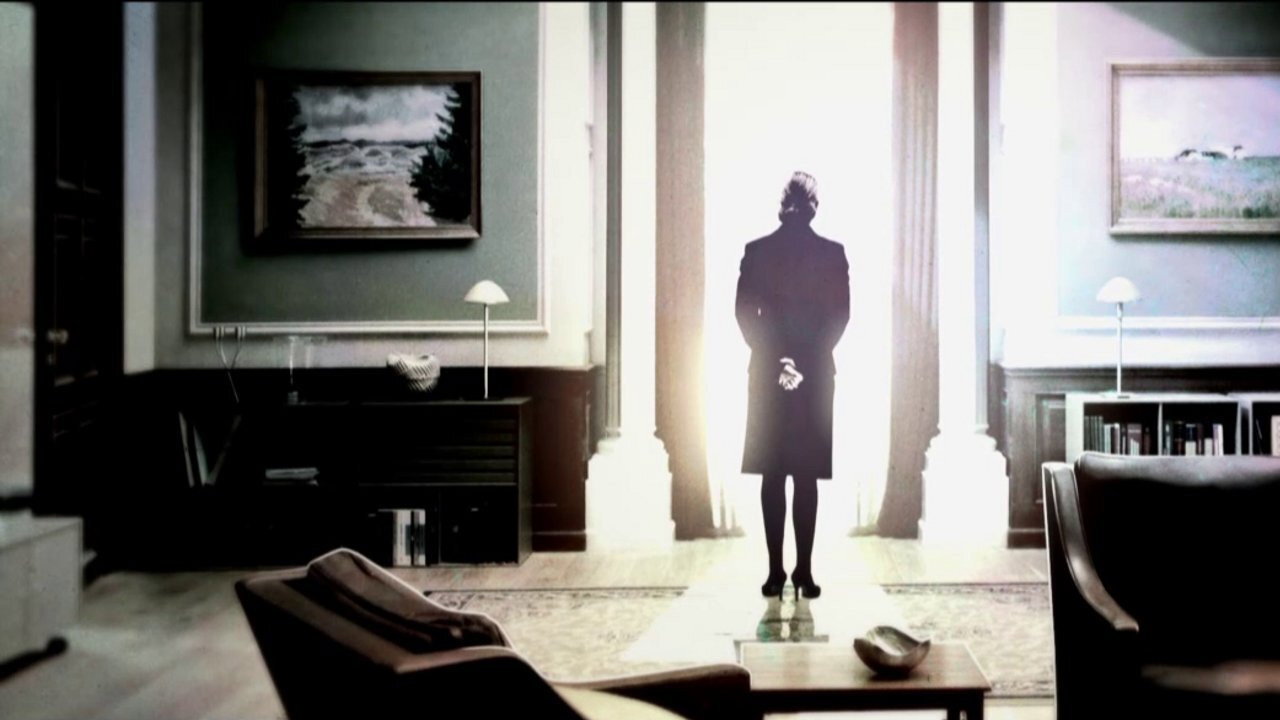
Nine directors share the work, Charlotte Sieling, Søren Kragh-Jacobsen and Jesper W. Nielsen among them, and the look holds across all of them. Søren Gam and Dorte Knirke Madelung give Nyborg an office of pale wood and long tables, and TV1 a glass box in which everyone can watch everyone else fail. The light is Danish winter light, grey and low, and half the important conversations happen in the back of a car at night. Halfdan E’s theme is a short, cold piano figure over a pulse, and the episodes themselves run almost without music, which is the right decision for a series about people talking.

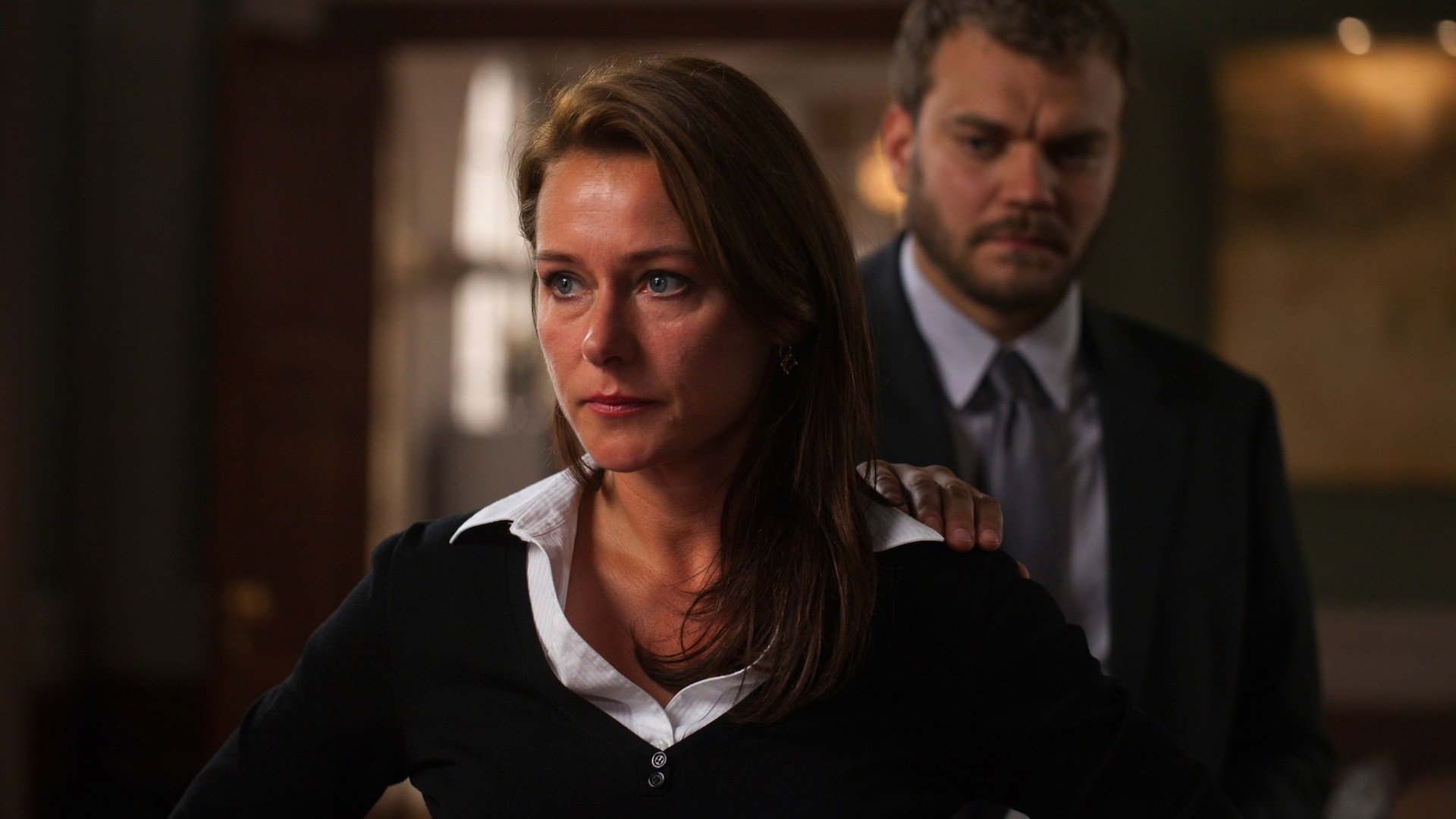
Knudsen holds it together. She plays Nyborg as competent, warm and capable of surprising herself, and the moment in the first episode when she puts down her notes at the televised debate and simply talks moved us more than we were ready for. It was not the speech. It was her face afterwards, as if she had done something she could not take back, and the cut to Philip Christensen (Mikael Birkkjær), her husband, watching at home with their son Magnus (Emil Poulsen), knowing what it would mean for the three of them. Philip has agreed to put his own career second. We will not say how that goes.

The flaw is tidiness. Problems arrive on Monday and are solved by Friday, and the right answer is usually visible; the only question is whether Nyborg can afford it. The opposition, Saltum aside, is a set of positions rather than people. The home scenes are written with the same neatness, and it suits them less, because a marriage does not resolve on a weekly schedule and once or twice the series behaves as though it might. The third season opens with a change we will not describe, brings in Lars Mikkelsen as Søren Ravn, an economist, and takes a few episodes to settle.

The comparison everyone reaches for is The West Wing, and it holds as far as it goes: both series love competent people and want us to love them too. Borgen is colder, and its politics is coalition politics, where nobody wins outright and every victory is on loan. Watch two episodes a night and not more. The problems are meant to be sat with, and the subtitles are quick.

Critical consensus AI synthesised

82
Positive
9
Mixed
0
Negative
0

The reviews are unanimous: every notice we have read is positive, and most critics call Borgen compelling before they call it anything else. The praise gathers around Sidse Babett Knudsen as Birgitte Nyborg, whose prime minister is found sympathetic, principled and, as the series goes on, harder than she started. Critics also credit the writing for making coalition politics watchable, for its interest in women holding power and the double standards they meet, and for asking repeatedly what idealism costs once you are in office. Those who return for the later series report that it loses none of its grip.

The spread is narrow, running from good to very good rather than dividing anyone. Such reservations as exist come from one direction. Den of Geek finds the politics simplified and the episodic structure limiting, and thinks the show is closer to personal drama than to political insight. The Times, warm but cooler than the rest, notices how often it is funny. Nobody dislikes it.

Radio Times
25 May 2022 · 5 stars · Lewis Knight
90*

The critic calls the fourth season a triumphant return for the Danish political drama, highlighting Birgitte Nyborg's evolution into a more ruthless figure amid conflicts over Greenland oil drilling, climate policy, and power versus principles. Praise centers on the strong performances by Sidse Babett Knudsen and Birgitte Hjort Sorensen, the timely themes, and the series' focus on women in power.

Read the full review →
The Guardian
7 January 2012
90*

Borgen is a fantastically compelling and intricate drama about politics, gender, change and power, with great characters. It is the best Danish TV drama since The Killing.

Read the full review →
Evening Standard
18 November 2013 · Nick Curtis
85*

The review of the third and final season praises the series as ridiculously compelling, noting it has lost none of its edge, rich texture, or focus on compromise, the personal-political divide, and strong female characters.

Read the full review →
The Telegraph
20 January 2012 · Clive James
85*

The reviewer finds the Danish political drama highly engaging and far from boring, praising its tight narrative, emotional range, and the winning, nuanced performance of Sidse Babett Knudsen as the liberal, principled politician Birgitte Nyborg.

Read the full review →
IndieWire
4 October 2013 · Aljean Harmetz
80*

The review praises Borgen's return for season 3, emphasizing its blend of political intrigue and psychological depth in following the characters' arcs. It highlights the show's compelling exploration of power dynamics and personal tolls as a standout quality.

Read the full review →
The Independent
5 January 2012 · Gerard Gilbert
80*

The preview highlights Borgen as a compelling political thriller from the makers of The Killing, centering on a trailblazing female prime minister played by Sidse Babett Knudsen, and notes its strong ensemble of female characters and focus on integrity amid coalition politics.

Read the full review →

Cast

If you liked this, try…

The West Wing poster86

The West Wing

1999 · The warmer American cousin: competent people walking fast and talking faster.

The Thick of It poster89

The Thick of It

2005 · British politics as panic and profanity; the same corridors, none of the dignity.

The Killing poster

The Killing

2007 · The Danish series that came first, with a murder instead of a coalition.

Baron Noir poster

Baron Noir

2016 · French party politics played rougher and dirtier, with the idealism mostly gone.

A Hijacking poster

A Hijacking

2012 · Tobias Lindholm’s film about a negotiation, patient and unsentimental in the same way.