Emma Moran gives everyone in London a superpower, withholds one from her heroine, and gets eight funny, filthy episodes out of the joke, then eight more. Mairéad Tyers carries it; the stories underneath her are thinner than she deserves.
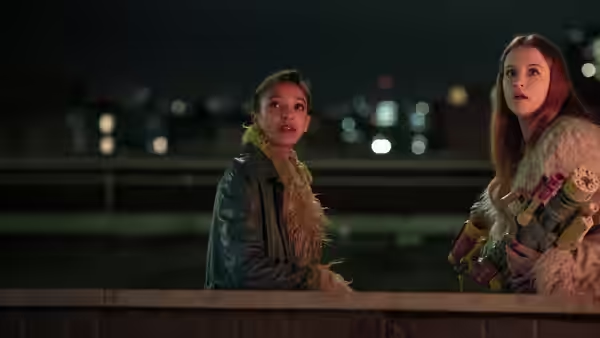
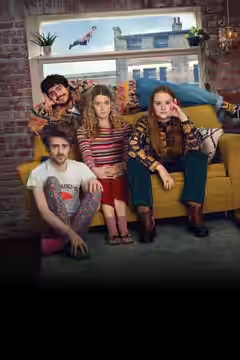
Emma Moran’s idea is a good one and she does not waste it. In her London everyone has a superpower, and powers are about as much use as a driving licence: handy, occasionally embarrassing, nothing to build a life on. Jen is the one person on her street without one, and Extraordinary is a flatshare comedy about a woman who has decided this is the reason she is unhappy. It is rude, quick and warmer than it pretends to be. We enjoyed both runs of eight episodes, the first from 25 January 2023 and the second from 6 March 2024, and our one complaint is that the plots do not always hold up the jokes.
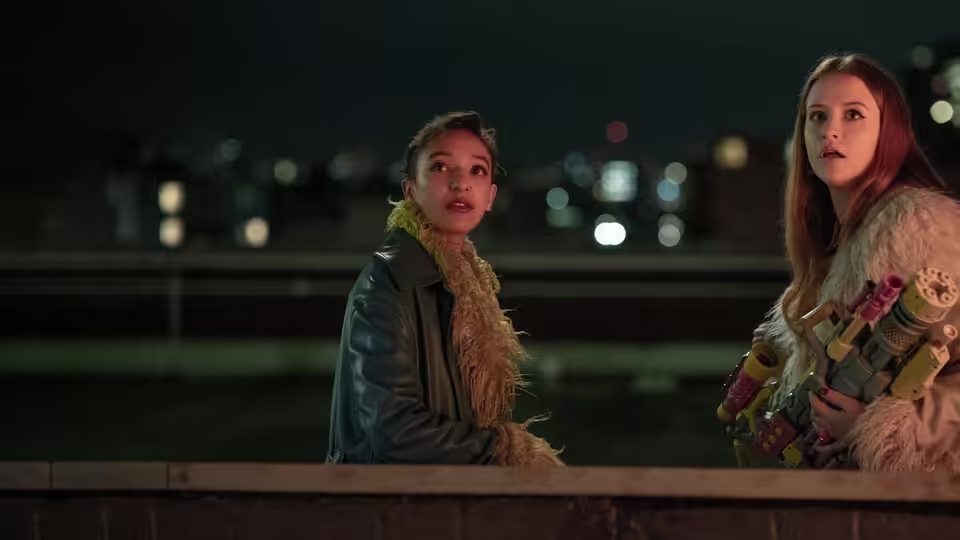
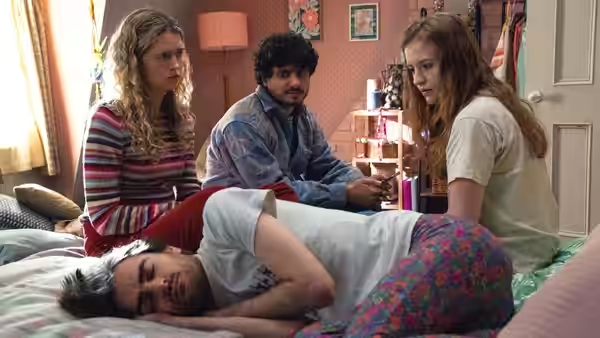
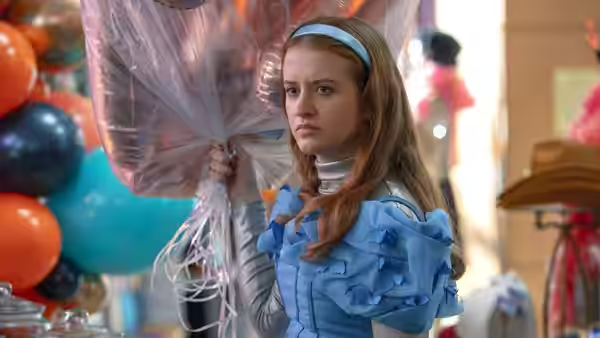
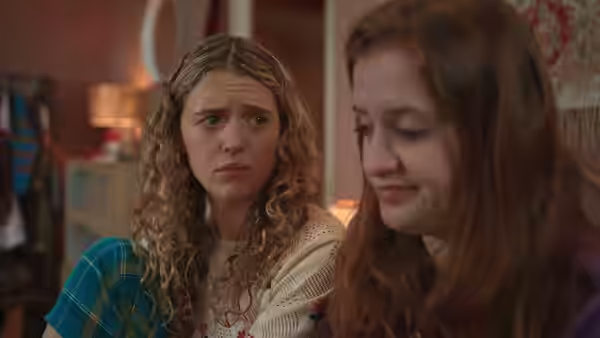
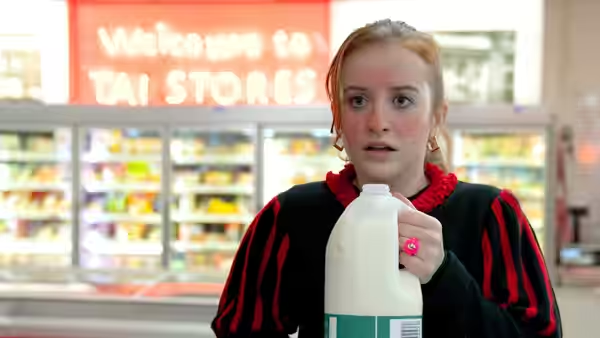
Mairéad Tyers is the reason it works. Jen is vain, broke and unkind to the people who put up with her, and Tyers plays her without once asking to be forgiven. She lies to her mother, sleeps with a man who can fly (Ned Porteous’s Luke) and then follows him around, and treats Carrie as a free counselling service. Tyers lets you see the fright under all of it, usually in the half-second after a joke, and never pushes it. It is a lead performance that trusts the audience to work the character out.
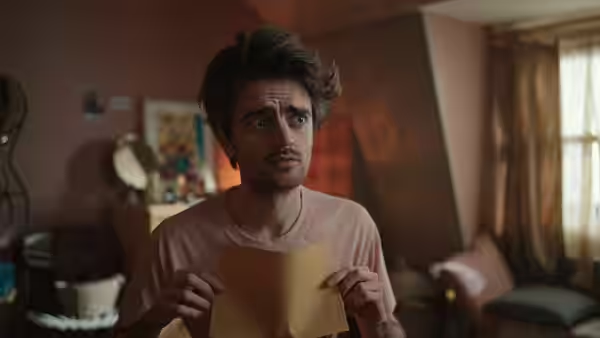
Sofia Oxenham has the sadder part and does more with less. Carrie’s gift is that the dead can speak through her, and the show’s first good scene is her at work, standing in a meeting room while a dead man uses her mouth to argue about his will and his relatives talk across her. It was played for laughs and we found we were not laughing. None of the relatives says thank you to her. That scene told us what the series was about, which is people being used, more clearly than anything Jen says. Bilal Hasna makes Kash’s dream of a crime-fighting crew pathetic and touching in equal parts, and Luke Rollason, as the man who was recently a cat, does the kind of physical comedy that would be unbearable if he were not so precise about it.
There are four cinematographers credited across the two series, Luke Bryant, Dan Stafford Clark, Álvaro Gutiérrez and Carlos Catalán, and three directors, Nadira Amrani, Toby MacDonald and Jennifer Sheridan, and the look stays consistent: bright, flat, the kitchen of a rented flat with nothing hidden in shadow. The powers happen cheaply and at the edge of the frame while the conversation carries on, which is the right choice for the joke and for the budget. Galina Chakarova, Adam Moss, Carly Brown and Dan Crinnion cut it fast enough that a weak gag is gone before you have time to mind. Boys Noize’s music is electronic and insistent and gives the whole thing a pulse it would not otherwise have.
The weakness is the stories. In the first series the business with the clinic drifts in and out as the writers need it, and Siobhán McSweeney, as Jen’s mother, is given one note and asked to hit it until the last episode. When Moran wants to say something about accepting yourself, she has a character say it, and the show gets smaller every time. The second series is steadier. It gives Rollason a proper story, lets Carrie want things of her own, and finds more for Safia Oakley-Green’s Andy to do. Most critics preferred it to the first, and so did we.
Set against Misfits, which gave young offenders powers and let them be awful, this is gentler and more interested in friendship than in sex, though there is plenty of both. It is a sitcom first and a fantasy a distant second, and it is better for knowing that.
Watch it two episodes at a time, with someone who will not flinch at the language. The jokes are the point. The lessons you can ignore, and the show mostly lets you.