Series review

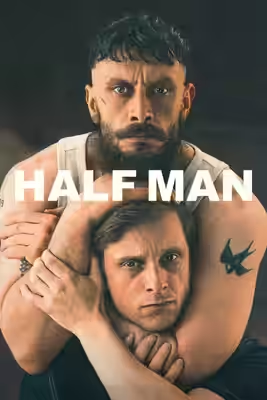
Half Man

2026 · Directed by Alexandra Brodski, Eshref Reybrouck · Series · 15

In a sentenceSix episodes with two men whose affection is almost as worrying as their violence

Drama

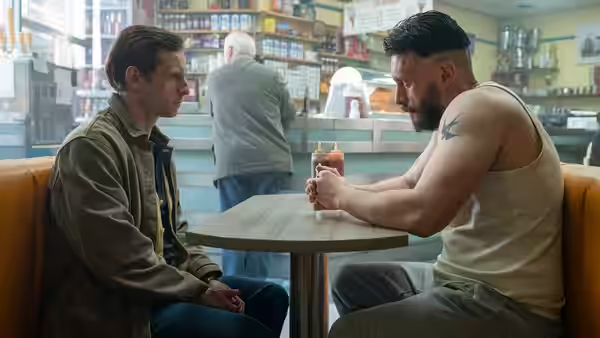
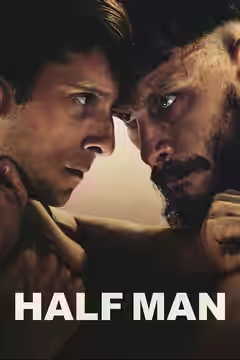
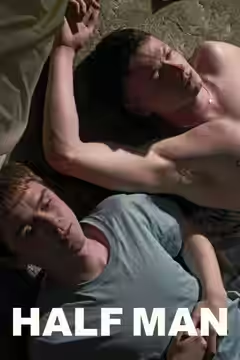
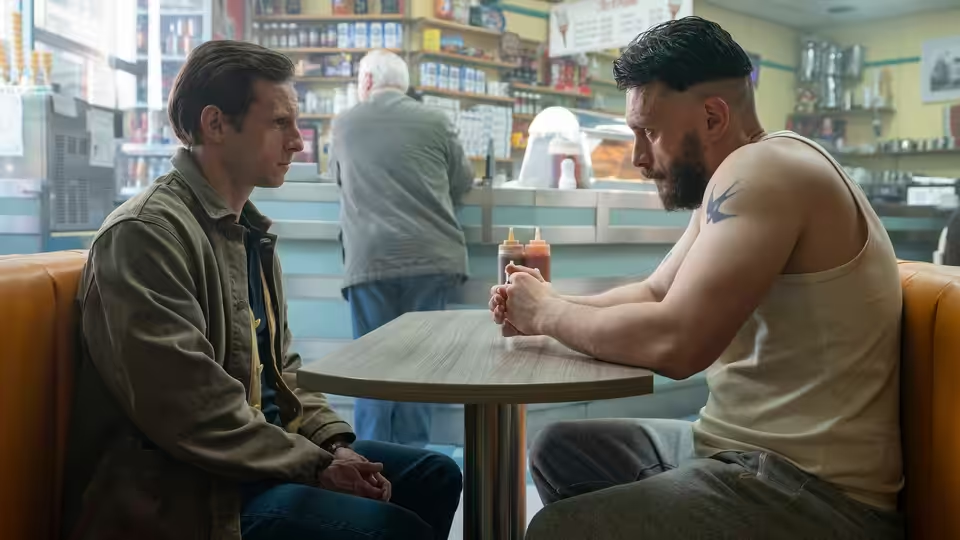
Niall (Jamie Bell) and Ruben (Richard Gadd) share a bond that combines loyalty, affection and violence. Their relationship stretches across decades, with the series moving between periods of their lives to examine how they become entangled with one another. As younger men, they confront questions of attraction and masculinity that continue to shape their connection. The story follows a dependence that neither can easily leave behind, and the harm that comes with remaining close. Gadd also writes the six-part drama, with Neve McIntosh appearing as Lori.

Plays from YouTube when you press play; nothing loads from them until then.

Fi1m review

Jamie Bell and Richard Gadd hold our attention through a difficult relationship drama. But Half Man repeats its suffering and explains its people too often; six episodes leave less room for discovery than they should.

Half Man is gripping in stretches and exhausting across its six episodes, with performances that deserve a less repetitive script. Richard Gadd writes about two men whose loyalty keeps surviving behaviour that ought to end it. He is interested in how affection, attraction and aggression become difficult to separate, and in the excuses people make for someone they cannot relinquish. The explanations become more insistent as the series goes on.

Jamie Bell plays Niall, while Gadd takes Ruben, and their performances make this destructive attachment worth following. Neither man can be settled into a convenient category and left there. Our sympathies shift because the writing allows hurt and cruelty to coexist, and the actors resist making either seem like the whole person. Bell and Gadd sustain an interest in these men that the increasingly repetitive writing puts under considerable strain.

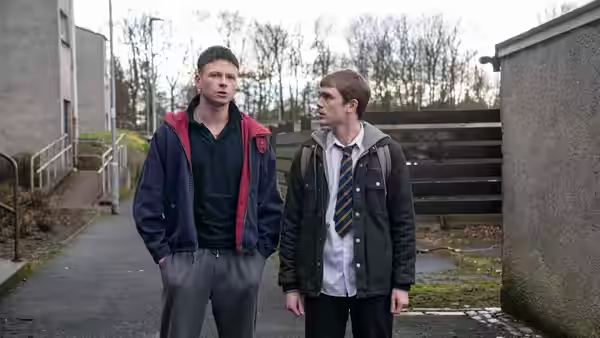
The early episodes are particularly good at leaving attraction uncertain. Affection can be sincere without being safe, and the series allows the younger men’s feelings to remain difficult to name. We felt uneasy watching that closeness become inseparable from the threat of violence. Their loyalty makes it harder to dismiss the relationship, even when the behaviour gives us ample reason to wish they would keep their distance.

Across the changing timelines, however, Gadd becomes less willing to let behaviour speak for itself. Ben McKinstrie’s editing brings different periods of the relationship into view, giving us opportunities to revise our sympathies. The script too often uses those opportunities to confirm what we already know, explaining the men’s damage after their conduct has made it clear. Later stretches need more than another demonstration that neither can manage this attachment without causing harm.

Directors Alexandra Brodski and Eshref Reybrouck sustain the tension, with little respite from the pair’s unhappiness. Carlos Catalán’s cinematography and Emer O’Sullivan’s production design cannot compensate for how thinly some of the surrounding people are written. The series needs those people to have lives that matter when Niall and Ruben are not demanding attention. Underwritten supporting characters are especially costly in a drama that depends on our understanding more than one person’s experience.

Evgueni Galperine and Sacha Galperine provide the music, but the series gets most of its pressure from Gadd’s writing. Trauma accumulates, and there is seldom enough relief for one injury to feel different from the next. We were worn out by the repeated violence, and eventually found ourselves attending less closely to suffering that ought to have mattered. A little variation would have made the difficult passages harder to dismiss.

The handling of Niall’s sexuality is less assured than the performances, too. A drama so concerned with masculinity needs to be careful about making repression explain too much. Here, it risks treating a complicated man’s desires as further evidence of his damage, rather than allowing them an existence beyond it. The early treatment of attraction leaves more room for doubt, and the series loses something when it becomes determined to explain.

A relationship drama that asks us to stay with unpleasant behaviour needs to keep finding something worth our attention in the people responsible. Half Man does this intermittently, and its actors make the most of those passages. There is enough here for viewers interested in male intimacy and its failures, provided they can tolerate the insistence. It is not a sensible choice for an evening that already needs rescuing.
Critical consensus AI synthesised

70
Positive
4
Mixed
2
Negative
1

Most critics find Half Man a compelling but punishing study of masculinity, repression and destructive attachment, with praise clustering around the performances across its timelines. The spread is wide: enthusiasm for its complicated central relationship sits alongside complaints that the surrounding characters and plotting need more work. The sharpest disagreement concerns the writing. Digital Spy praises its layered treatment of trauma and identity without lecturing, while Vulture finds that the ambiguity of the early episodes gives way to formula and excessive explanation. NME takes the opposite view of its progression, finding the later episodes stronger in their character dynamics. The Hollywood Reporter offers the clearest dissent, admiring the acting but finding the accumulated trauma monotonous and the storytelling short of freshness. The consensus is broadly favourable, though the reviews differ over whether the sustained bleakness deepens the drama or simply makes it exhausting.

Variety
21 April 2026 · Aramide Tinubu
80*

The critic calls it an excellent but difficult watch that explores the brittle bonds of male friendship and violence. She singles out Gadd's ability to write complex characters who shift perspective and the emotionally shattering final episode for praise.

Read the full review →
Vulture
23 April 2026
65*

The critic finds the early episodes compelling in their ambiguous, layered exploration of attraction, masculinity, and homoerotic tension between the young protagonists but feels the series grows increasingly didactic, formulaic, and overly explanatory in later timelines, ultimately squandering its initial potential.

Read the full review →
Radio Times
24 April 2026 · ★★★ · Gareth McLean
60

Gadd’s difficult second album after Baby Reindeer charts a toxic, tragic 30-year relationship between de facto stepbrothers locked in destructive co-dependency; it has much to admire in its study of masculinity and repressed love but is half-baked with underwritten characters and plot holes.

Read the full review →
The Hollywood Reporter
21 April 2026 · Daniel Fienberg
40*

The critic describes it as a deeply felt but monotonous exercise in trauma that is more exhausting than enjoyable. He praises the performances and grip on toxic masculinity but singles out the unrelenting emotional drain, lack of narrative freshness, and dour tone for complaint.

Read the full review →
Empire
22 April 2026 · Sophie Butcher

The series tracks the toxically codependent dynamic of two half-brothers over decades, with strong performances but a story that devolves into a bleak-fest of trauma, violence and repression on modern masculinity.

Read the full review →
Digital Spy
21 April 2026 · ★★★★★ · Laura Jane Turner
100

The critic hails the series as breathtaking and appointment television, praising its nuanced, layered portrayal of a toxic yet loyal bond between two flawed men, strong performances across timelines, and refusal to lecture while exploring trauma, identity, and masculinity.

Read the full review →

Cast

Stills

If you liked this, try…

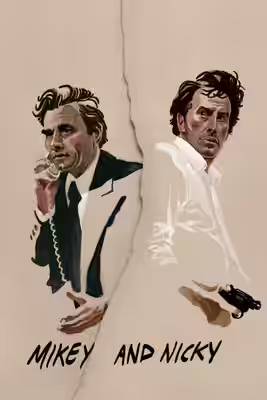
Mikey and Nicky poster

Mikey and Nicky

1976 · Male friendship and resentment, with old grievances making every small exchange feel dangerous.

Happy Together poster

Happy Together

1997 · A destructive relationship between men, with more room for tenderness and ordinary frustration.

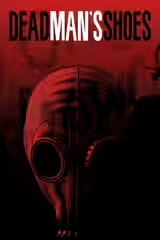
Dead Man's Shoes poster

Dead Man's Shoes

2004 · Brotherly loyalty and violence, compressed into a story that gives cruelty lasting consequences.

The Return poster

The Return

2003 · A Russian family drama that makes male authority frightening without explaining every feeling.

Brothers poster

Brothers

2004 · This Danish drama follows trauma into family life, where affection offers little protection.