Julia Davis’s comedy gets its laughs from carefully chosen, deeply unkind language. Not every gag earns the discomfort, but enough of the writing works to recommend it to those who enjoy feeling slightly implicated.
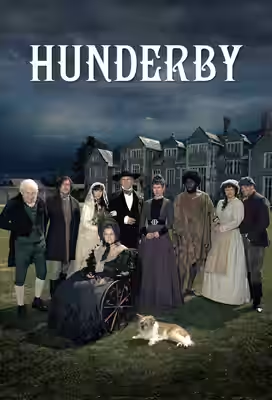
Hunderby is good, uneven comedy, worth trying if verbal nastiness is your sort of entertainment. Julia Davis, its creator and one of its writers, gets more out of the exact wording of a joke than out of simply making it rude. That keeps the programme funny when it might have settled for being unpleasant. The misses are noticeable, though, and anyone unconvinced by this kind of humour will find little comfort in the care with which it is delivered.
Davis shares the writing credit with Barunka O’Shaughnessy, and their strongest asset is an ear for a phrase that goes a little further than we expect. We laughed at the language and felt uncomfortable about laughing. The precision does it: the wording is too carefully chosen to let us dismiss the offence as a passing bit of silliness. There is pleasure in hearing a joke so exactly shaped, even when its success makes us feel less than charitable towards ourselves.
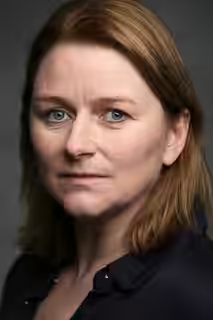
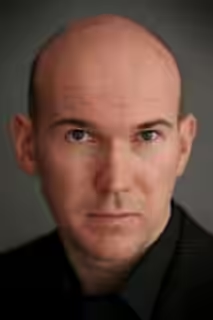
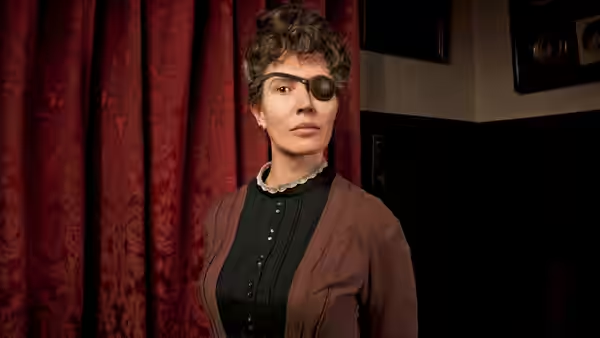
Davis also plays Dorothy, with Alexandra Roach as Helene and Alex Macqueen as Edmund. Having the creator among the cast suits comedy in which delivery matters this much: these lines need to be spoken, not merely collected as proof of the writer’s cheek. The strongest moments make their point without seeming to wait for congratulations. We are less persuaded whenever the effort to be outrageous becomes more noticeable than the joke, and the programme does sometimes seem to be checking that we have noticed.
Tony Dow directs, and the useful measure of the direction here is how much room it leaves for language and story to work together. There is a continuing story beneath the jokes, which gives them something to build upon and gives us a reason to stay through a weaker passage. That helps keep Hunderby from exhausting itself as a collection of unpleasant remarks. At 25 minutes an episode, it also has a sensible length for comedy that risks wearing us down.
The problem is that precision cannot rescue every gag. Some of the humour earns a wince without earning a laugh, and those moments make the programme feel rather more satisfied with itself than we are. Its unpleasantness is part of the appeal, and we have no quarrel with that. A failed joke is harder to forgive when it seems to expect credit just for making everyone feel awkward.
By the standards of comedy built to make us squirm, Hunderby has enough control of its language to justify the discomfort. It does not need every joke to work, but its weaker stretches make concentrated exposure a less attractive proposition. One episode at a time seems a sensible arrangement. Try it with someone who can share a laugh without insisting that everyone involved has behaved well.