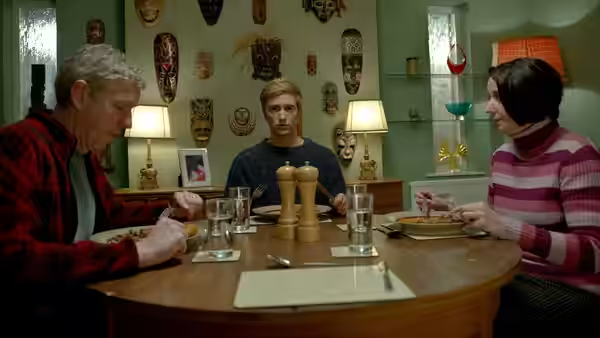
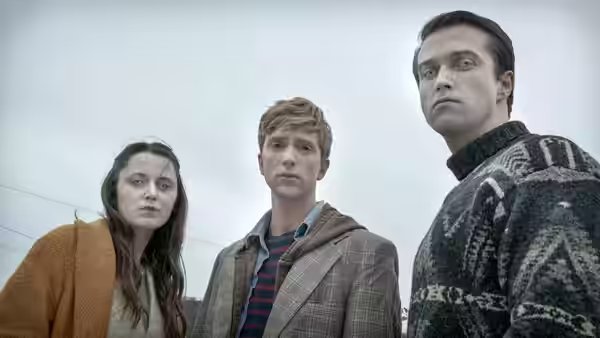
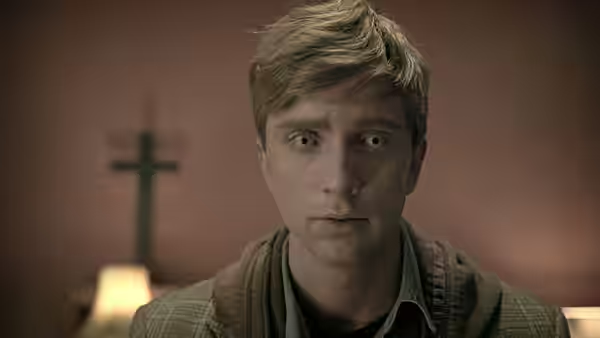
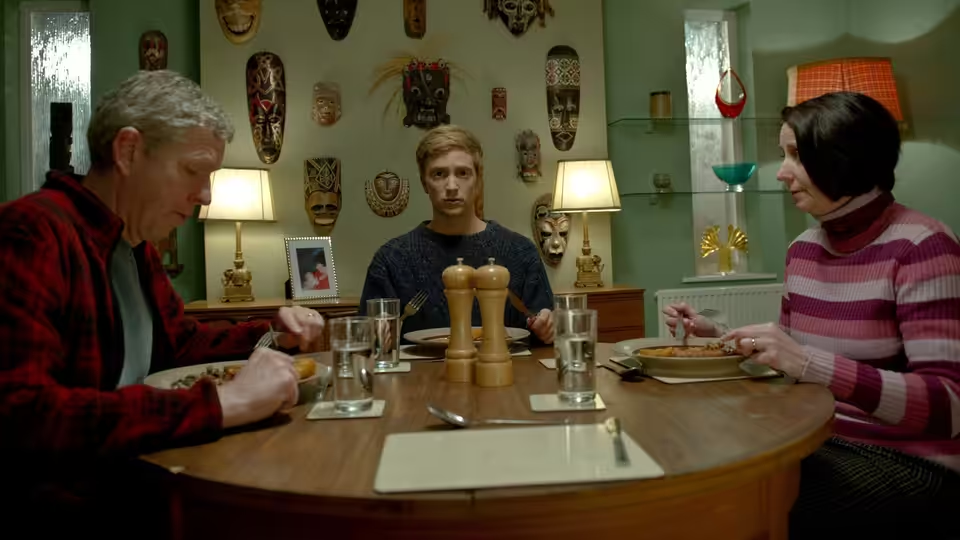
Kieren Walker (Luke Newberry) sits between his parents at the family dining table
Series review

In the Flesh

2013 · Created by Dominic Mitchell · Series · 53m · CHVRS 14+

In a sentenceComing back from the dead is awkward enough without everyone having opinions about it

Kieren Walker (Luke Newberry) faces a second chance among people still dealing with the devastation caused by the undead. He wants to reconnect, but guilt and prejudice complicate the attempt to resume an ordinary life. Jem Walker (Harriet Cains) and Bill Macy (Steve Evets) are among those caught in the aftermath. Encounters between people trying to move on bring old hurt into the present, while questions of sexuality, suicide and acceptance press into everyday life. The threat of horror remains, but getting through a conversation can present difficulties of its own.

Plays from YouTube when you press play; nothing loads from them until then.

Fi1m review

Dominic Mitchell’s In the Flesh finds warmth and discomfort in the undead’s attempts to reconnect. The performances make it worth watching, though its short first series takes on more themes than it can properly develop.

Dominic Mitchell’s In the Flesh is a good, affecting zombie drama with a tendency to explain things its actors have already made clear. It considers how people might live together after the immediate horror, when there is time to feel guilty, resentful or ashamed. The ordinary business of reconnecting gets proper attention, rather than serving as a pause before the next fright. Its patience with people is the reason to watch, even when its eagerness to discuss every difficult subject makes the storytelling feel hurried.

Luke Newberry gives Kieren Walker a vulnerability that makes this approach work, and Harriet Cains brings a welcome warmth to Jem Walker. Their scenes together have the discomfort of people for whom being close does not make speaking easy. We were moved by their awkward efforts to reconnect; the strain in ordinary exchanges makes the damage feel personal. Neither performance needs a speech about second chances to make us understand why another chance might be difficult to accept.

Dominic Mitchell takes sexuality, suicide and trauma seriously, and is prepared to let a zombie story be sad without apologising for it. That makes the undead point of view worth following: their experience does not end when somebody else stops being frightened of them. The series is particularly persuasive about the effort involved in ordinary contact after devastation. It can also be funny about the gap between accepting someone in principle and having to deal with them in person.

Tony Slater Ling’s cinematography and Sami Khan’s production design help the everyday world remain recognisable around the undead, so the theatrical make-up has a setting in which it can unsettle. We can attend to the people beneath it without forgetting why others might recoil. This grounding is important when the horror threatens to overwhelm the smaller exchanges. The two kinds of drama do not always fit together, but the attention to ordinary life gives the frightening material something worth disturbing.

The first series has three episodes, which is little room for everything being attempted. Jamie Pearson and Colin Fair’s editing faces the problem of finding space for these subjects while keeping the story moving, and some changes of emphasis feel abrupt. The allegory is also too plainly stated at times: once the awkwardness and prejudice have registered, explaining their wider meaning adds little. There are stretches when we want the programme to stay with an exchange rather than hurry towards another concern, and others when it lingers over a point we understood.

Edmund Butt’s music supports the quieter drama, though the performances need little assistance. The programme is less convincing when the music, the writing and the performances all seem to be asking for the same response at once. Still, its heavy-handedness comes from taking hurt seriously, and that is preferable to treating the undead as disposable targets. Luke Newberry and Harriet Cains give the sentiment enough warmth to stop the whole thing becoming a lecture.

As a zombie story, In the Flesh earns its place by spending time with the people such stories usually keep at a distance. Its flaws are real, especially when a difficult subject gets raised and then has to compete with several others. Give it time for Luke Newberry and Harriet Cains, and allow for a programme that sometimes talks over its own good actors.

Critical consensus AI synthesised

71
Positive
4
Mixed
1
Negative
1

Most critics respond warmly to In the Flesh, praising its thoughtful use of zombie horror to explore trauma, prejudice and the difficulty of reconnecting with other people. The praise centres on the writing’s attention to everyday awkwardness and its willingness to consider devastation from the undead’s point of view. Several reviews find the series emotionally affecting, with its treatment of guilt, acceptance and second chances giving familiar horror material a more personal focus.

The reservations concern how much the short run attempts and how comfortably its social themes sit alongside the horror. Some critics find the themes overcrowded or the storylines insufficiently resolved. The spread is wide: Den of Geek is particularly enthusiastic about the opening episode’s blend of social realism and satire, while Variety finds the allegory heavy-handed and the pace sluggish. Digital Spy’s mixed assessment of the finale still credits Harriet Cains and Luke Newberry with warmth and strength together.

The Guardian
22 January 2015 · David Renshaw
85*

Renshaw finds the series thrillingly original, intelligent and emotionally affecting. He particularly praises its use of zombiehood to explore teenage sexuality, suicide and angst with insight and heart.

Read the full review →
IndieWire
6 June 2013 · Alison Willmore
75*

Willmore finds the miniseries an intelligent, introspective expansion of the zombie genre, though it tries to handle too many themes in its limited runtime. She especially praises its grounded details and its exploration of trauma from the undead’s point of view.

Read the full review →
The AV Club
7 June 2013 · Genevieve Valentine
75*

The critic finds the series a thoughtful, bittersweet exploration of second chances, though its nuances sometimes falter against its horror elements. She praises its attentive portrayal of the awkward, everyday efforts people make to reconnect after devastation.

Read the full review →
Variety
5 June 2013 · Brian Lowry
40*

Lowry finds the miniseries earnest and heavy-handed, with a promising premise that too often shuffles along. He praises the zombies’ theatrical makeup but says the story’s social allegory is too on the nose.

Read the full review →
Den of Geek
17 March 2013 · Louisa Mellor
95*

Mellor calls the first episode brilliant, praising its tense, affecting treatment of guilt, prejudice and acceptance. She especially applauds how the show blends zombie horror with social realism and satire.

Read the full review →
Digital Spy
31 March 2013 · ★★★ · Morgan Jeffery
60

The critic finds the finale powerful but incomplete, and says the short run leaves too many storylines unresolved. Harriet Cains and Luke Newberry are singled out for the warmth and strength of their performances together.

Read the full review →

Straight answers AI written, from our review

Is In the Flesh worth watching?
In the Flesh is worth watching for its affecting performances and attention to life after horror; we score it 78. We recommend it most to viewers interested in guilt, prejudice and awkward family conversations, though the short first series takes on more subjects than it can develop and sometimes explains what its actors already make clear.
How long is In the Flesh, and what is it rated?
In the Flesh has episodes of about 53m and is rated 14+ by the CHVRS in Canada. It is a drama series.
Where can I watch In the Flesh in Canada?
In the Flesh is streaming on AMC+ and Amazon Prime Video in Canada. Availability is checked daily; the links above go straight to each service.
How violent or frightening is In the Flesh, and is it suitable for children?
In the Flesh carries a UK 18 certificate, so we would not recommend it for children, despite its contrasting US TV-14 rating. Frightening undead imagery sits alongside serious treatment of suicide, sexuality and trauma; its emphasis on ordinary conversations does not make it gentle viewing, though we cannot give a precise account of its violence.
How does In the Flesh compare to The Returned?
In the Flesh offers warmth and uncomfortable conversations, while The Returned builds dread around the dead coming home to a French mountain town. We judge the opening run of The Returned more successful, though its second run disappoints; In the Flesh suits viewers who prefer an affecting family drama, despite its tendency to spell out its themes.
What should I watch after In the Flesh?
After In the Flesh, try The Returned (2012, Fi1m 85): Another community struggles with grief when its dead come home. Then Let the Right One In (2008, Fi1m 88): Loneliness and tentative affection give this wintry vampire story its force; and Thelma (2017, Fi1m 85): Sexual repression and supernatural dread meet in another sensitive outsider story.

Cast

If you liked this, try…

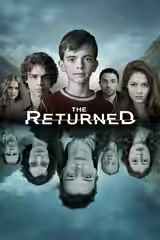
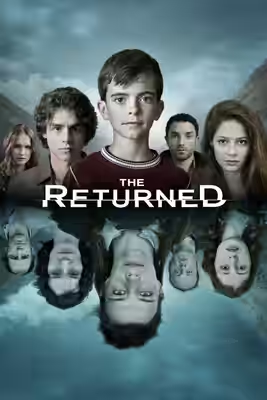
  1. The Returned (2012, Fi1m 85)Another community struggles with grief when its dead come home.

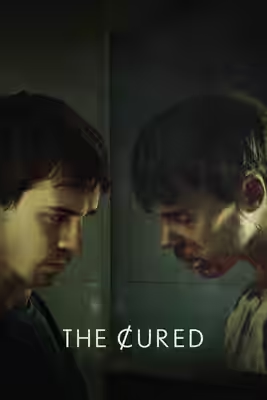
  2. The Cured (2017) · not reviewed yetRecovered zombies face a society considerably less forgiving than its medicine.

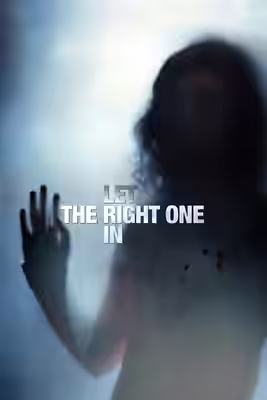
  3. Let the Right One In (2008, Fi1m 88)Loneliness and tentative affection give this wintry vampire story its force.

  4. Dead of Night (1974) · not reviewed yetA soldier’s homecoming turns family denial into grim, intimate horror.

  5. Thelma (2017, Fi1m 85)Sexual repression and supernatural dread meet in another sensitive outsider story.

Free account

Know what to watch tonight

Two lists that know where things are streaming, collections you can share, your own score beside ours, and Discover that remembers what you have seen.

  • Want to see, sorted by what is streaming now
  • Seen, with your score out of ten
  • No adverts, ever