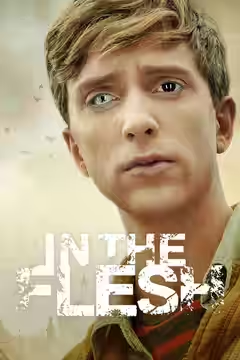
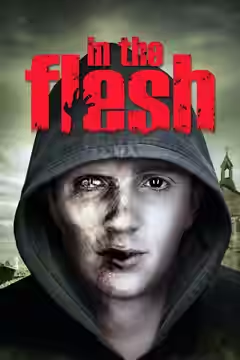
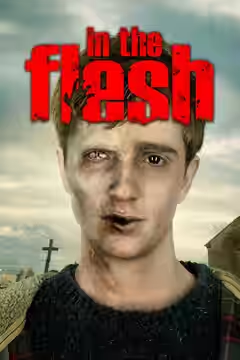
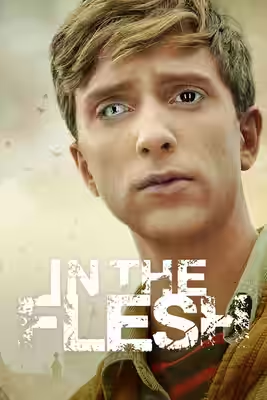
Dominic Mitchell’s In the Flesh finds warmth and discomfort in the undead’s attempts to reconnect. The performances make it worth watching, though its short first series takes on more themes than it can properly develop.
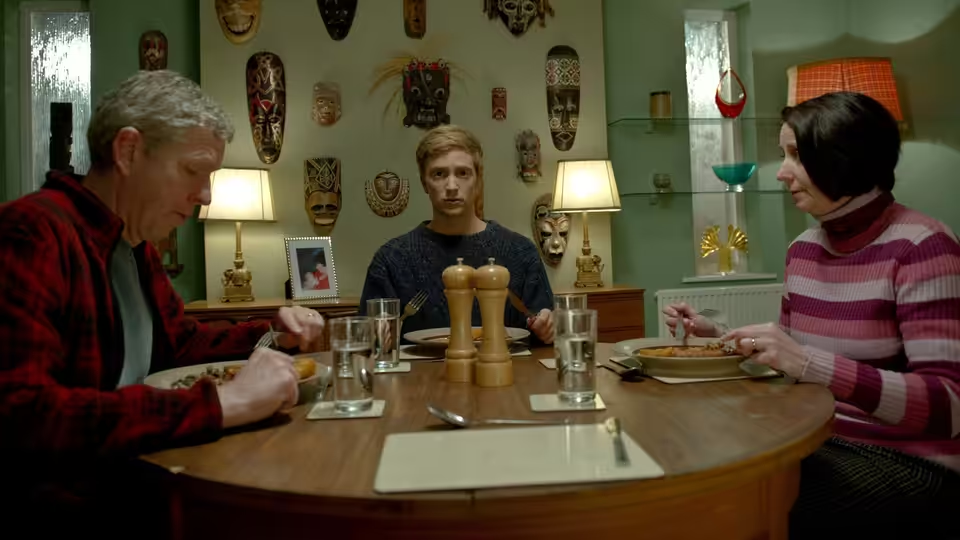
Dominic Mitchell’s In the Flesh is a good, affecting zombie drama with a tendency to explain things its actors have already made clear. It considers how people might live together after the immediate horror, when there is time to feel guilty, resentful or ashamed. The ordinary business of reconnecting gets proper attention, rather than serving as a pause before the next fright. Its patience with people is the reason to watch, even when its eagerness to discuss every difficult subject makes the storytelling feel hurried.
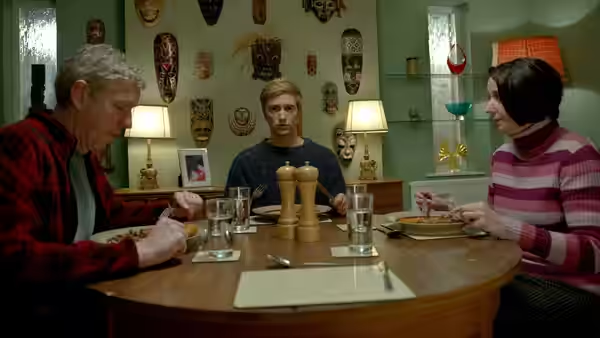
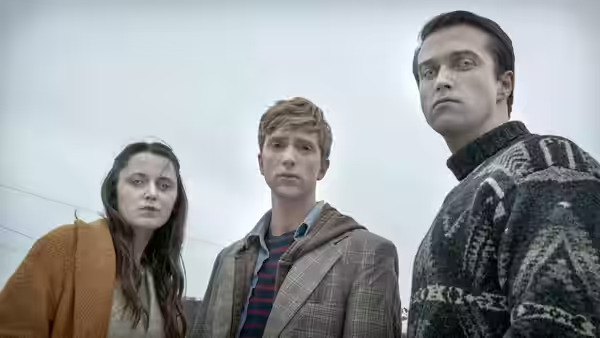
Luke Newberry gives Kieren Walker a vulnerability that makes this approach work, and Harriet Cains brings a welcome warmth to Jem Walker. Their scenes together have the discomfort of people for whom being close does not make speaking easy. We were moved by their awkward efforts to reconnect; the strain in ordinary exchanges makes the damage feel personal. Neither performance needs a speech about second chances to make us understand why another chance might be difficult to accept.
Dominic Mitchell takes sexuality, suicide and trauma seriously, and is prepared to let a zombie story be sad without apologising for it. That makes the undead point of view worth following: their experience does not end when somebody else stops being frightened of them. The series is particularly persuasive about the effort involved in ordinary contact after devastation. It can also be funny about the gap between accepting someone in principle and having to deal with them in person.
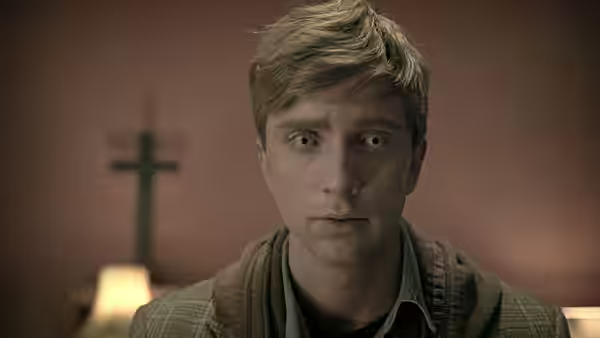
Tony Slater Ling’s cinematography and Sami Khan’s production design help the everyday world remain recognisable around the undead, so the theatrical make-up has a setting in which it can unsettle. We can attend to the people beneath it without forgetting why others might recoil. This grounding is important when the horror threatens to overwhelm the smaller exchanges. The two kinds of drama do not always fit together, but the attention to ordinary life gives the frightening material something worth disturbing.
The first series has three episodes, which is little room for everything being attempted. Jamie Pearson and Colin Fair’s editing faces the problem of finding space for these subjects while keeping the story moving, and some changes of emphasis feel abrupt. The allegory is also too plainly stated at times: once the awkwardness and prejudice have registered, explaining their wider meaning adds little. There are stretches when we want the programme to stay with an exchange rather than hurry towards another concern, and others when it lingers over a point we understood.
Edmund Butt’s music supports the quieter drama, though the performances need little assistance. The programme is less convincing when the music, the writing and the performances all seem to be asking for the same response at once. Still, its heavy-handedness comes from taking hurt seriously, and that is preferable to treating the undead as disposable targets. Luke Newberry and Harriet Cains give the sentiment enough warmth to stop the whole thing becoming a lecture.
As a zombie story, In the Flesh earns its place by spending time with the people such stories usually keep at a distance. Its flaws are real, especially when a difficult subject gets raised and then has to compete with several others. Give it time for Luke Newberry and Harriet Cains, and allow for a programme that sometimes talks over its own good actors.