Charlie Covell’s modern Greek myths begin with real swagger, and Jeff Goldblum’s vain, frightened Zeus is a pleasure to watch. Then eight episodes of plot arrive at once, and by the end the series is explaining its prophecy rather than enjoying it.
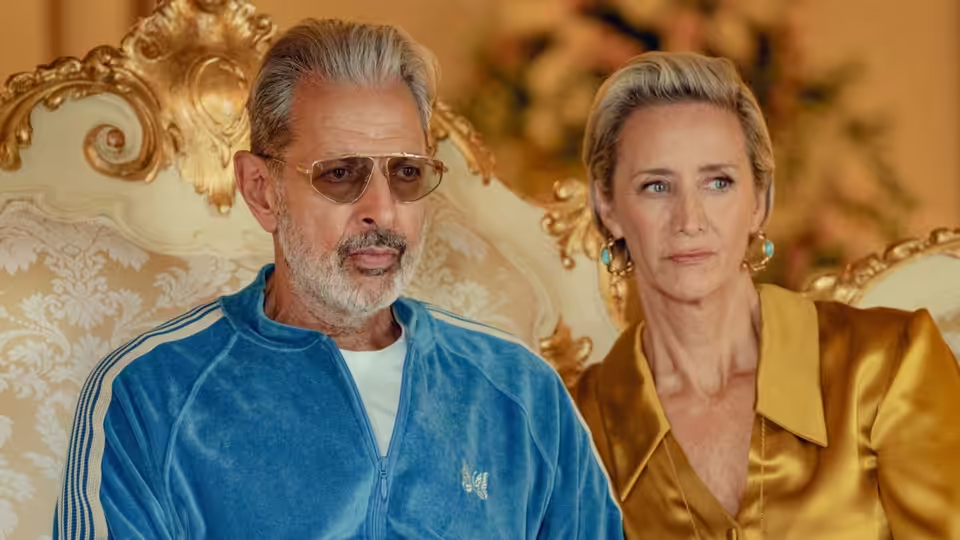
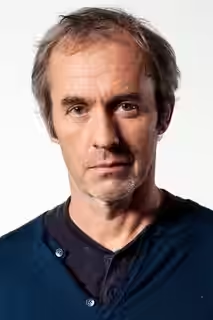
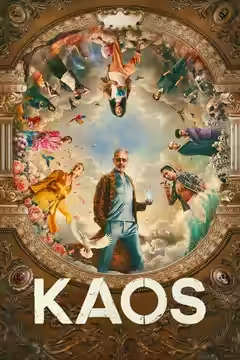
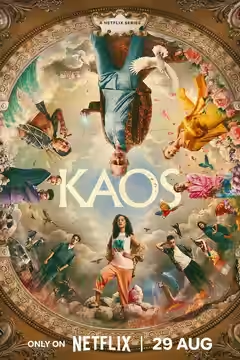
Charlie Covell has put the Greek gods in a world that looks like ours and left them with their old habits. Zeus (Jeff Goldblum) lives in a white villa on Olympus with a pool, a wife who is also his sister, and a prophecy he has spent centuries not reading. Below him is Krete, a modern city of billboards and traffic where the people celebrate Olympia Day under President Minos (Stanley Townsend). The idea is good and the first three episodes are better than good. Over eight hours the series slowly buries the thing it does well under the things it feels it ought to do.
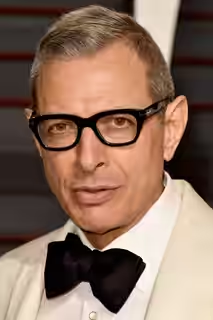
Goldblum is the reason to start. He plays Zeus as a man who has never in his life been told no, which means that charm and cruelty come out of him in the same breath and he cannot tell them apart. The first episode hangs on a wrinkle: he finds a line on his forehead, and because the prophecy begins with a line, the most powerful being in creation spends the day in front of a mirror. We laughed properly at this, and more than once, because Goldblum plays the panic straight. Later, when the fear curdles into something that gets people killed, he does not change gear so much as show us the gear was there all along.
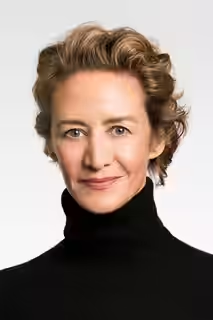
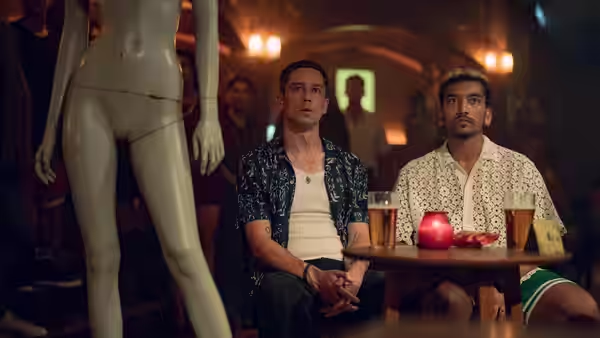
Stephen Dillane’s Prometheus narrates from his rock, dry as the stone, and his voice gives the series a shape it would otherwise lack. Janet McTeer’s Hera is the coldest thing on screen, a woman who has run this household for a long time and sees no reason to tell her husband anything. Nabhaan Rizwan plays Dionysus as the son nobody rings, puppyish and hurt, and he is good enough that we minded when the script forgot him for an episode at a time. Billie Piper’s Cassandra tells the truth in a voice that has long since stopped expecting an answer.
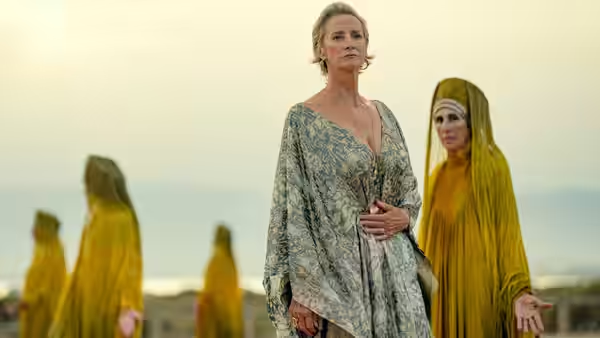
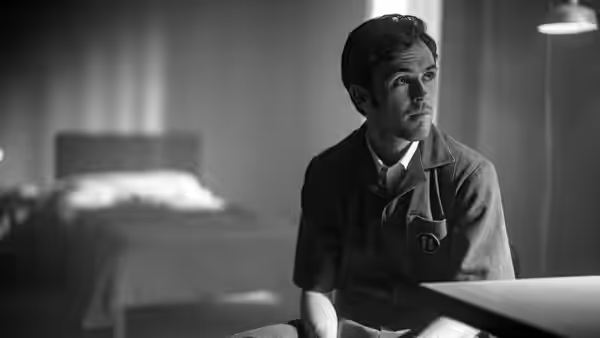
Georgi Banks-Davies and Runyararo Mapfumo share the directing, and between them they build three distinct places. Olympus is sun, white stone and gold fittings, a hotel nobody else is allowed into. Krete is a real-looking city where the gods appear on advertising hoardings and the Trojans, a conquered people, do the low-paid work. The Underworld is drained of colour, a place of queues and forms where the dead wait to be processed, and it is the best-designed thing in the series. Isabella Summers’s music keeps a low electronic pulse under the Olympus scenes and lets the mortal ones breathe with less.
The mortals are where the trouble starts. Riddy (Aurora Perrineau) is married to a famous musician and has stopped loving him, and anyone who knows the myth of Eurydice knows where she is headed; the first episode gets her there. Perrineau is watchful and sad and carries the only story with ordinary human stakes. But hers is one of three mortal threads, each with its own prophecy to fulfil, and Covell cross-cuts between them so evenly that each one stops to let the others catch up. By the fifth hour the prophecy had been recited to us so many times that we could have said it along with the characters.
We were bored, in the sixth episode, and we noticed because the first three had not let us be. Scenes exist to move a piece from one board to another. Characters explain to each other what we watched them do an hour earlier. There are twists, and we will not describe them, but several arrive as announcements rather than discoveries, and a twist you are told about is just information. The comedy thins as the plot thickens, which is the wrong way round.
Covell’s The End of the F*ing World ran at half this length and knew exactly when to stop. KAOS has that script’s ear for how awful people talk to each other and none of its discipline. Most critics have been kinder than we are, and we can see why; the opening is so confident that it buys a great deal of patience, and some reviewers evidently had more of it left by episode seven than we did.
Watch the first three episodes with company and a drink. They are funny, handsome and sharp about what power does to the people who hold it. If the prophecy has its hooks in you by then, stay for the rest and accept that the series will tell you everything twice. If it has not, you have already had the best of it.