David Rawle and Chris O’Dowd make this affectionate family comedy funny without straining for it. The growing-up stories offer few surprises, but the animated drawings and the cast’s easy company give familiar material a welcome oddness.
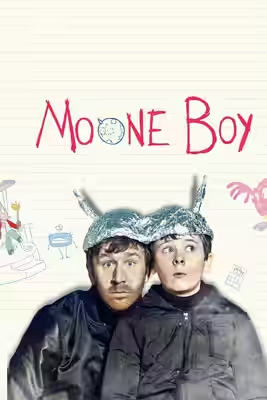
Chris O’Dowd’s Moone Boy finds a good use for an imaginary friend: giving a boy someone to be himself with. It is a funny, affectionate family comedy, and its fondness for people survives their capacity to be tiresome. O’Dowd, who created the series and plays Sean Murphy, sensibly leaves David Rawle’s Martin Moone at its centre. The growing-up stories are familiar enough to be a limitation, but the boy and his peculiar companion make this an easy programme to recommend.
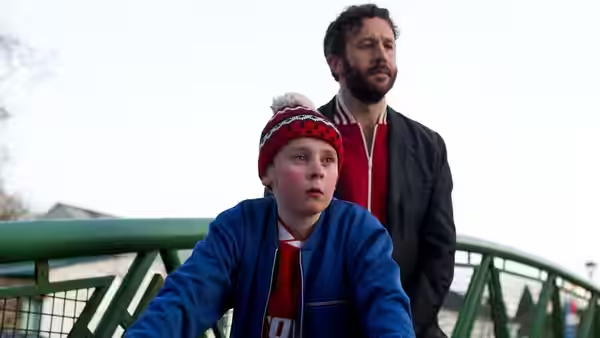
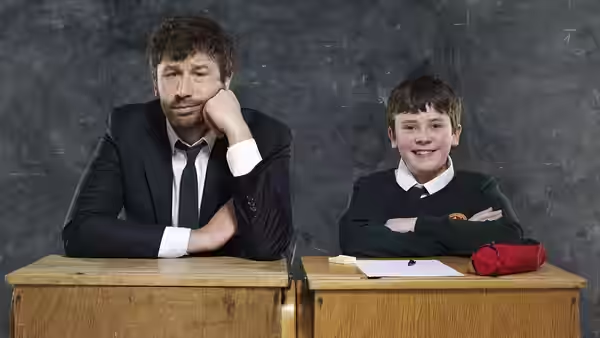
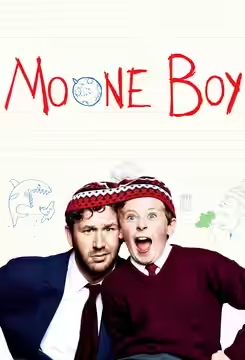
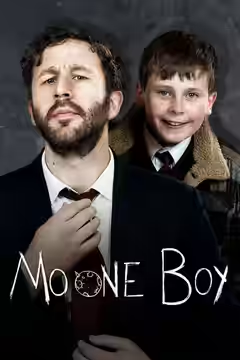
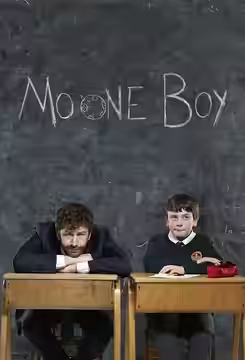
Rawle gives Martin the unforced quality that a comedy about childhood needs. He never seems to be demonstrating how adorable or precocious a child can be, which leaves us free to like him without encouragement. O’Dowd is an amusing choice of imaginary companion, an adult presence in a boy’s private world, and he makes Sean feel like company worth keeping. Their pairing allows the series to take Martin’s thoughts seriously while finding plenty to laugh at in them.
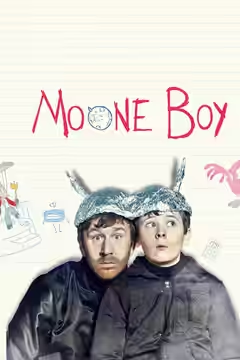
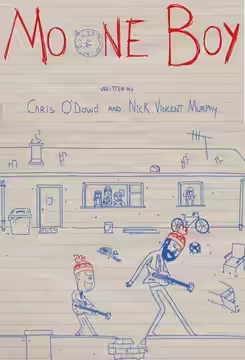
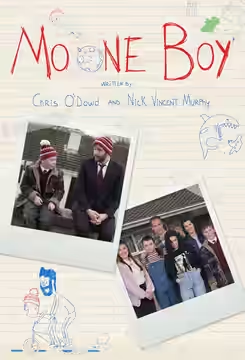
Those thoughts also turn up in Martin’s animated drawings, the series’ most distinctive comic device. The animation gives his imagination something to do on screen, sparing us the laborious business of having a child explain himself to adults. We were cheered by those drawings, because they let Martin be funny without treating him as a joke. Directors Ian Fitzgibbon and Declan Lowney handle the movement between family comedy and visual fantasy with a lightness that suits the small scale of the stories.
The family matters, too, rather than merely providing people for Martin to escape. Deirdre O’Kane’s Debra Moone and Peter McDonald’s Liam Moone help give the household enough comic interest to hold its own beside Sean. Ian O’Reilly, as Padraic, adds to the pleasure of watching young performers who seem comfortable inside the same programme as their adult colleagues. The ensemble’s warmth feels earned by allowing these people to be amusingly fallible; affection does not require everyone to behave impeccably.
At 22 minutes, an episode asks for a modest stretch of an evening, and the scale is right. The nostalgic soundtrack helps establish the mood without having to supply all the pleasure of recognition. There is a danger, in this sort of comedy, that remembering childhood will be treated as enough of a joke. The performances and animated drawings usually provide something more particular to enjoy.
That qualification matters. The basic coming-of-age material can feel second-hand, and some of the sweetness makes the comedy softer than it needs to be. O’Dowd’s creation is at its least interesting when affection alone is expected to carry familiar family business. The flights of imagination raise expectations that the everyday stories do not always meet, so anyone hoping for sustained comic strangeness should temper that hope.
Family sitcoms can be exhausting when every character is required to be the loudest person present. Moone Boy is comfortable letting a natural performance and a small visual joke hold our attention, and it benefits from that restraint. Try an episode when a comedy with some affection for children would be welcome.