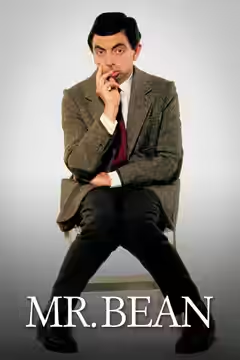
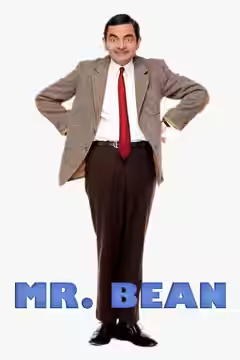
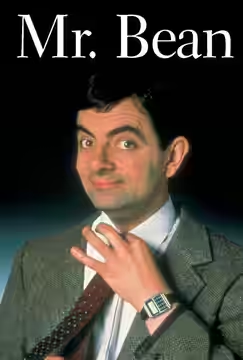
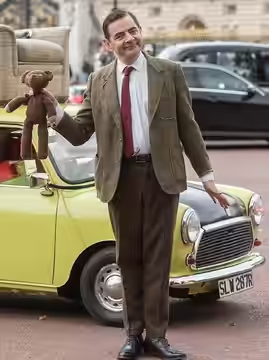
Rowan Atkinson’s near-silent man is as good a piece of physical comedy as British television has produced, built from nothing by writers who trusted the face. Spend more than one episode with him at a sitting and you notice how little else there is.
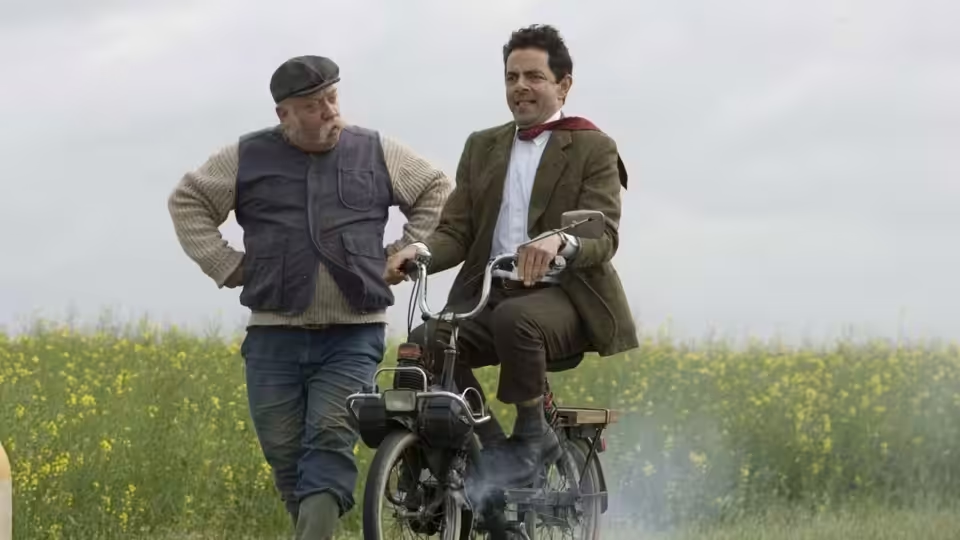
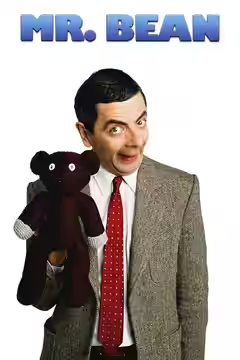
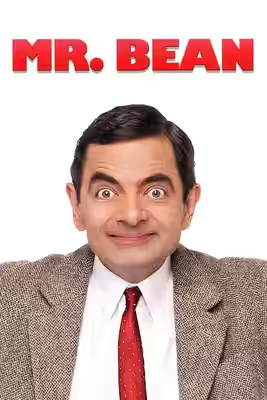
Rowan Atkinson and Richard Curtis built a comedy around a man who does not talk, and they built it for television, where everyone talks. Mr. Bean hardly ever speaks, and he treats every public space he enters as a problem to be solved by stealth. There are fourteen episodes of about 25 minutes, the first shown in 1990, and almost nothing in them needs translating. It is as good as physical comedy on television has been, and we recommend it warmly. Our caveat is one the programme already knows about itself: take him one episode at a time.
The scripts are credited to Atkinson, Curtis, Robin Driscoll and Ben Elton, and they are lists of places and the objects in them. A swimming pool. A golf course. A shoe shop. Each sketch sets Bean a small task, lets him misunderstand it, and follows the misunderstanding to its end without blinking. The directors, John Howard Davies, Paul Weiland and John Birkin, keep the camera back and the frame wide so that his whole body stays in shot, and they cut as little as they can get away with. That is the right choice. A gag like this dies if you cannot see the man and the object in the same picture.
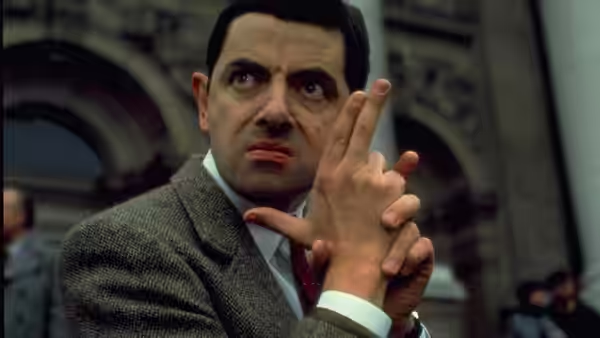
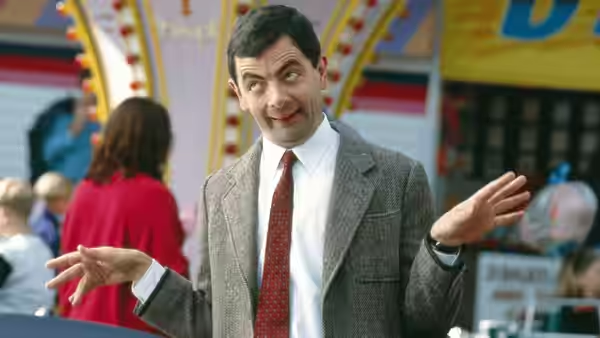
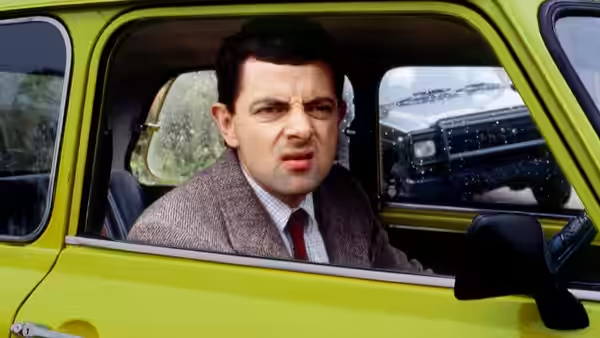
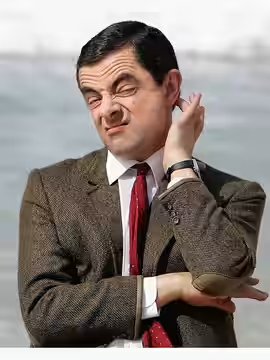
Atkinson’s face does the work the dialogue would have done. He looks at an object, then at us, then back at the object, and you know he has had an idea and the idea is bad. The sounds he makes instead of words, a hum, a strangled “Bean”, a small furious squeak, are funnier than most writers’ lines. In the restaurant episode, Roger Lloyd Pack’s waiter watches him make a private disaster of a meal with the patience of a man paid by the hour. We laughed until it hurt, and then we felt slightly ashamed of ourselves, because the joke is on a decent man doing his job. That is the programme’s secret. Bean is not an innocent. He is petty, sly and pleased with himself, and part of the pleasure is watching someone get away with it.
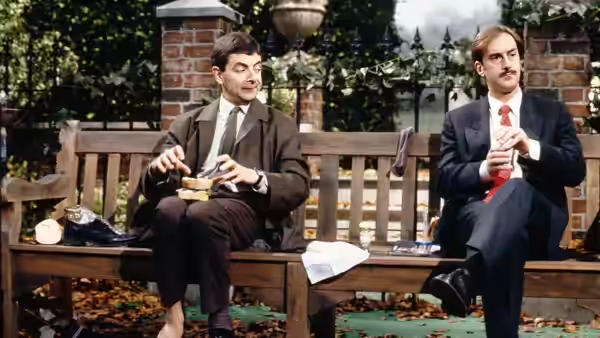
The rest of the cast are there to be baffled. Caroline Quentin is a traffic warden, Richard Briers is a Mr. Sprout, Richard Wilson is a dentist with his hands in Bean’s mouth, Angus Deayton is a man on a park bench who only wanted to eat his lunch. None of them is given a life, and the programme does not pretend otherwise; they have uniforms and a tolerance that runs out at exactly the moment the sketch needs it to. After three episodes in a row you feel the limit. It is also what keeps the thing clean. Nobody on screen competes with the face. Danny La Rue appears as himself.
Not everything lands. Stitching sketches into 25-minute episodes means the stitches show, and more than once a scene ends because the time is up rather than because the joke is over. Some of the longer set pieces, the ones that depend on a single object misbehaving, run twenty seconds past their best moment. And there is a strain of spite in Bean, towards children, towards queues, towards anyone slower than him, that the writers find funnier than we always did.
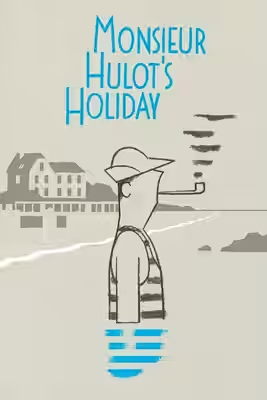
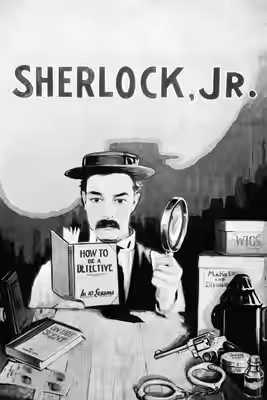
Set against Atkinson’s own work, this is the reverse of Blackadder, which was all talk, and it is the braver of the two. Set against the silent comedians it plainly admires, it is less tender; Bean has none of the sadness of Chaplin or Tati, and does not want our sympathy. The case has been made that he is a rebel against the rules of everyday life. We would put it lower than that. He is a man who has never been told no, and the programme shows what happens to a swimming pool when such a man gets hold of it.
Watch it with someone who shares none of your language, if you can arrange that; it is the test the programme passes and most comedy fails. Then stop after one. He will still be there tomorrow, and he will not have learned anything.