Maria Sten carries this Reacher spin-off with a stillness the parent series never asked of anyone, and the fights and chases are as clean as ever. Between them, though, the show explains her at a length she does not need.
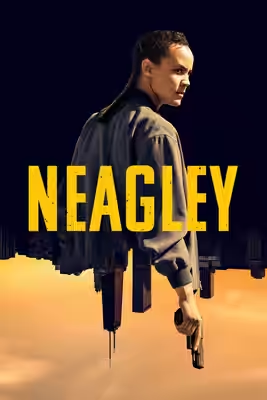
Frances Neagley was the best thing about Reacher that was not Alan Ritchson’s shoulders: the colleague who spoke when it mattered, hit when it mattered more, and otherwise kept out of the light. Creators Nicholas Wootton and Nick Santora have now bet eight episodes on the idea that the quiet one can hold a series alone. She can. What she cannot do is stop the writers from filling the silence around her with backstory, and that is the difference between a good series and the decent one this is.
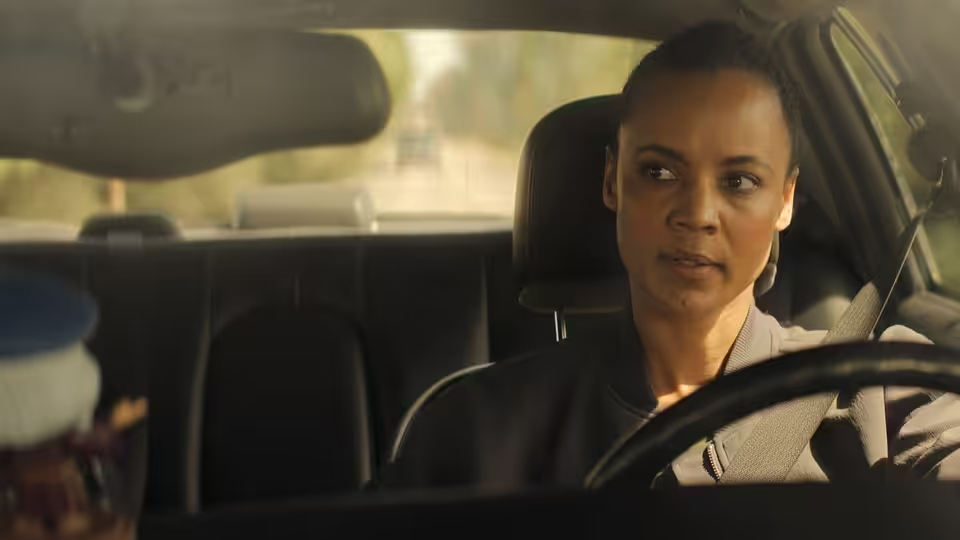
Maria Sten is the reason to watch. In Reacher she was a presence; here she is a performance, and a careful one. She plays Neagley as someone who has learned to hold her body very still so that nothing gets in, and the series is at its best when it simply watches her do that in a room full of people who want something from her. When she does move, in a corridor fight in the second episode that is over in under a minute, the violence has a plainness to it: no wisecrack, no lingering, a job done. Ritchson’s Reacher enjoyed himself. Neagley does not, and Sten makes that the more interesting choice.
Ken Glassing shoots her accordingly, in cool greens and sodium orange, with the camera kept at a distance she would approve of and moved in only when she is alone. Nazgol Goshtasbpour designs the world as a series of rooms nobody has bothered to make comfortable: motels, precinct back offices, a bar with the chairs still stacked. Abram Waterhouse dresses Neagley in the same dark jacket for most of the run, which is right, and the men around her in suits that fit slightly too well, which is a joke that lands. Tony Morales’s score keeps to a low pulse and mostly stays out of the way.
The trouble is what the writers think we need to know. Somewhere in every episode the case stops so that Neagley’s past can be laid out, and there is a great deal of it. Damon Herriman’s Lawrence Cole and Matthew Del Negro’s Pierce Woodrow are given scenes whose only purpose is to tell us who she was before we met her, and Sten has already told us with her face. J. J. Geiger cuts these passages slowly, as if they were the point, and the case, which is small and quite well shaped, has to wait for them.
Greyston Holt’s Detective Hudson Riley is the standard-issue policeman who resents the civilian and then does not, and Holt does the standard thing with him competently. Adeline Rudolph is better served: her Renee is allowed to be evasive without being sinister, and her scenes with Sten are the only ones in which two people seem to be listening to each other. Jasper Jones’s Keno is a live wire the series could have used more of. Four directors share the run, Sam Hill, Phil Abraham, M. J. Bassett and Gary Fleder, and the hand-offs show mainly in how long the fights are allowed to go on.
Here is what we felt. In the second episode, after that corridor, the camera stays on Sten as she checks her own hands, and she flinches, once, at nothing. It moved us more than we expected a Reacher spin-off to manage, because it is the first time in either series that violence has appeared to cost anyone anything. Elsewhere we were bored, and a little cross about it, because the case kept stopping so that she could be explained to us in scenes with nothing in them Sten had not already shown.
Reacher worked because it knew it was pulp and behaved like it: a problem, a town, a large man, some broken arms. Neagley wants to be pulp and a character study at once, and the character study is the part written down while the pulp is the part that works. Most critics have been kinder than we are, and we can see why; the fights are good and Sten is very good. We just wanted the series to trust her the way the show that made her did.
Watch it at home, in twos, where the exposition can be talked over and the fights cannot. It carries a 15 and earns it in the first ten minutes. If a second run comes, we would like it to arrive knowing less about her.