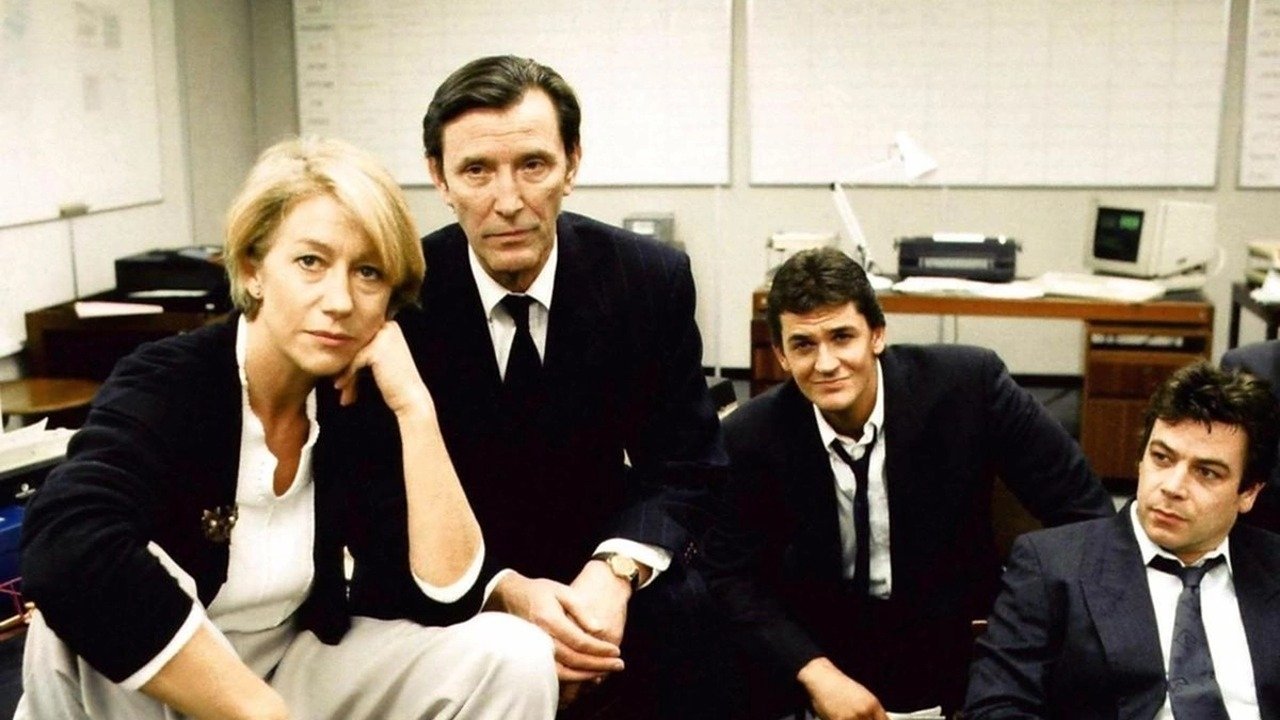
Prime Suspect is an absorbing police drama, led by Helen Mirren’s difficult, compelling Jane Tennison. Some later cases press their social concerns too hard, but the acting keeps us interested in the people.
Prime Suspect is a crime drama we recommend with one reservation: some later cases become too concerned with the subject they are addressing. Helen Mirren’s Jane Tennison is reason enough to stay, and the original two-part series gives her a mystery that deserves her attention as well as ours. It takes the work seriously, including the unpleasant business of getting colleagues to accept that she can do it. That makes the investigation absorbing before any answer is in sight.
The writing, with Lynda La Plante and Allan Cubitt among those credited, makes the hostility surrounding Tennison part of the business of an investigation. Her colleagues do not need to be elaborate villains to make her working life difficult. We felt angry at the resentment directed at her, because it turns the practical work of investigating a case into another test of her right to be there. The drama is persuasive because that hostility has to be dealt with while the inquiry continues.
Mirren makes that burden visible without asking us to approve of Tennison at every turn. There is room in the performance for intelligence and impatience, and Mirren does not soften Tennison merely to make the hostility towards her easier to condemn. We can want her judgement to be respected and still find her difficult. Across seven series, that gives the programme more to work with than the prospect of another solved case.
Directors include Christopher Menaul, John Madden and Philip Martin, and the programme is strongest when it trusts the cast to hold our attention. Its naturalism depends on conversations that feel like work: people trying to establish something while having to deal with each other. Nicholas Hooper’s music is secondary to that effect; the acting supplies the discomfort that matters. The strongest exchanges keep our attention on how difficult it can be to get useful cooperation from people who resent being asked.
The later cases can be too eager to explain the social problem they have chosen to examine. Once that happens, the investigation feels less like something being discovered, and we begin anticipating what the story intends to tell us. This matters in a programme whose early strength is the patient observation of people under pressure, with room for motives to remain awkward or unclear. Mirren helps keep these stretches watchable because Tennison is too complicated to function neatly as an example, though the writing sometimes seems to wish she would.
A police procedural has to make the investigation worth following even when its central character is this strong. Prime Suspect generally manages it: the mysteries feel credible, and the acting gives us reasons to pay attention to people beyond their usefulness to the plot. Its seven series comprise fifteen episodes. Start with the opening two, and give them your attention rather than treating them as company while doing something else.