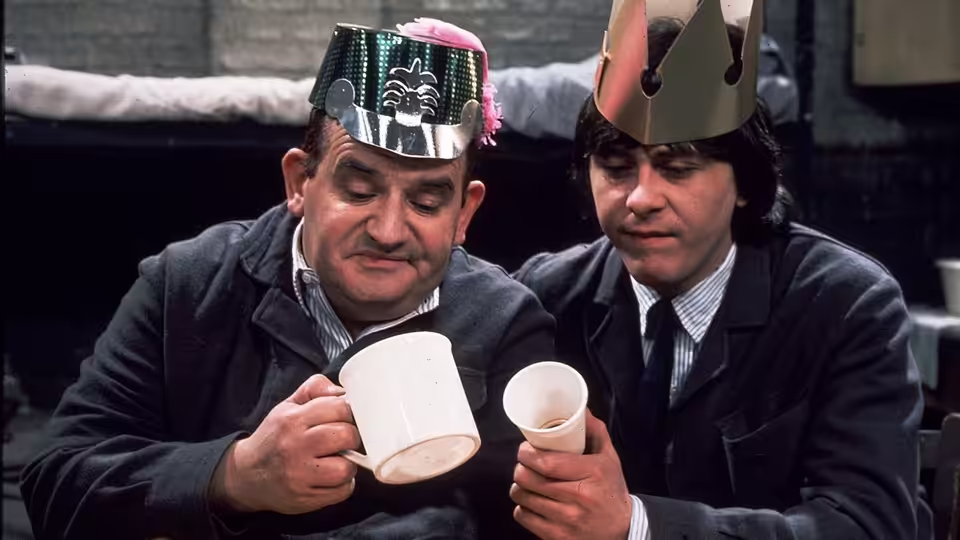
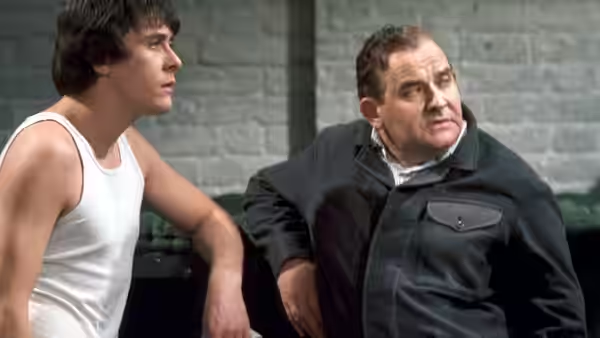
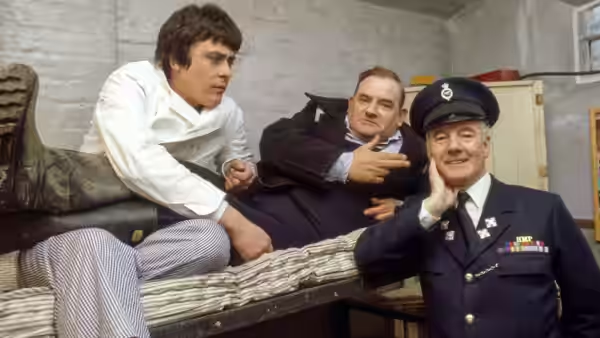
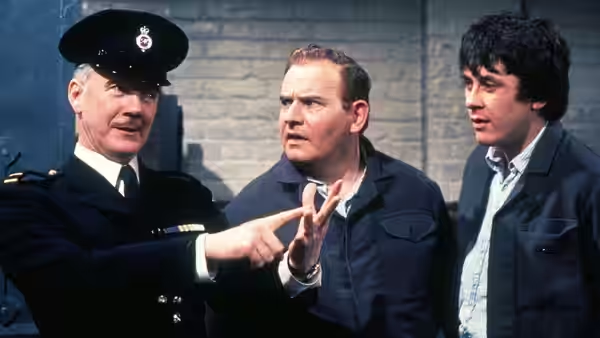
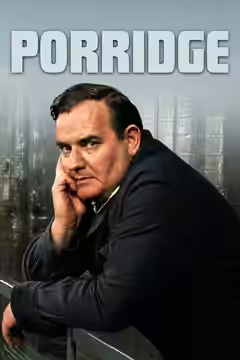
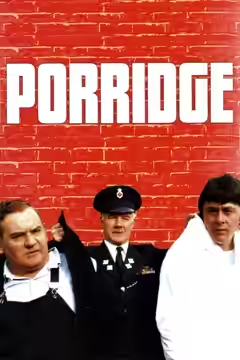
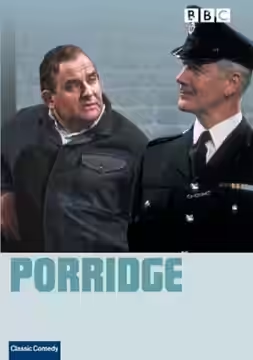
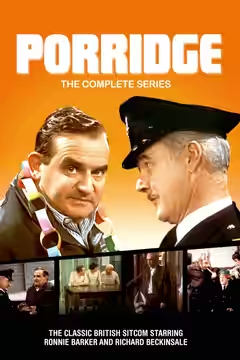
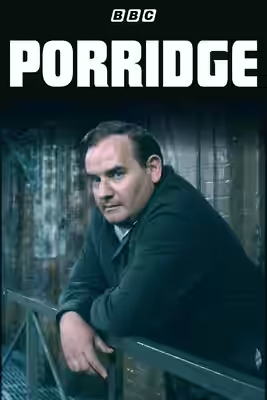
Ronnie Barker leads a prison sitcom with precise jokes and an affection for its characters that feels earned. The warders’ battles with Fletcher occasionally grow predictable, but Richard Beckinsale keeps the company worth having.
Porridge is a sharply written prison comedy with enough kindness to make us care what happens between the jokes. Dick Clement and Ian La Frenais give Norman Stanley Fletcher the sort of intelligence that is useful when somebody else controls almost everything about the day. Ronnie Barker makes his efforts to secure a small advantage seem worth close attention, even when the advantage amounts to little. Much of the comedy comes from Fletcher trying to have the last word.
The writing is careful about who knows what. Fletcher can read people quickly, and Clement and La Frenais build the exchanges around that skill. The official business soon becomes secondary to getting somebody to concede a point. The verbal sparring stays easy to follow because the immediate wants are clear. There is pleasure in seeing a familiar excuse adjusted for a different listener, particularly when the listener knows perfectly well what Fletcher is doing.
Richard Beckinsale’s Lennie Godber gives Barker someone worth the trouble of explaining things to. His uncertainty keeps Fletcher’s expertise from becoming merely a succession of clever answers, and Beckinsale finds humour in listening without making Godber look vacant. Barker allows a trace of concern to enter Fletcher’s advice, then avoids making a ceremony of it. The affection between the men is persuasive because neither performance asks us to stop laughing and admire how touching it all is.
Fulton Mackay and Brian Wilde make the two warders distinct comic opponents. Mackay gives Mr Mackay a vigilance that seems to sharpen whenever Fletcher speaks, while Wilde’s Mr Barrowclough appears almost grateful to be given a plausible explanation. We laughed hardest at Barker’s courtesy towards Mackay: he makes obedience sound like an insult. Mackay’s refusal to be charmed matters just as much, since Fletcher would be a tedious fellow if everyone obligingly lost every exchange.
Sydney Lotterby’s direction gives the actors time to work through an exchange without hurrying them towards the next joke. The editors, among them John Dunstan and Howard Dell, leave space for a look to register after the line has finished. That restraint suits Barker, whose confidence can be funnier than the words he is about to say. The half-hour length gives these encounters enough room without requiring a new complication every few minutes.
The limitation is that these personalities can settle into their allotted jobs too comfortably. Once the pattern of Fletcher’s manoeuvres and the warders’ responses becomes familiar, some exchanges take longer to reach the answer than they need to. Peter Vaughan gives Harry Grout a quiet authority that helps disturb that comfortable pattern. It is a modest complaint, but more noticeable when several episodes are watched together.
The confined sitcom depends on people being unable to walk away from an argument, and imprisonment gives that convention an uncomfortable force. There are limits to how far a comedy this companionable will explore that discomfort. Its interest is in how people manage the daily company of others they have not chosen, and the actors make that enough. Watch an episode at a time, before Fletcher’s methods become as familiar to you as they are to the warders.