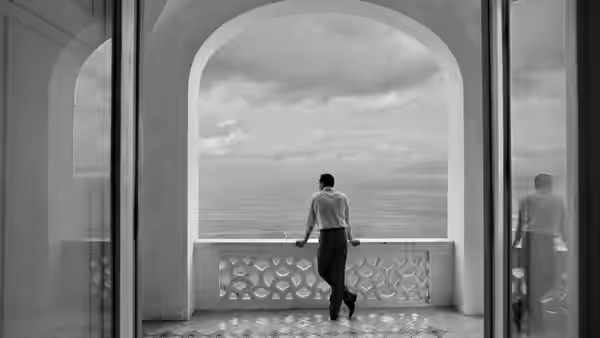
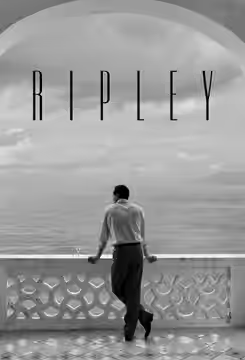
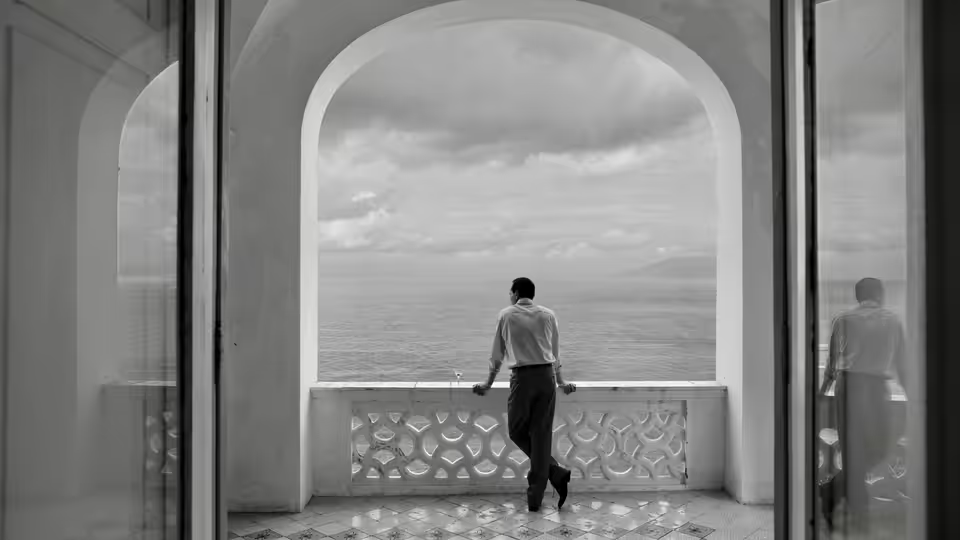
A man stands on a balcony overlooking the sea through an archway
Series review

RIPLEY

2024 · Created by Steven Zaillian · Series · MPA TV-MA

In a sentenceAndrew Scott climbs every staircase in Italy looking guilty, and we were with him all the way

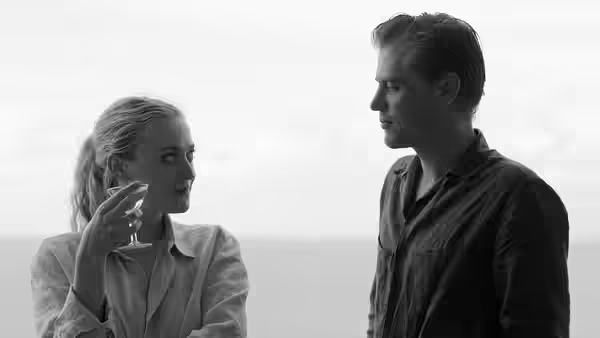
New York, the early 1960s. Tom Ripley (Andrew Scott) lives in a single rented room and makes his living posting letters from a debt collection agency that does not exist. A private detective tracks him down on behalf of Herbert Greenleaf (Kenneth Lonergan), a shipbuilder whose son has gone to Italy to paint and shows no sign of coming home. Greenleaf will pay Tom’s passage if Tom will fetch him. Tom sails, and finds Dickie Greenleaf (Johnny Flynn) in Atrani, a village of steps on the Amalfi coast, sharing his days with Marge Sherwood (Dakota Fanning), an American writing a book about the place. Tom wants Dickie’s house, Dickie’s clothes and Dickie’s life. Marge sees it before anyone else does.

Plays from YouTube when you press play; nothing loads from them until then.

Fi1m review

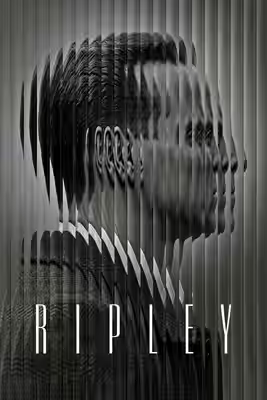
Steven Zaillian’s eight-part Highsmith adaptation is slow, cold and shot in a black and white that makes Italy look like a crime scene. It is also superbly made, and Andrew Scott is frightening in it. Allow it its pace.

Steven Zaillian has taken Patricia Highsmith’s novel and turned it into eight episodes in black and white. It has been filmed before, by Anthony Minghella in 1999, with Matt Damon in a swimsuit and the Mediterranean doing half the work. Zaillian has gone the other way. There is no sun, no romance and almost no charm, and the result is the most exacting version we have seen. It is also slow enough that some people will give up in the second hour, and we understand them.

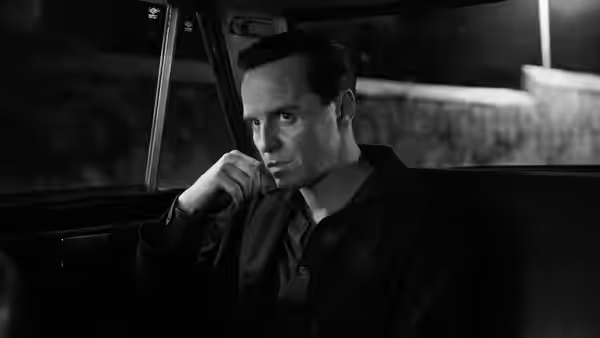
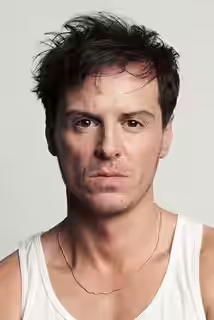
Andrew Scott’s Ripley is no boy. He is a tired man who has done this before, and Scott plays him through waiting: the pause before an answer, a beat longer than an honest man would need; the way he sets down a glass as if it might be used against him. His accent is flat and careful and never slips. He does not ask to be liked. When Tom tells Dickie he enjoys his company we did not believe him, and this story works better when we half do. It is the one place we would have taken a little of Minghella’s warmth.

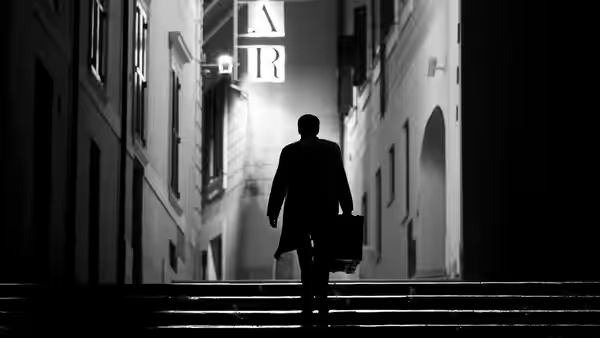
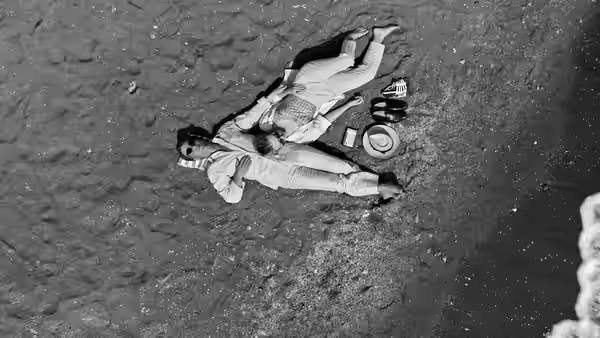
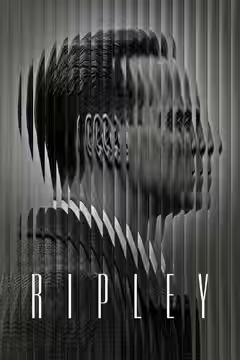
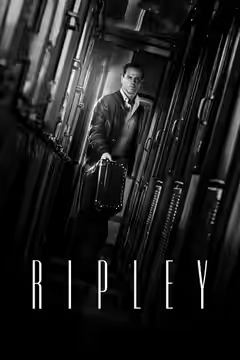
Robert Elswit shoots Italy with the colour taken out and the contrast pushed hard. The blacks are deep enough to lose a man in and the whites of Atrani’s stone are hard on the eyes. Staircases are everywhere, filmed from above so that the people on them look like figures on a diagram. David Gropman gives Dickie a villa with a terrace and not much on the walls, and Rome a run of flats with lifts that never work. Maurizio Millenotti and Giovanni Casalnuovo put Tom in one brown jacket and a raincoat for the wrong climate, and Dickie in linen he has never had to think about. Zaillian keeps returning to Caravaggio, in churches and galleries, and since Caravaggio killed a man and ran, the point is not subtle.

Midway through the third episode the story takes the turn anyone who has read Highsmith will be waiting for, and we will not describe it. Zaillian gives what follows the best part of an hour with almost no dialogue, and it is the strongest stretch in the series. There is a sequence on a Roman staircase, mostly one man, a lift that will not oblige him and a cat watching from a landing, that we sat through with our hands half over our faces. When it ended we realised we had been holding our breath for someone we had no reason to wish well, and felt slightly grubby about it. Joshua Raymond Lee and David O. Rogers hold every shot past the point a nervous editor would cut, and the tension comes from that.

The trouble is the middle. Eight episodes is a great many for one man and one lie, and around the fifth we noticed the pattern: a police inspector arrives, asks the same three questions in a different order, and leaves; a letter is typed and read to us; a train is caught. By the sixth we looked at the clock. Johnny Flynn’s Dickie is written as a dull, weak, faintly decent man, true to the book and a problem on screen, because the early episodes need a pull between him and Tom and there is not much of one. Dakota Fanning’s Marge is sharper, dry and suspicious from her first scene, and the series is better whenever she is in it. Kenneth Lonergan, as Herbert Greenleaf, plays a father who has confused money for attention, and plays him well. Jeff Russo’s score is used sparingly; footsteps, water and a typewriter do most of the work, and that is the right decision.

Minghella wanted us to grieve. Zaillian wants us to watch a man work, and Highsmith, who liked her murderer more than anyone he met, would recognise this version.

Watch it at home in the dark, one episode at a time, and do not wait for it to speed up, because it has decided not to. It carries a 15 certificate, and it earned it on the stairs.
Critical consensus AI synthesised

72
Positive
12
Mixed
2
Negative
4
IndieWire
4 April 2024 · Ben Travers
90*

The critic praises Zaillian's black-and-white adaptation for its hypnotic storytelling and exquisite cinematography that shades the tale of a deplorable killer. Andrew Scott's striking performance pulls off its own 'talented' twist on the material.

Read the full review →
The AV Club
4 April 2024 · A- · Matt Schimkowitz
90

The review calls it the best Talented Mr. Ripley adaptation yet, with Zaillian, Scott, and cinematographer Robert Elswit delivering a masterful, textured take faithful to Highsmith. Scott's quiet, unassuming terror as Ripley stands out amid striking black-and-white photography and purposeful direction.

Read the full review →
The Guardian
4 April 2024 · Lucy Mangan
90*

This scintillating noirish adaptation leaves the 1999 film in the shade, thanks to Andrew Scott's mesmerising performance as a wellspring of possibilities. The black-and-white photography is gorgeous, the slow pace builds exquisite tension, and the supporting cast is excellent.

Read the full review →
Vulture
4 April 2024
90*

The critic finds the remorseless, monochromatic series a deliciously mean adaptation anchored by Andrew Scott's phenomenal performance. It sneers at the upper class with complicated aims, immersive cinematography, and a mercurial spirit that rejects previous adaptations' moral framing.

Read the full review →
The i Paper
4 April 2024 · Ed Power
85*

The critic praises Andrew Scott’s twitchy, anxious and brilliant performance as a world-weary, ruthless Ripley in this bleakly dazzling black-and-white adaptation. Zaillian’s meditative direction and the stark Italian setting provide a perfect platform for Scott to embody the character he was born to play.

Read the full review →
The Times
3 April 2024
85*

This monochrome adaptation is a stunning Hitchcockian work of art with stark perfectionism; the slow, hypnotic pace and Caravaggio-like use of light make it cinematic and compelling once the black-and-white style is accepted.

Read the full review →

Straight answers AI written, from our review

Is RIPLEY worth watching?
Ripley is worth watching for anyone who can sit still for eight slow, cold episodes in black and white, and we scored it 80. Andrew Scott is frightening as Tom, and the near-silent stretch after the story turns in the third episode is the best thing in it. The middle sags around the fifth and sixth hours, so do not wait for it to speed up.
How long is RIPLEY, and what is it rated?
RIPLEY is rated TV-MA by the MPA in the US. It is a drama series.
Where can I watch RIPLEY in the US?
RIPLEY is streaming on Netflix in the US. Availability is checked daily; the links above go straight to each service.
How violent or frightening is RIPLEY, and is it suitable for children?
Ripley carries a 15 certificate in the UK and TV-MA in the US, and it is not for children. The violence is sparse but earned it: one long sequence on a Roman staircase had us with our hands half over our faces. The fear comes from watching a man dispose of what he has done, held in long shots, rather than from gore or jump scares.
How does RIPLEY compare to The Talented Mr. Ripley?
Ripley is the colder and more exacting version, where The Talented Mr. Ripley is all sun, romance and grief. Zaillian strips out the charm and asks you to watch a tired man work; Minghella wants you to mourn. Choose the series if you want Highsmith straight and can stand the pace, and the film if you missed the warmth.
Is RIPLEY based on a true story or a book?
Ripley is based on Patricia Highsmith's novel The Talented Mr. Ripley, not on a true story. Zaillian keeps close to the book, including a Dickie who is written as dull and faintly decent, true to Highsmith and a problem on screen. You need not have read it, though anyone who has will know what is coming in the third episode.
What should I watch after RIPLEY?
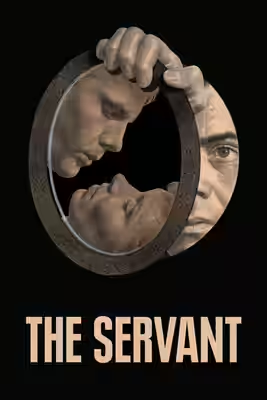
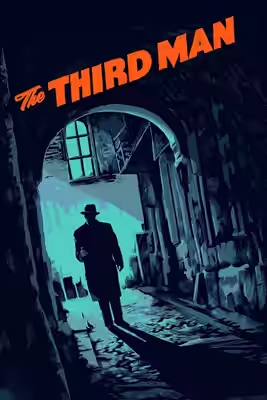
After RIPLEY, try Purple Noon (1960, Fi1m 82): The first Ripley on film, with Alain Delon far too handsome to be trusted. Then The Talented Mr. Ripley (1999, Fi1m 80): Minghella’s version, all sun and grief, for those who missed the warmth here; and The Servant (1963, Fi1m 89): Dirk Bogarde moves into a rich man’s house and quietly takes it over.

Cast

If you liked this, try…

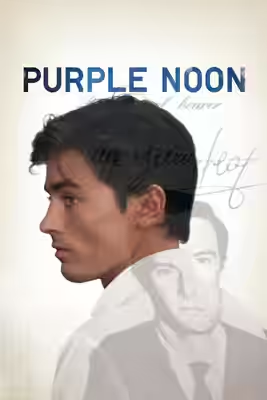
  1. Purple Noon (1960, Fi1m 82)The first Ripley on film, with Alain Delon far too handsome to be trusted.

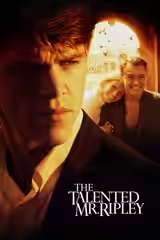
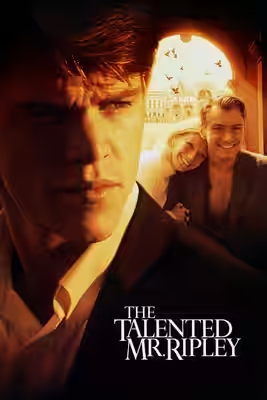
  2. The Talented Mr. Ripley (1999, Fi1m 80)Minghella’s version, all sun and grief, for those who missed the warmth here.

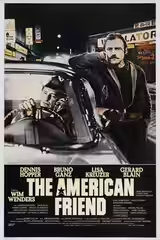
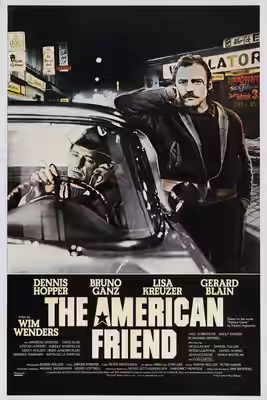
  3. The American Friend (1977) · not reviewed yetWenders takes a later Highsmith Ripley to Hamburg and lets Dennis Hopper loose.

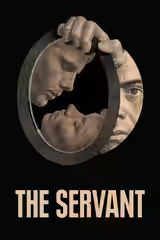
  4. The Servant (1963, Fi1m 89)Dirk Bogarde moves into a rich man’s house and quietly takes it over.

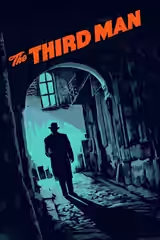
  5. The Third Man (1949, Fi1m 92)Black and white, a European city at night, and a friend who is not what he seemed.

Free account

Know what to watch tonight

Two lists that know where things are streaming, collections you can share, your own score beside ours, and Discover that remembers what you have seen.

  • Want to see, sorted by what is streaming now
  • Seen, with your score out of ten
  • No adverts, ever