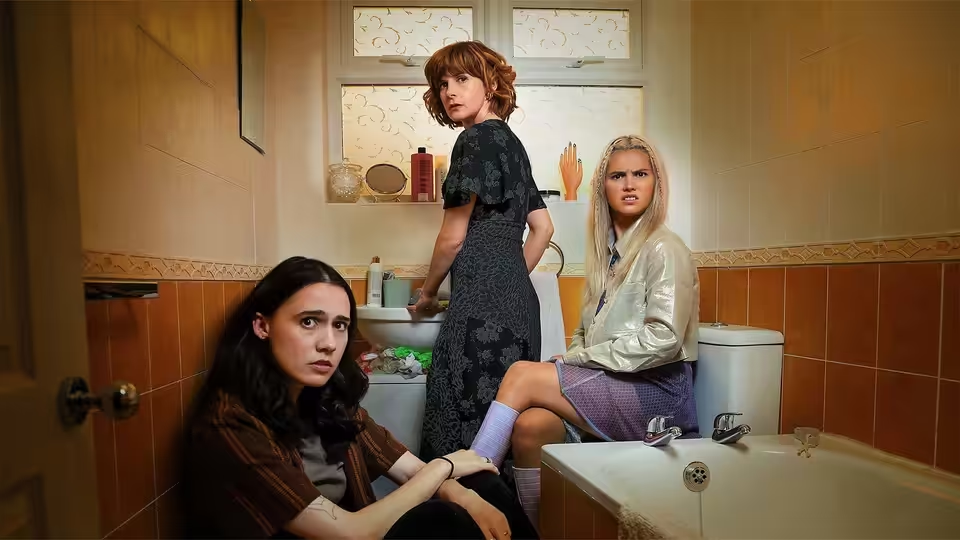
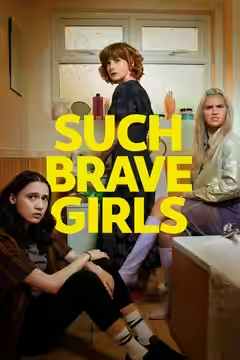
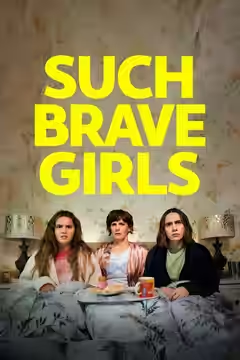
The first series of Kat Sadler’s family comedy is filthy, funny and well worth the discomfort. Its self-absorption occasionally becomes tiring; Louise Brealey’s appalling mother keeps us watching.
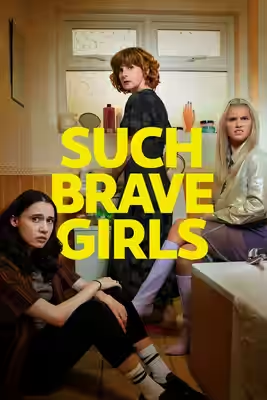
The first series of Such Brave Girls is a dark family comedy worth recommending to anyone who can bear a sustained lack of tact. Writer and star Kat Sadler takes mental-health struggles and family trauma into territory where good intentions count for little. Her characters want sympathy and are poorly equipped to give it. Across six episodes, the humour is frequently filthy and sometimes exhausting. Much of the trouble is self-inflicted, which gives the jokes somewhere uncomfortable to go.
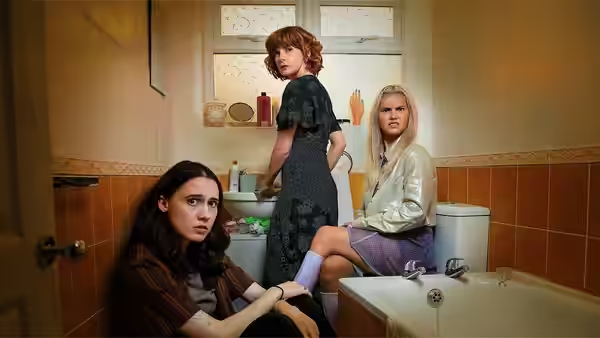
Sadler plays Josie, with Lizzie Davidson as her sister Billie and Louise Brealey as their mother, Deb. The writing gives all three enough selfishness to be funny without making them interchangeable. Its best insults work because we can hear people trying to protect their own importance, even when the subject ought to command some care. Sadler is especially good at making an unpleasant response arrive before we have settled on the appropriate sympathetic one.
Brealey is the strongest reason to persevere when the discomfort threatens to become the whole joke. Deb’s narcissism is appalling, but Brealey gives it enough comic conviction that the character never feels like an exercise in diagnosing bad parenting. We found ourselves laughing at her when we wanted to be cross with her. What did it was the certainty of her selfishness: Brealey makes putting herself first seem entirely reasonable to Deb. The daughters’ need for care becomes more painful in her company.
Sadler and Davidson give the sisters a convincing familiarity, and their chemistry keeps the show from turning into a collection of insults. We believe that these women belong to the same family even when being related seems to have done them little good. Their embarrassment matters beyond the next punchline, so the self-inflicted struggles retain some weight. As the comedy allows more affection into these relationships, neither performer loses the awkwardness that made the sisters interesting.
Simon Bird and Marco Alessi direct, with Edward Tucker responsible for cinematography. The directors use the ensemble well, letting the women be unpleasant without making every offence feel like a bid for attention. That matters in a programme whose gross-out humour could easily become a competition to offend. At its strongest, the comedy lets a cruel remark tell us something about the person making it, and trusts the actors to supply the rest.
The weakness is repetition. Sadler sometimes spends too long on the sisters’ self-absorption. Once the family has established how little patience anyone has for another person’s troubles, further demonstrations can feel redundant. Brealey helps, though she cannot make every return to the family’s grievances feel necessary. The six-episode run is brief enough; the writing could still be tighter.
A comedy about mental health has to let its people matter beyond their difficulties, and this one does. The affection that emerges is welcome because we have had ample reason to dislike the family, and the performances make that change of feeling credible. It is a good choice for company that enjoys an awkward laugh and does not need immediate reassurance afterwards. Anyone hoping for a restorative evening of kind relatives listening patiently should choose something else.