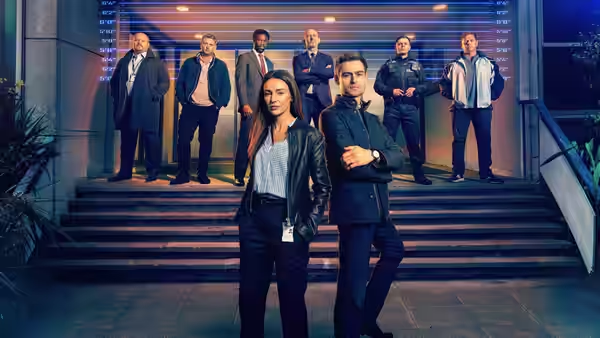
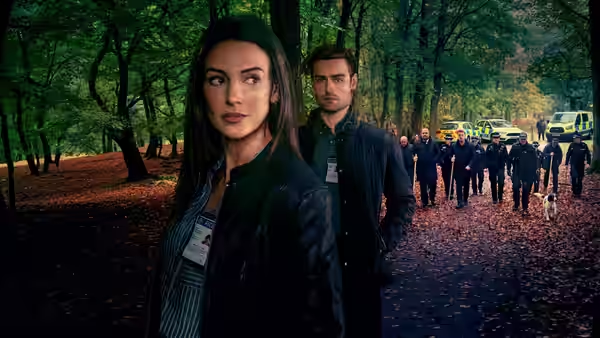
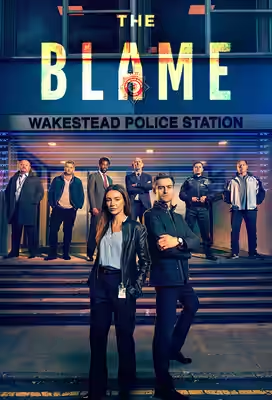
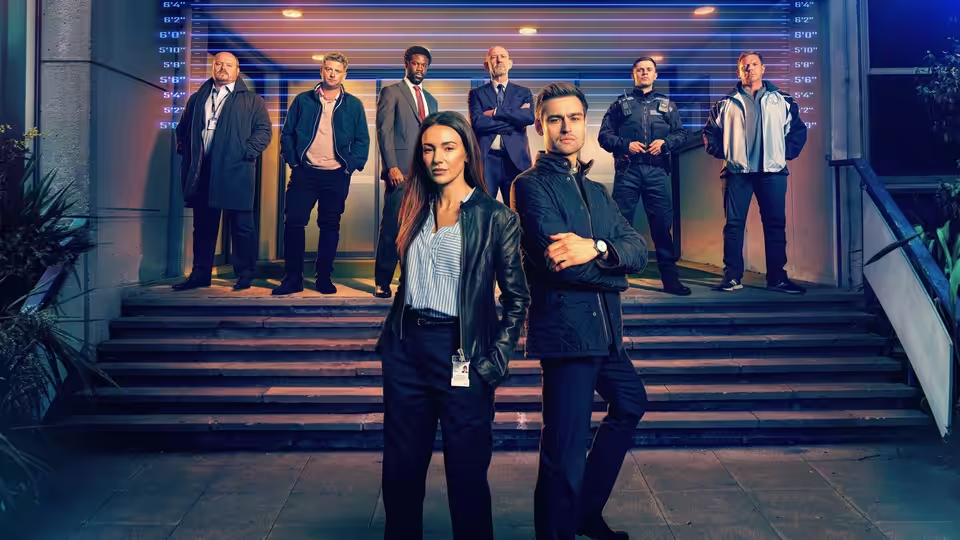
DI Emma Crane (Michelle Keegan) and DI Tom Radley (Douglas Booth) stand before their team on building steps
Series review

The Blame

2026 · Created by Megan Gallagher, Namsi Khan, Ashley Sanders · Series · 50m

In a sentenceA police procedural in which the interview room is less frightening than the canteen

DI Emma Crane (Michelle Keegan) is a detective on a murder inquiry that will be watched from above and from within. The other DI on the floor is Tom Radley (Douglas Booth); the man above them both is DCI Kenneth Walker (Ian Hart); and around them in the incident room are DC Joel Stevens (Gavin Spokes), DI Douglas James (Josh Bolt) and PC Callum Drummond (Cel Spellman). Sophie Madsen (Matilda Freeman) and Neil Shergill (Nigel Boyle) are the names that come to matter outside the station. Crane wants the killer. What stands in her way is less the evidence than the building she works in, where the conversations officers have with each other, drawn from real transcripts, come under as much scrutiny as the crime. Six episodes, around 50 minutes each.

Plays from YouTube when you press play; nothing loads from them until then.

Fi1m review

A brisk ITV murder mystery with a sharper programme underneath it, about what police officers say to each other when they think nobody is reading. Keegan is good, Ian Hart is better, and the whodunnit keeps getting in the way.

The Blame is a six-part ITV drama adapted from Charlotte Langley’s novel by Namsi Khan, Ashley Sanders and Megan Gallagher, and it is two programmes at once. One is a murder mystery of the kind the channel has made for decades, with a body, a board of suspects and a twist at the end of each hour. The other is about the police force doing the investigating, and about what its officers say to each other when they think nobody is reading. The second is the better programme, and the first keeps interrupting it. It is good, and worth your week if you like your detectives tired and your coppers compromised, though the reviews so far have been warmer than we are.

Michelle Keegan plays DI Emma Crane as a woman who has learned to keep her face still in a room full of men waiting for it to move. It is a quieter performance than the one she gave in Fool Me Once, and a better one. She listens well, which is rarer on television than it should be, and when she does let something show it is usually in the wrong company. The writers have not made Crane a saint. She cuts corners, she keeps things from people who ought to know them, and Keegan plays those choices as habits rather than as plot.

Ian Hart’s DCI Kenneth Walker is the programme’s best idea. Hart plays him as a manager rather than a monster, a man who thinks of himself as fair and has the clear-up figures to prove it, and who cannot hear what is wrong with the way his team talks. Douglas Booth’s Tom Radley is affable and easy, and Booth lets you like him for a good while before you start counting what he laughs at. Gavin Spokes, Josh Bolt and Cel Spellman fill out the floor as men who are not villains, exactly, but who have never once been asked to consider whether they might be. That is the point, and the programme makes it without a speech.

The scenes that got at us are the transcripts. Messages between officers, drawn from real ones, are put on screen plainly, without music and without anyone reacting to them for us, and they are worse than anything the murder plot manages. We were angry, and then a little ashamed of how surprised we were, because none of it is news. What makes it land is that the men typing these things are the same men we have been watching do their jobs competently for an hour. The programme trusts us to hold both facts at once.

It is well made without drawing attention to it. Phil Wood shoots the station in the flat, even light of a place with too many ceiling panels and saves the shadows for outside, so that the office looks safer than it is. Elizabeth Mary Moore’s incident room is a working office rather than a set: half-wiped whiteboards, a kettle nobody has descaled, a jacket on a chair that stays there for three episodes. Lauren Miller puts Crane in the same dark coat throughout, and the coat starts to look like armour. Sarah Warne’s score is mostly a low pulse and has the sense to stay out of the interview rooms.

The trouble is the machinery. Claire Tailyour and Rebecca Rycroft direct with pace, and Ben McKinstrie cuts to match, and there are stretches where the programme moves so quickly that nobody is allowed to sit with anything. Each episode delivers its turn on schedule. We saw two of them coming and did not mind; a third is there to be a twist and for no other reason, and it costs the programme some of the trust it had earned with the transcripts. The whodunnit and the argument about the force are pulling in different directions, and by the fifth hour the whodunnit is winning.

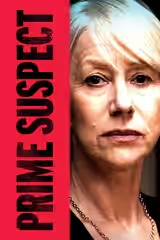
The obvious comparison is Prime Suspect, which put Helen Mirren’s Jane Tennison in a room like this one more than thirty years ago and let her stay there, slowly, for hours. The Blame is not that. It does not have the patience, and it does not have the nerve to let its mystery be the least interesting thing about it. It has the right subject, though, and a cast that knows how to play men who are pleasant to your face.

Watch it two episodes at a time, not six in a night. Taken fast, the twists are what you will remember. Taken slowly, it is the messages, and they are the part it does best.

Critical consensus AI synthesised

2 of 6
Positive
2
Mixed
0
Negative
0

With only 2 reviews in so far, the early word is warm. Both critics find the six-part ITV drama a tense whodunit that keeps viewers guessing, and both single out its look at misogyny inside the police as what lifts it above the standard murder mystery, with the transcripts drawn from real cases earning particular mention. Michelle Keegan’s lead performance is praised, and Digital Spy rates the series above her earlier Fool Me Once. The one reservation so far, from the same quarter, is that the pace is too quick, with twists arriving before the last has settled. Radio Times is a touch cooler overall but raises no serious complaint.

Radio Times
20 September 2026 · ★★★★ · David Brown
80

The critic calls it timely and pointed television that examines institutional misogyny in policing through real-life inspired transcripts and a complex central detective. They praise its success at keeping viewers guessing while exploring the broader culture beyond the murder mystery itself.

Read the full review →
Digital Spy
20 September 2026 · Janet A Leigh
90*

The critic finds the six-part ITV series even more compelling than Michelle Keegan's previous drama Fool Me Once, praising its gripping twists, strong performances (especially Keegan's), and exploration of police culture and misogyny alongside the central mystery. The main complaint is that the fast pace leaves insufficient breathing room between plot developments.

Read the full review →

Straight answers AI written, from our review

Is The Blame worth watching?
The Blame is worth watching if you like your detectives tired and your coppers compromised, and we scored it 71. Michelle Keegan is good and Ian Hart is better, and the scenes built from real messages between officers are the strongest thing in it. The whodunnit around them is brisker than it needs to be and keeps getting in the way.
How long is The Blame, and what is it rated?
The Blame has episodes of about 50m. It is a crime and drama series.
Where can I watch The Blame in Greece?
The Blame is not on any streaming or rental service in Greece at the moment. It is available in 1 other country; change your country at the top of the page to see where. Availability is checked daily.
How violent or frightening is The Blame, and is it suitable for children?
The Blame is a UK 15 certificate crime drama and is not for children. There is a murder inquiry at its centre, but the disturbing material is what the officers say to each other in messages drawn from real transcripts, put on screen plainly and without music. Teenagers of fifteen and over should be fine; the squeamish have little to fear beyond the language.
How does The Blame compare to Prime Suspect?
The Blame shares its subject with Prime Suspect, a woman detective in a room full of men who resent her, but not its patience. Prime Suspect let Helen Mirren's Jane Tennison stay in that room slowly for hours; The Blame moves fast and delivers a twist every episode. The earlier programme is the better one, and anyone who wants the story told with nerve should start there.
Is The Blame based on a true story or a book?
The Blame is based on a novel by Charlotte Langley, adapted for ITV by Namsi Khan, Ashley Sanders and Megan Gallagher. The messages between officers shown on screen are drawn from real transcripts, which is where the programme feels most like a true story. You do not need to have read the book to follow it.
What should I watch after The Blame?
After The Blame, try Prime Suspect (1991, Fi1m 88): The original account of a woman detective and the men who resent her; still uncomfortable. Then Forbrydelsen (2007, Fi1m 84): Twenty hours on one murder, and a detective who forgets to go home; and Top of the Lake (2013, Fi1m 82): Elisabeth Moss in a New Zealand town where the police are part of the problem.

Cast

If you liked this, try…

  1. Prime Suspect (1991, Fi1m 88)The original account of a woman detective and the men who resent her; still uncomfortable.

  2. Happy Valley (2014) · not reviewed yetSarah Lancashire as a sergeant carrying her town and her family at once.

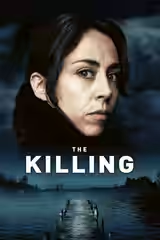
  3. Forbrydelsen (2007, Fi1m 84)Twenty hours on one murder, and a detective who forgets to go home.

  4. Top of the Lake (2013, Fi1m 82)Elisabeth Moss in a New Zealand town where the police are part of the problem.

  5. Mare of Easttown (2021, Fi1m 78)Kate Winslet, a small Pennsylvania force, and grief that gets in the way of the job.

Free account

Know what to watch tonight

Two lists that know where things are streaming, collections you can share, your own score beside ours, and Discover that remembers what you have seen.

  • Want to see, sorted by what is streaming now
  • Seen, with your score out of ten
  • No adverts, ever