Bridget Christie’s menopause comedy is funny, warm and properly interested in the woman doing the unpaid work. The rural eccentricity occasionally feels overworked, but Christie gives Linda enough stubborn life to make the journey worthwhile.
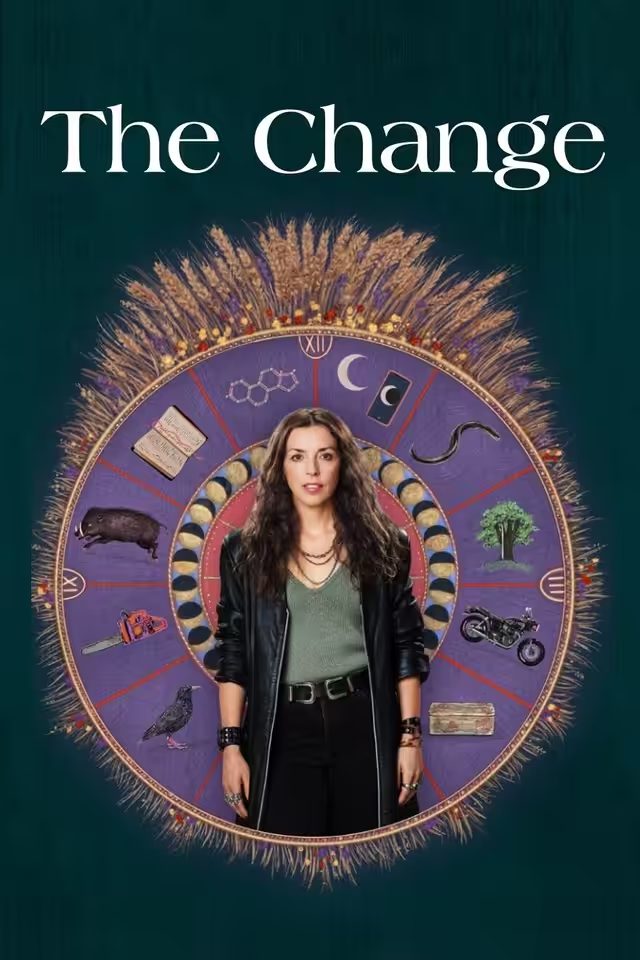
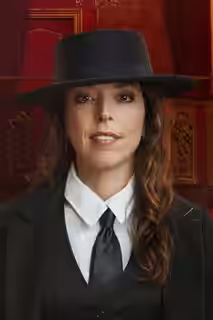
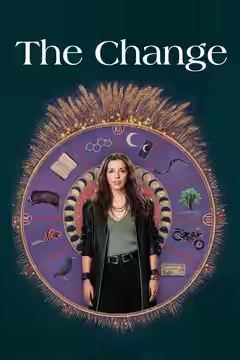
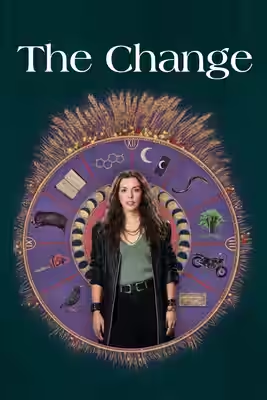
The Change is a funny, humane comedy that occasionally tries too hard to be peculiar. Bridget Christie writes and plays Linda, a 50-year-old wife and mother who heads to the Forest of Dean on a motorbike after the menopause makes her reconsider her life. Christie gives her a bluntness that is funny without needing to be endearing. Her impatience is easy to understand in a life organised around other people’s needs.
Christie’s writing is particularly good on domestic work: the jobs that become somebody’s permanent responsibility because everybody else has stopped noticing them. Linda’s frustration is well founded, and the writing gets laughs from the unfairness of her position. She is not obliged to be gracious about it. There is pleasure in watching a comedy ask what happens when the person doing the work decides to do something else.
We felt relieved when Linda headed off on her motorbike. Christie makes the wish to be somewhere else easy to understand. Al Campbell’s direction makes the Forest of Dean an inviting place to escape to, with a folky atmosphere that suits the increasing strangeness of the comedy. The move into a rural community also brings other people’s concerns into Linda’s attempt to attend to her own.
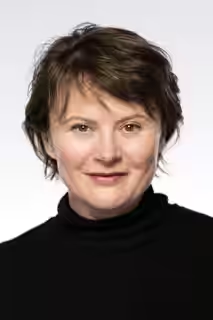
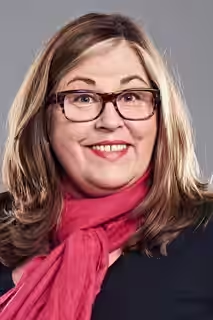
Campbell has a capable ensemble to work with, and its company is one of the programme’s chief pleasures. Christie keeps Linda direct and understandable, so there is someone to stay interested in when the surrounding comedy grows more fanciful. Around her are Monica Dolan as Carmel, Liza Tarbuck as Siobhain and Paul Whitehouse as Tony.
The difficulty is that Christie and Campbell sometimes seem to assume that an odd encounter will be entertaining because it is odd. The first series has six episodes, but there are stretches where the pace slackens while the programme enjoys its collection of local characters. The jokes do not always repay the attention, and Linda’s wish to reclaim her life is more involving than the effort to make her surroundings distinctive. A little less insistence on strangeness would have helped the comedy.
The interest in climate change and gender identity could easily make the series feel crowded, but it belongs to Christie’s curiosity about how people live together. These concerns widen the story beyond one woman’s understandable need for a break. As a comedy about middle age, it benefits from letting Linda want more than small improvements to her existing life. The writing does not need a string of jokes about symptoms to make its subject clear.
Try it for Christie, especially if comedies about family life usually leave you wondering who is clearing up afterwards. A taste for woodland eccentrics will help with the slower stretches. Leave the washing-up until afterwards.