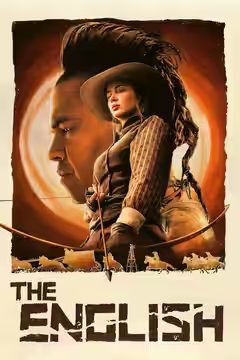
Hugo Blick’s six-part revenge western gives Emily Blunt and Chaske Spencer a long ride across the plains and a great deal of handsome sky. The two leads and Arnau Valls Colomer’s camera are worth the trip; the plotting around them is not always.
Hugo Blick created, wrote and directed all six episodes of The English himself, which tells you most of what you need to know about it. It is one man’s western, made to one man’s taste, and that taste runs to wide flat horizons, sudden violence and people who talk in complete paragraphs. The story underneath is simple. An Englishwoman wants a man dead, a Pawnee ex-scout wants land he was promised, and the two of them ride north together because neither is safe alone. What Blick builds around that is a good deal less simple, and not always to the series’ advantage.
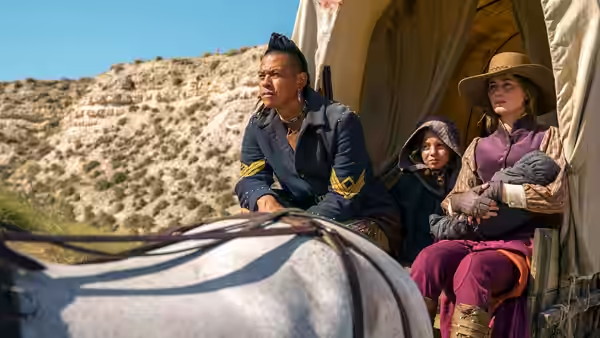
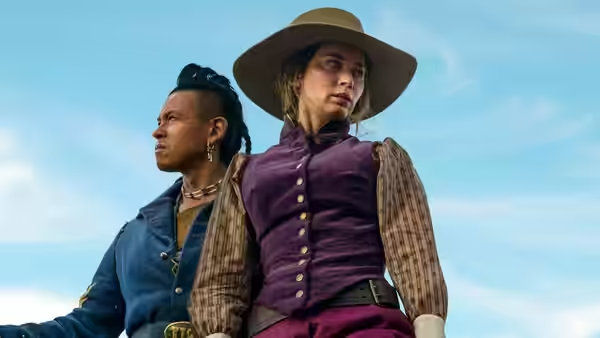
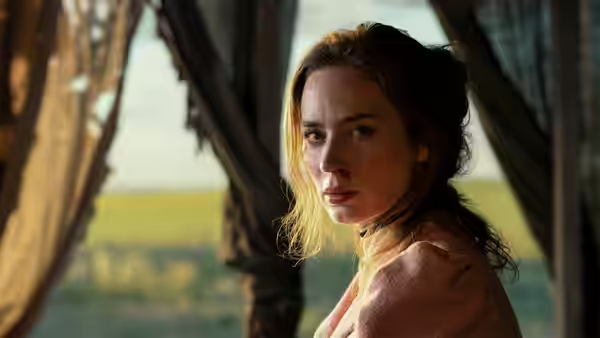
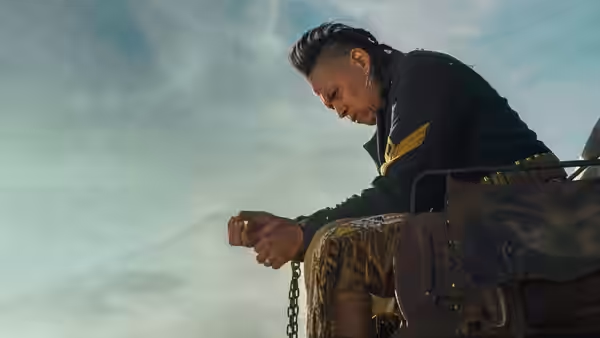
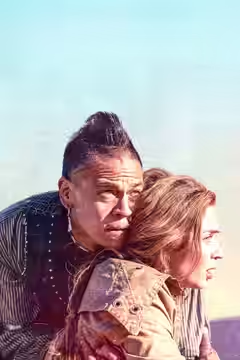
The leads carry it. Emily Blunt plays Cornelia as a woman who has decided to be brave and is checking, every few minutes, whether the decision has held. She talks too much, the series knows it, and Blunt lets the chatter run just long enough before the face beneath it shows. Chaske Spencer does the opposite. Eli says as little as he can, and Spencer plays him as a man who has spent his life being looked at by people who made up their minds about him before he opened his mouth. Their first proper conversation, by a wagon in the dark, is the best scene in the opening hour, and it is two people sitting still.
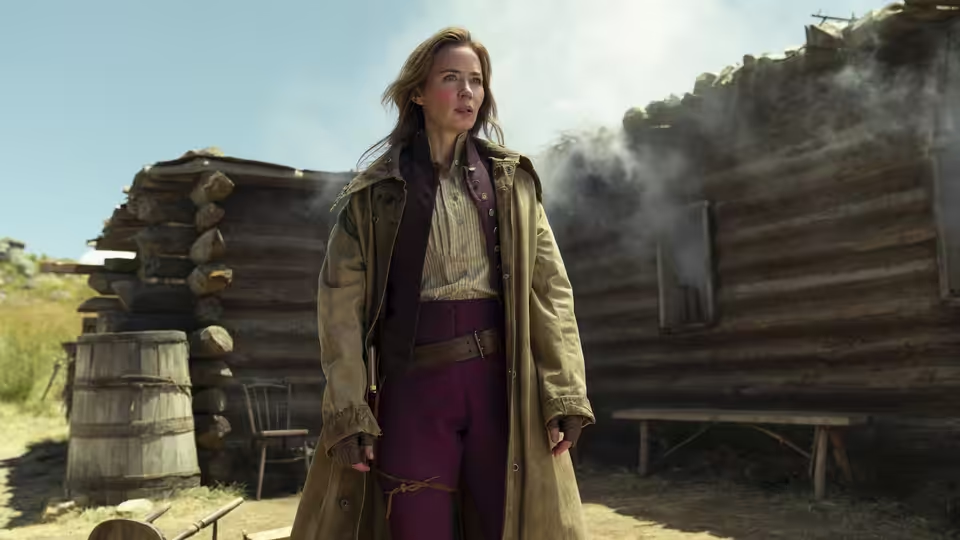
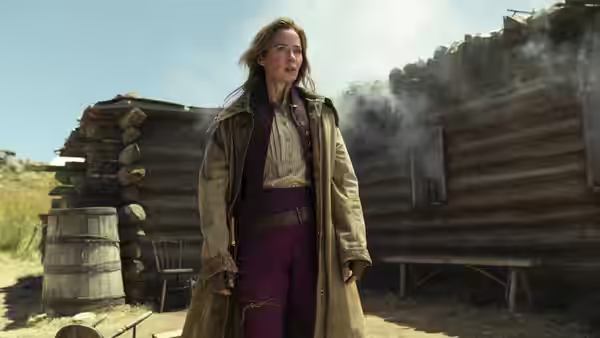
Arnau Valls Colomer shoots the plains with the horizon low and the people small, and he mostly holds the camera still and lets riders cross the frame. The land looks empty and it looks as if it belongs to no one, which is the point. Chris Roope’s production design keeps the settlements to a handful of unpainted boards, so that when Watts’s hotel turns up with a bar and a shelf of bottles it looks like an intrusion. Phoebe De Gaye puts Cornelia in a pale pink travelling dress and a parasol, a colour nothing else in the frame shares, and we could see from the first shot why every man she meets assumes she is either mad or rich.
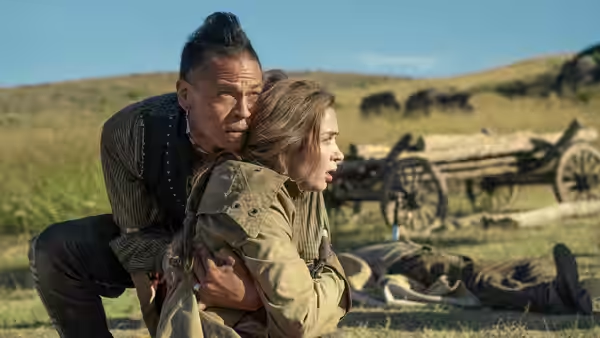
The violence is fast and shown plainly. Ben Yeates and Andy Morrison cut the shootings as short, flat events, no slow motion, no build-up; somebody is talking and then they are not. One killing in the first episode, done in daylight to a character we had only just been introduced to, horrified us more than the larger set pieces later, because it was finished before we had registered it was happening. Federico Jusid’s score stays out of these moments and arrives afterwards, strings and a slow guitar, and his use of Mazzy Star’s “Fade Into You” over one episode’s close is the sort of anachronism that ought to be embarrassing and is not.
The trouble is everything else. Blick has not made a series about two people; he has made a series about a territory, and he wants us to meet the sheriff, the rancher, the homesteaders and the soldiers of Hoxem before the leads have got anywhere near it. Ciarán Hinds is on screen for a single episode and Toby Jones for barely more, and both are better company than most of the people who replace them. By the third and fourth hours the strands have multiplied to the point where we were keeping a list, and a story that began as a straight line north has doubled back through flashback twice. It all connects. It takes too long doing it.
There is also the talk. Blick likes a line that could stand alone, and nearly every character gets one, including men who are about to be shot and would, you would think, have other things on their minds. Some of these land. Many make the plains sound like a debating chamber. Tonantzin Carmelo’s Touching Ground says less than almost anyone in the series and is the better for it.
Set against the revisionist westerns it plainly admires, it is more generous than most: it wants its Pawnee scout and its Englishwoman to fall for each other and it half-earns that. Six hours at 49 minutes apiece is a long ride. Watch the first two episodes in one sitting, because the middle two will test you and the last two are worth getting to. It is a 15 certificate and means it.