Jack Thorne’s six-part horror begins as a familiar chosen-boy story and becomes something frightening and its own. Johnny Harris is the reason to stay through the shaky opening hour; the dead, when they finally stand still, are the reason you will not sleep.
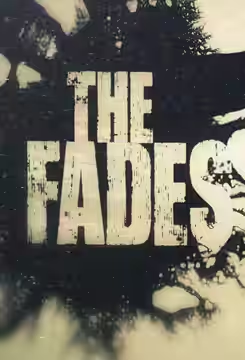
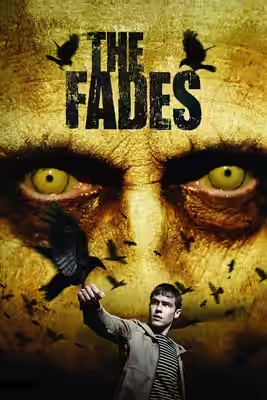
Jack Thorne, who wrote on Skins, has made a six-hour horror about a sixth-former who sees the dead. The first episode is shaky. It has the chosen boy, the tired mentor who explains the rules, the clever friend who knows how this sort of story goes, and anyone who watched Buffy the Vampire Slayer will know where the furniture is. Stay with it. By the third hour The Fades has grown into a scrappy, frightening series with its own ideas about what the dead want from us, and we finished it unsettled and glad we had.
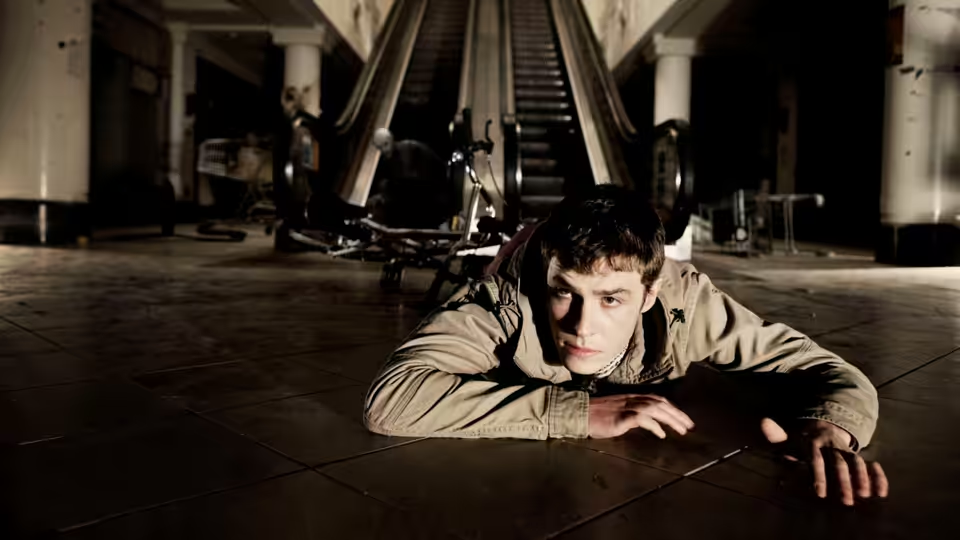
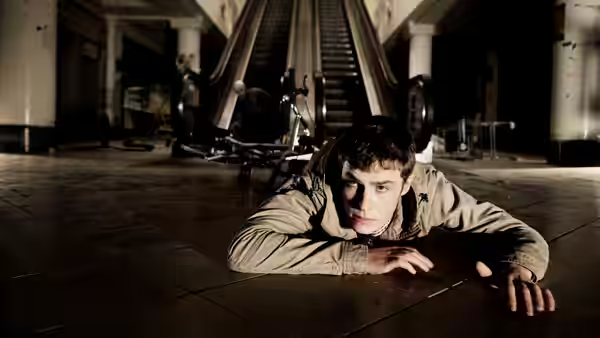
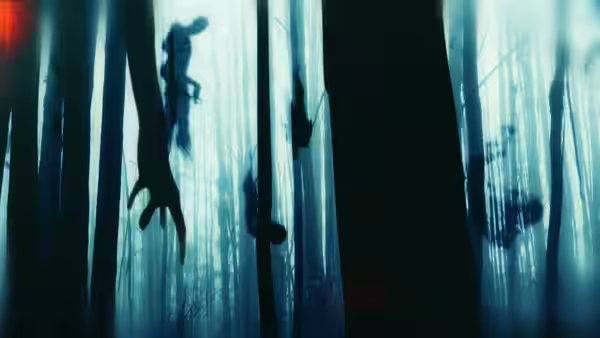
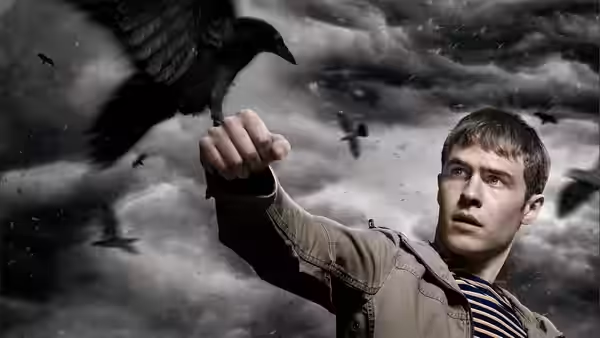
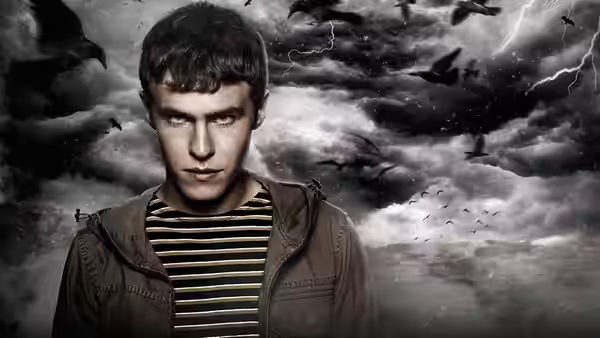
The dead who could not move on are called Fades, and they do not float or glow. They stand about. Stephan Pehrsson shoots them in flat English daylight, in car parks and school corridors, and does not light them any differently from the living, which is why they are hard to look at. Catrin Meredydd gives the town nothing to be proud of: pebbledash, strip lights, a derelict precinct. Paul’s dreams of ash are the one place the series allows itself a picture, grey flakes settling on a town that does not know it is finished.
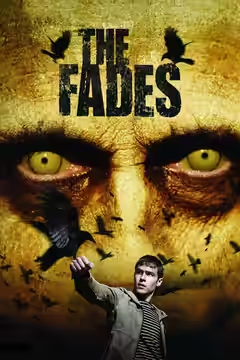
The first time a Fade stood at the back of a frame and did nothing, we were properly frightened. The make-up gives them skin like wallpaper coming away from a damp wall, and the series has the nerve to let them be sad before it lets them be dangerous. The horror, when it comes, is wet and close and badly lit, which is the right way round.
Johnny Harris carries the mythology, and it is heavy. Neil Valentine is a man in a bad coat who has fought this alone for years and expects no thanks, and Harris plays him with a reasonable, patient voice that keeps saying unreasonable things. When the writing asks him to explain what an Angelic is, or why the dead are turning, he makes it sound like a man reading the gas bill, and the information goes down easier for it.
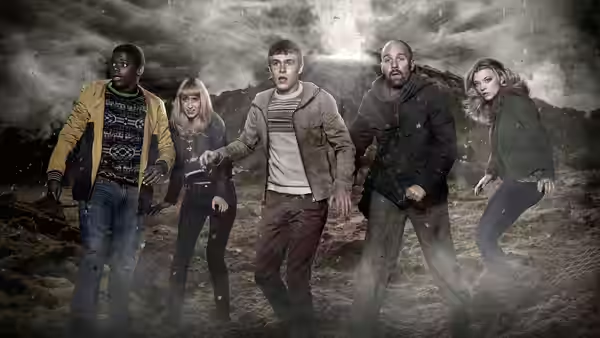
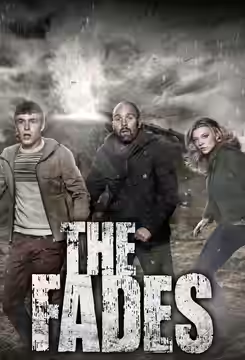
Iain De Caestecker makes the chosen boy bearable. His Paul sweats, apologises, and looks at every revelation as though he would rather it had happened to somebody else. Daniel Kaluuya’s Mac gets the best lines and talks over all of them, a boy who has seen every film and is thrilled, against his better judgement, to be in one; we laughed at most of his speeches and then felt we should not have, because Thorne lets us see how lonely he is under them. Lily Loveless is sharp and cruel as Anna, and Claire Rushbrook, as their mother Meg, knows something is wrong with her son and has run out of professionals to ask.
The quiet surprise is Natalie Dormer and Tom Ellis as Sarah and Mark Etches, a marriage already in trouble. What happens to Sarah in the opening minutes sets the story going and we will leave it there. Their scenes together are the ones we did not expect to be moved by, and were, because Thorne writes them as two people who still like each other and cannot say so.
The rules shift from episode to episode, and we were never sure what an Angelic could do or why ascension stopped working; nor, at times, was the series. Paul’s pursuit of Jay is written thinly and Sophie Wu is given little to do but be wanted. Paul Thomson’s score pushes at moments the pictures had already handled. Three editors are credited, Luke Dunkley, Matthew Tabern and Sam Williams, and the pace lurches, long talk then sudden running, which may be why. Farren Blackburn and Tom Shankland share the direction and favour a hand-held wobble that helps the frights and hurts the conversations.
Six hours, a 15 certificate, and a last episode that has too much to do and does most of it. If British horror is your genre, this is a good evening, and a better two. Watch it with the lights off and somebody beside you who knows nothing about it, and do not let them look up what a Fade is before Harris tells them.