Justin Kurzel’s five-part adaptation of Richard Flanagan’s novel is the harshest account of the Burma Railway we have seen on television, and the most tender about the affair before it. The 1980s strand is thin, but we recommend it, with the lights on.
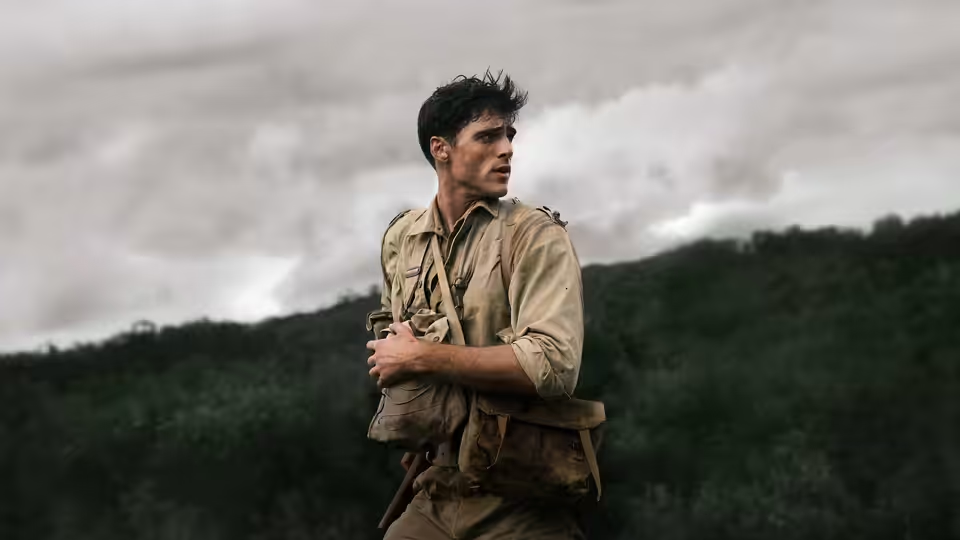
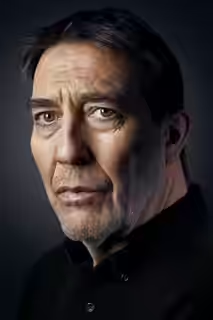
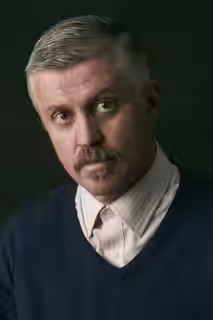
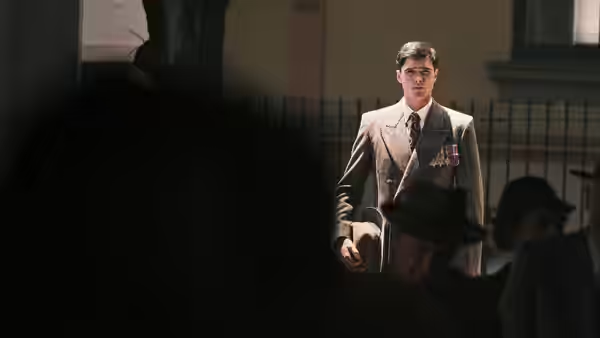
Dorrigo Evans is a surgeon, and The Narrow Road to the Deep North follows him across forty years in three strands. In the 1940s, played by Jacob Elordi, he is engaged to Ella (Olivia DeJonge) and visiting his uncle Keith (Simon Baker), who keeps a coastal hotel with a young wife, Amy (Odessa Young). In a jungle camp in Thailand he is the senior officer among starving prisoners building a railway for Major Nakamura (Shō Kasamatsu). In the 1980s, played by Ciarán Hinds, he is a famous man who gives speeches about the war and goes home to a wife (Heather Mitchell) he does not look at. Justin Kurzel directs all five episodes from Shaun Grant’s adaptation of Richard Flanagan’s novel, and they have made the harshest thing about the Burma Railway we have seen on television.
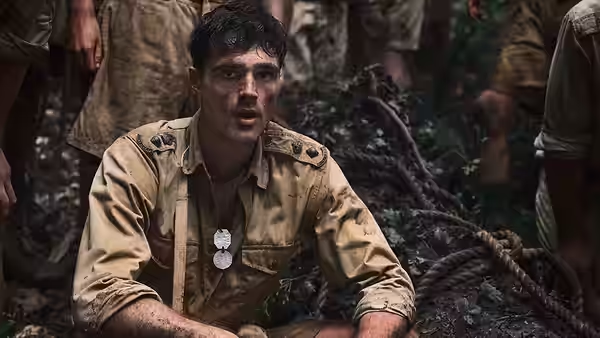
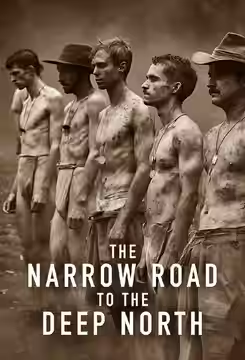
Sam Chiplin shoots the camp in near darkness, brown and green, so that faces arrive out of the murk and a lantern is an event. Alice Babidge, who designed both sets and costumes, has built the place out of bamboo, mud and tarpaulin and dressed the men in what is left of their uniforms, which by the third episode is a loincloth and a hat. Kurzel does not look away, and we were horrified, properly horrified, by a scene in which Dorrigo cuts a rotting leg off a man with a saw while four others hold him down. We have seen amputations in war films; not one where the camera stayed on the surgeon’s face rather than the leg, and where what was on the face was arithmetic.
Elordi is tall, and Kurzel uses it. He plays Dorrigo as a man who speaks when he has to, upright when the guards are watching and folding when they are not. He bargains daily with Nakamura for fewer men on the line, and Kasamatsu plays the Major as a tired, courteous man who believes in the railway and is sorry about the rest. Those two across a table are the best scenes in the camp. Thomas Weatherall as Darky Gardiner, William Lodder as Rabbit Hendricks and Christian Byers as Jack Rainbow give the prisoners faces and jokes, and the series takes its time with them.
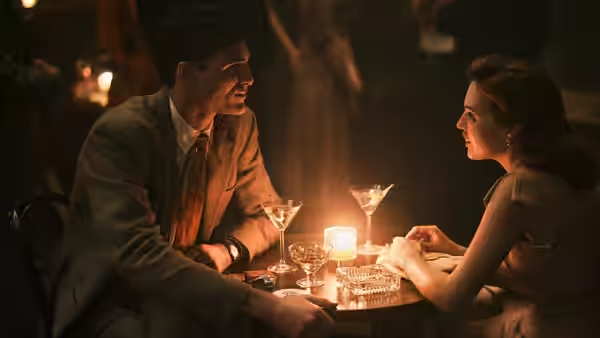
Then it cuts to the coast before the war, and the light changes. Chiplin shoots the hotel in late-afternoon sun through net curtains, and Odessa Young’s Amy stands in that light looking at a man she should not be looking at. The affair is played straight: no soft focus, a good deal of sweat, and two actors who seem to find each other funny, which is rarer on screen than desire. Simon Baker gives Keith a decency that makes it worse. Jed Kurzel’s score, low strings and a drone that sometimes settles into something like a hymn, is the same in both strands, so the bedroom and the camp are scored as one memory. Alexandre de Franceschi cuts between them on a gesture or a colour rather than a beat.
The 1980s strand is where it thins. Hinds is as good as he always is, and the series gives him a lectern and a hotel bed with a colleague’s wife (Essie Davis as Lynette Maison), and asks him to make a man out of them. He nearly does. Heather Mitchell’s older Ella has less to work with. The three timelines are sometimes cut together so insistently that the point, that he never left the camp and never left the hotel either, is made twice more after we have taken it. The fourth episode piles cruelty on cruelty until we were numb rather than moved, and we do not think numb was the intention.
Kurzel and Grant have worked together before, on Snowtown and Nitram, both about Australian men and violence, neither willing to explain it away. This is the first time they have had a love story to go with it, and the tenderness gives the brutality somewhere to land.
Watch it over more than one night, and with someone, so there is a reason to pause. And do not go in expecting the war to be the thing that undoes him.