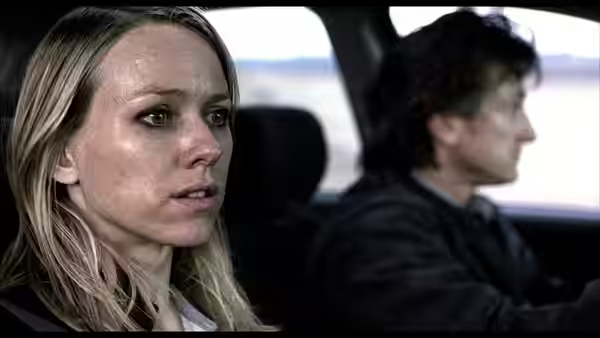
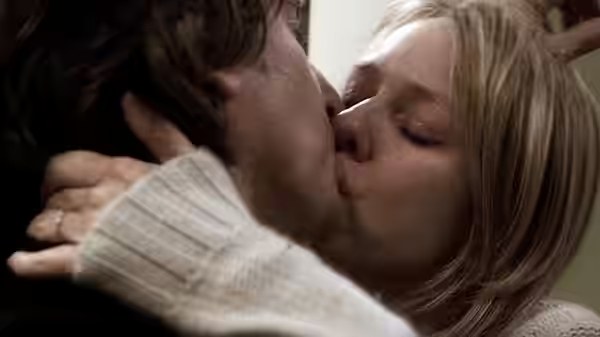
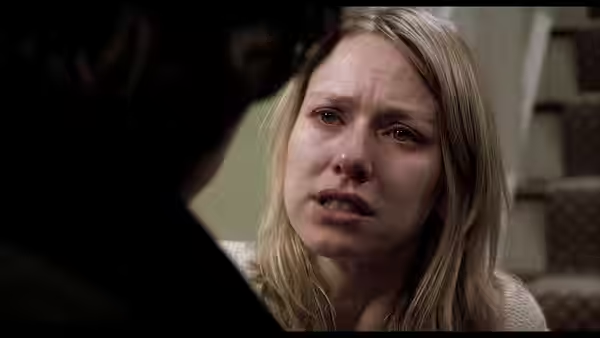
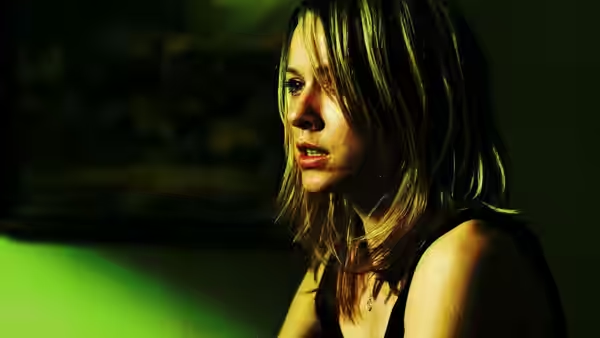
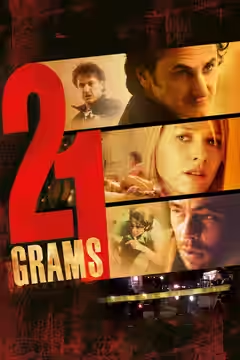
The fractured storytelling in 21 Grams can feel needlessly elaborate, but Sean Penn, Naomi Watts and Benicio del Toro make its suffering difficult to dismiss. A demanding drama, worth enduring for the people in it.
21 Grams is worth seeing for its actors, even when its broken chronology makes their work harder to follow. Alejandro González Iñárritu directs a drama about three lives connected by a traffic accident, with grief, guilt and faith all demanding attention. Guillermo Arriaga’s screenplay gives us the consequences in pieces, making us reconsider people as more of their circumstances become clear. That can be absorbing, but there are stretches when we are busy placing a scene instead of feeling what happens in it.
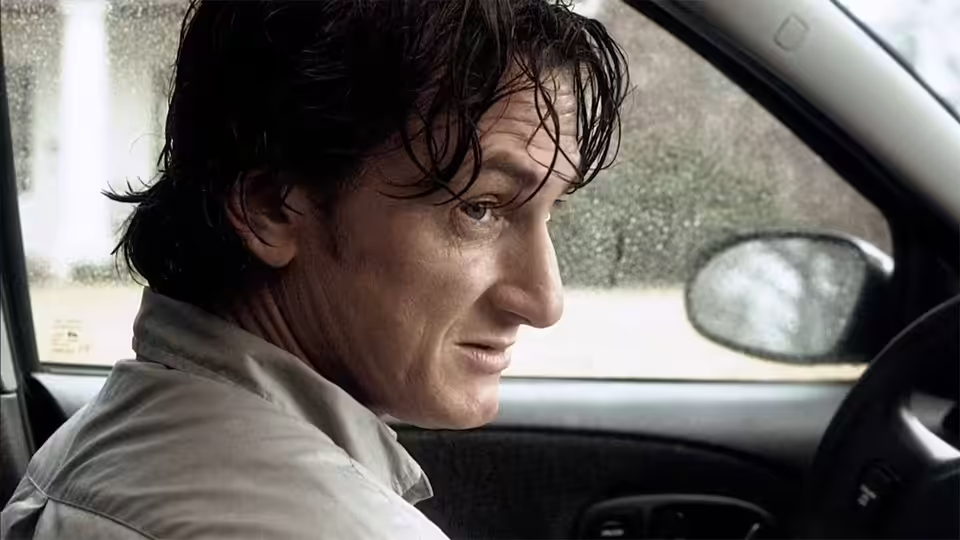
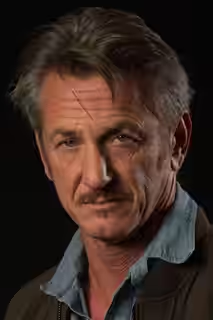
Stephen Mirrione’s editing makes the jumps forceful enough to hold our attention, and the early uncertainty encourages us to look closely at everyone. A face in distress arrives before a full explanation, so an actor must establish something the chronology has not yet supplied. We were upset by Paul’s anger at the doctor’s because Sean Penn makes the loss of composure feel so exposing. For that scene, working out where we were in the story mattered less than watching a man struggle to stay in control.
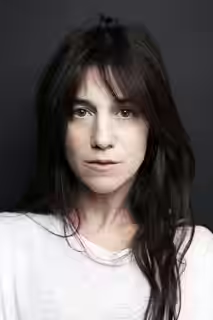
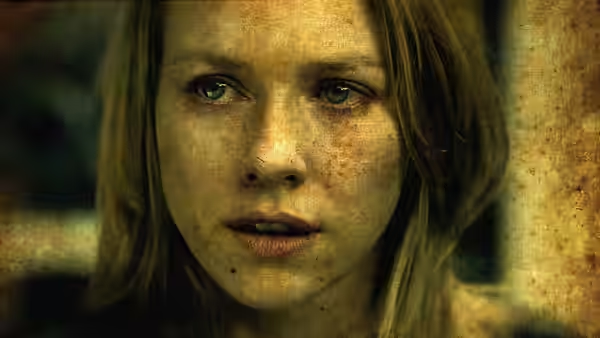
Naomi Watts gives Cristina Peck’s distress an immediacy that makes the film’s rearranging seem briefly unnecessary. We do not need another clue to take her seriously, and the performance holds our attention even when the writing pushes hard for anguish. Benicio del Toro gives Jack Jordan a troubled conviction that keeps the questions about guilt and faith attached to somebody we can care about. Neither performance lets the suffering become merely a subject for discussion, though the script occasionally seems determined to conduct one.
Rodrigo Prieto’s gritty cinematography makes these performances uncomfortable to watch, with little visual relief from the distress. Yet the insistence on roughness becomes wearing; we do not need quite so much encouragement to feel that these lives are difficult. Brigitte Broch’s production design is particularly effective around the doctor’s scene, where the surroundings do little to soften Paul’s anger. Our attention stays on the confrontation, which is quite enough to make the scene hurt.
Gustavo Santaolalla’s music reinforces the mournfulness, sometimes more firmly than the performances require. The religious themes have a similar problem: there is plenty to consider, but the film keeps pressing us to appreciate the importance of what it is considering. The voice-over also explains too much, leaving little space for us to decide what we think. These are frustrating choices in a drama whose actors communicate complicated feelings without needing everything put into words.
The problem with the chronology becomes clearer as the connections emerge. With less left to discover, the rearrangement starts to feel like extra work imposed on a fairly direct account of damaged lives. A crime drama can use our curiosity to make us look harder at its characters, but here we sometimes end up checking our understanding of the sequence instead. The cast gives us plenty to think about without that distraction, and the scenes retain their force when the puzzle has ceased to be interesting.
Still, there is enough here to justify the effort if difficult, performance-led drama is what the evening calls for. The cast makes the grief particular, and the film is considerably more affecting when it trusts them to do that without further explanation. Give it your attention, but do not choose it for an undemanding night together.