Film review

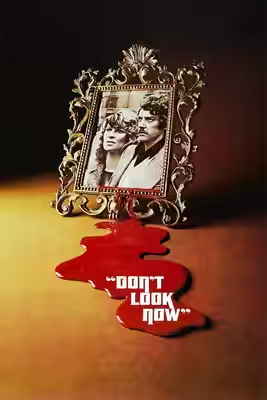
Don't Look Now

1973 · Directed by Nicolas Roeg · 1h 50m · 18

In a sentenceVenice looks damp, the marriage feels real, and we would like someone to turn the lights on

ThrillerDramaHorror

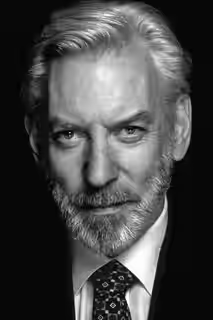
After the death of their young daughter, John and Laura Baxter travel to Venice. Donald Sutherland and Julie Christie play the bereaved couple, whose time in the city brings them into contact with the supernatural. Laura looks for a connection with the child they have lost, while John resists explanations he cannot make sense of. Around them, wintry Venice becomes a place of unsettling impressions and possible warnings. Nicolas Roeg directs a story of mourning, marriage and premonition, in which the couple struggle to understand what they are seeing and what they want to believe.

Plays from YouTube when you press play; nothing loads from them until then.

Fi1m review

Don’t Look Now is a frightening, deeply felt film about bereavement, with Donald Sutherland and Julie Christie making its marriage convincing. Roeg’s fractured storytelling occasionally labours the warnings, but the fear comes from people worth caring about.

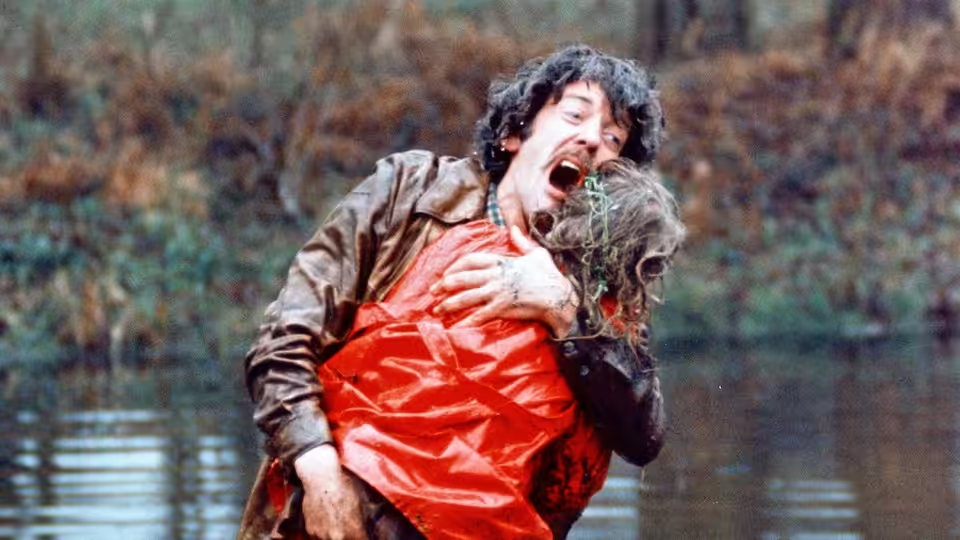
Nicolas Roeg’s Don’t Look Now is a frightening film that takes a grieving marriage seriously enough to make the fear hurt. John and Laura Baxter, played by Donald Sutherland and Julie Christie, go to Venice after their young daughter drowns. The possibility of contact with her unsettles a couple who are already struggling with her loss. Roeg gives their sorrow time and attention, so the supernatural matters before there is much to explain.

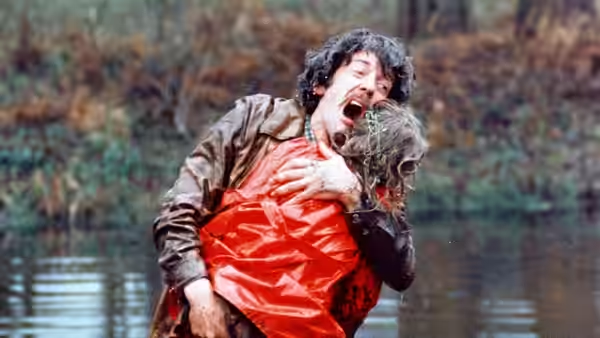
We were shaken by the opening drowning, where the cutting makes a family tragedy feel horribly difficult to take in. Editor Graeme Clifford keeps returning us to that unsettled way of watching: a fragment catches the eye before its place in the story becomes clear. The shifts in time require attention, but they also suggest how little control these people have over what enters their thoughts. Roeg does not let a remembered image stay safely in the past. The editing keeps it close to what is happening now.

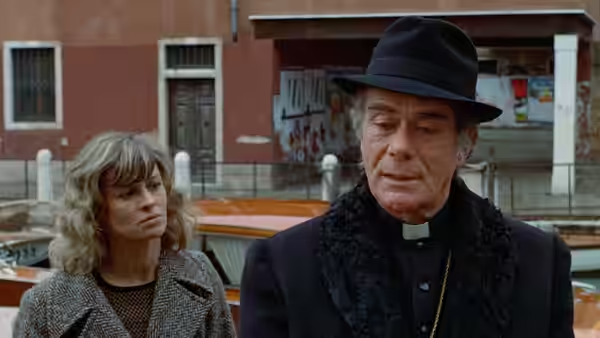
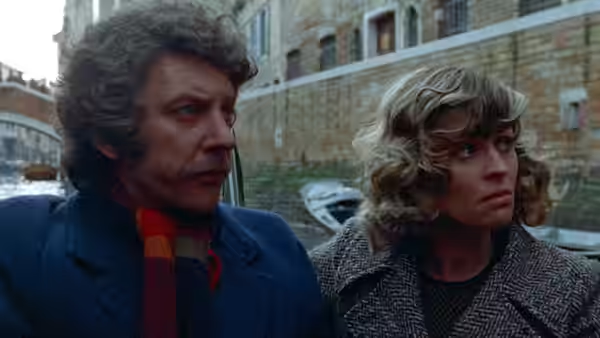
Anthony B. Richmond photographs Venice in muted colours, with red standing out sharply enough to pull attention away from everything around it. That selective use of colour makes us search the picture, often before there is a clear reason to be alarmed. The dampness and the water matter just as much: after the opening, even the surroundings offer little comfort. Venice remains recognisably a real city, with the cold and the difficulty of finding a way through it left in.

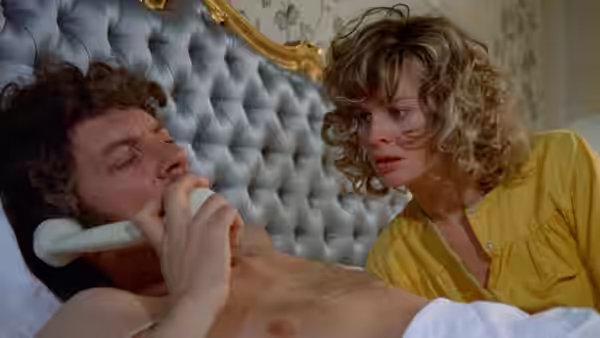
Sutherland and Christie give the film the everyday familiarity it needs. They are believable as people who have shared a life before the story begins, and who can still be close without being equally ready to face what has happened. Sutherland makes John’s resistance to the supernatural understandable; accepting it would mean accepting possibilities he cannot manage. Christie gives Laura’s longing for contact with their child enough urgency to keep it from becoming merely a plot device. The elliptical love scene allows them tenderness without pretending that sex has repaired anything.

Pino Donaggio’s music gives the sadness a clear, direct expression. That is useful when Clifford’s cutting has us occupied with how one moment connects to another: the score keeps the parents’ hurt from getting lost in the business of following clues. The sound contributes to the unease without making the couple seem remote. There is room here for tenderness, even when the images are making it difficult to relax.

The weakness comes when the premonitions begin to feel too insistently arranged. Allan Scott and Chris Bryant’s screenplay sometimes pushes John towards disbelief so firmly that a recognisable man risks becoming the person a supernatural thriller needs to ignore its warnings. Those stretches can feel chilly, and the film occasionally makes us wait for connections we have already begun to suspect. It is a small but real limitation in a film otherwise so attentive to the untidiness of grief.

The supernatural thriller often keeps us waiting for an explanation, and Roeg knows how to exploit that habit. He also makes the waiting uncomfortable in a different way: spending time with these parents means facing a loss that no explanation will make bearable. Treating the film solely as a puzzle would miss what Sutherland and Christie are doing. Give it your full attention, and preferably some company afterwards.
Critical consensus AI synthesised

82
Positive
12
Mixed
1
Negative
1

Most critics praise Don’t Look Now as a deeply unsettling supernatural thriller whose scares grow from the couple’s grief. Praise centres on Nicolas Roeg’s fractured editing, the wintry Venice setting and the convincing intimacy between Sutherland and Christie. The love scene draws particular attention for its emotional weight and elliptical cutting. Across the positive reviews, the film’s disorienting images and sound make bereavement and isolation felt rather than merely supplying an eerie backdrop.

The spread is wide, though dissent is limited: the main disagreement concerns whether the technique deepens the emotion or keeps it at a distance. The New Yorker admires the elegance but finds little emotional depth, while The New York Times sees an attractive Venetian travelogue short on suspense. Little White Lies offers a narrower reservation about dated plotting while praising the opening’s staging, performances and editing. Most critics instead find the formal disruption essential to the film’s disturbing effect.

Radio Times
★★★★★ · Tom Hutchinson
100

This is director Nicolas Roeg's masterpiece, a supernatural chiller with a fear-drenched mood of alienation sustained to an unforgettable climax. The erotic love-making scene between the leads forms the sensual core of the time-distorted vision of terror set in wintry Venice.

Read the full review →
Empire
1 January 2000 · Adam Smith
90*

The film is one of the most haunting and enigmatic supernatural thrillers ever made, with a mournful heart provided by Sutherland and Christie's believable grieving couple. It singles out the infamous sex scene and devastating ending for particular praise as brilliantly realised and still shocking.

Read the full review →
Slant Magazine
9 October 2023 · Chuck Bowen
90*

The review calls Roeg’s film a jumpy, melancholic masterpiece driven by emotional desolation and grief, elevated by its prismatic editing and sound design. It singles out the celebrated, elliptical love scene and the way the fractured structure conveys the couple’s isolation and fragility.

Read the full review →
Time Out
29 March 2012 · TM
90*

A superbly chilling essay in the supernatural about a couple shattered by the death of their small daughter who go to Venice to forget and are sucked into a terrifying vortex of time. Conceived in Roeg's usual imagistic style, it's hypnotically brilliant.

Read the full review →
The AV Club
8 June 2018 · A.A. Dowd
85*

The review praises Nicolas Roeg’s film as a singularly haunting work that blends grief drama with supernatural elements through disorienting technique. It singles out the shocking climax and the way the story uses Venice as a labyrinth of the mind to explore mourning and self-fulfilling prophecy.

Read the full review →
The Guardian
5 July 2019 · Peter Bradshaw
85*

The critic finds Roeg's 1973 film still capable of delivering major scares and jump moments while praising its template-setting influence on horror. He singles out the convincing chemistry of Sutherland and Christie as a married couple and Venice's realistic, non-touristy depiction as standout elements.

Read the full review →

Cast

Stills

If you liked this, try…

The Innocents poster

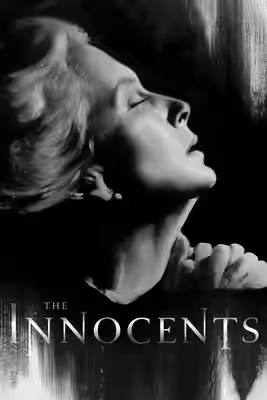
The Innocents

1961 · Another ghost story in which watching closely offers no dependable protection.

The Vanishing poster

The Vanishing

1988 · For the patient accumulation of dread around an absence nobody can bear.

Cure poster

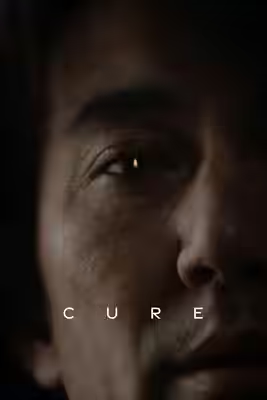
Cure

1997 · A colder, quieter investigation that makes everyday encounters feel difficult to trust.

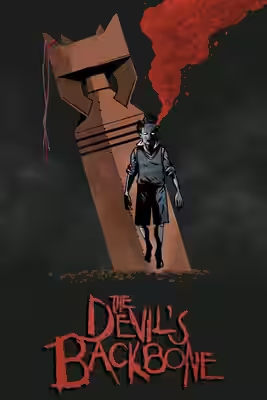
The Devil's Backbone poster

The Devil's Backbone

2001 · A ghost story that gives its frightened people lives beyond their fear.

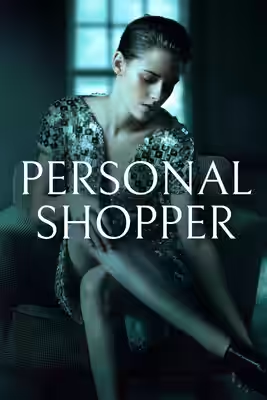
Personal Shopper poster

Personal Shopper

2016 · Bereavement and possible supernatural contact, with the uncertainty allowed to remain uncomfortable.