Eminem gives 8 Mile enough force to make its familiar underdog story worth following. Curtis Hanson handles the rap battles with assurance, though the women and the stretches between contests deserve more attention.
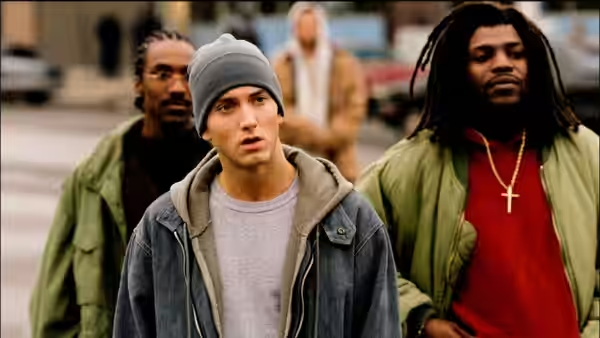
8 Mile is a good underdog drama with a performance strong enough to carry its familiar story. Curtis Hanson gives Eminem room to be difficult company, which is a sensible decision in a film about a young man struggling to be heard. The sulk, the anger and the determination make Jimmy worth watching without making him particularly pleasant. The rap battles reward our attention, although some patience is required between them.
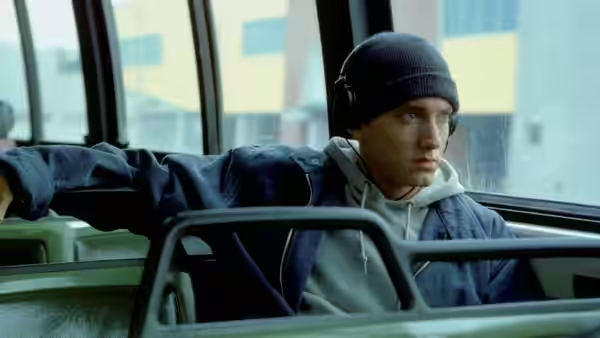
The useful thing about Eminem as Jimmy is how little he seems interested in winning our affection. He makes resentment uncomfortable, and he does not need a speech to suggest that being underestimated has become a daily irritation. At times the narrow emotional range leaves Hanson with too much of the same mood. Even so, the performance feels sufficiently personal to stop Jimmy becoming a collection of obstacles waiting to be overcome.
Rodrigo Prieto’s cinematography makes Detroit feel like somewhere people have to live, without turning every hardship into a picture for us to admire. Philip Messina’s production design supports that impression, giving the surroundings a weariness that suits Jimmy’s frustrations. We believe that simply keeping going takes effort here. That helps when Scott Silver’s script reaches for familiar setbacks, though there are stretches where the commitment to misery begins to feel dutiful.
The rap battles sharpen everything. Editors Jay Rabinowitz and Craig Kitson give these exchanges a pace the surrounding drama cannot always sustain, while leaving room for the force of a line to register. We were gripped by the rapping: hearing Jimmy organise his anger into rhythm made us care more about him than the stretches of brooding had managed. Eminem makes the act of finding and delivering the words absorbing in itself. The musical passages are persuasive about the pleasure and pressure of performing, even when the script is less curious about what the music means to Jimmy.
The women are less well served by Silver. Stephanie (Kim Basinger) and Alex (Brittany Murphy) have to register inside a story so firmly attached to Jimmy’s frustrations that their own lives feel secondary. We wanted more room for both, particularly when the men are allowed so much time to nurse their grievances. The imbalance weakens the drama: these women need interests beyond helping us understand the leading man, and the writing seldom gives those interests sufficient attention.
The handling of race is cautious too. Silver lets the underdog plot do so much of the explaining that the particular pressures of this rap scene sometimes become another general lesson about determination. It is easy to understand the appeal of that approach, and Hanson keeps the story accessible without making the contests feel like lessons. Still, the film could afford more curiosity about the culture Jimmy wants to enter, and less confidence that perseverance explains everything.
There is no need to arrive with an interest in rap to follow the pressure of these contests. Hanson makes the challenge immediate, and Eminem gives us enough reason to stay with a character who can be exhausting company. We would choose it for an evening when a forceful central performance matters more than an unfamiliar plot. Allow for some overworked unhappiness on the way to the music.