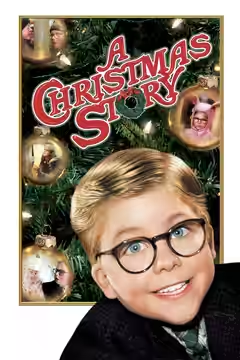
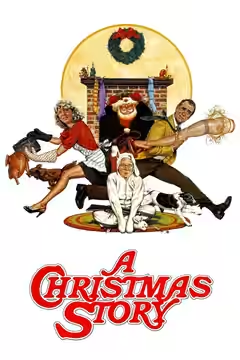
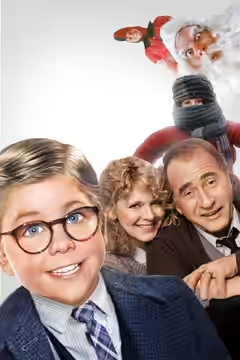
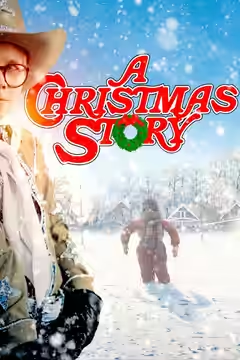
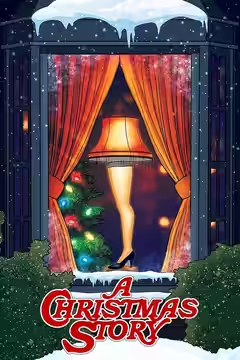
Bob Clark’s comedy, narrated by Jean Shepherd from his own stories, is warm without being sugary and funnier than its reputation as an heirloom suggests. It is loose, a string of anecdotes rather than a plot, and it is the better for it.
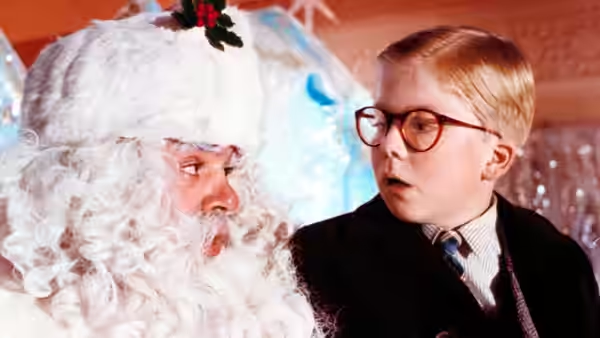
Bob Clark spends 93 minutes in a small town in December, watching a boy try to get a gun. That is the plot, if it can be called one. The screenplay, by Jean Shepherd, Leigh Brown and Clark from Shepherd’s own stories, is a dozen short ones laid end to end: the furnace, the flagpole, the bully, the parcel that arrives in a crate, the visit to Santa. Each is told with a grown man’s hindsight and a child’s sense of scale, and the film never once pretends the two are the same thing.
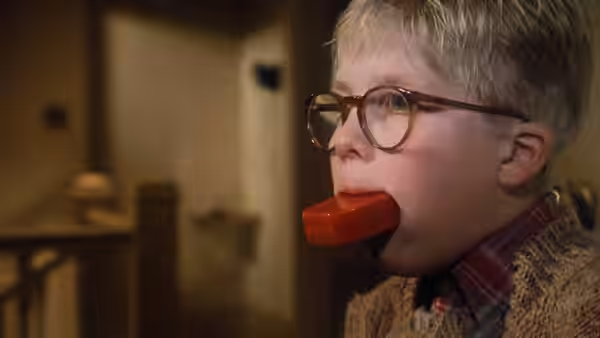
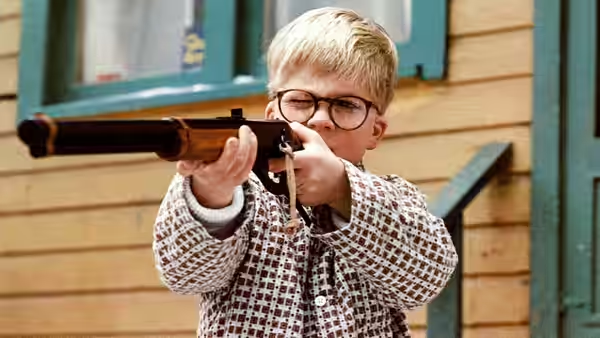
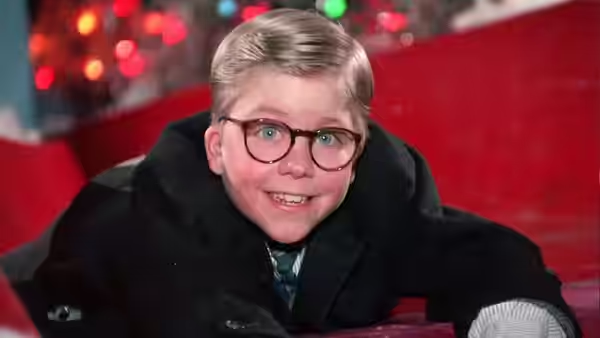
Shepherd’s narration does most of the work. He speaks as Ralphie grown up, about a Red Ryder air rifle, as another man might speak of the Holy Grail, in long, rolling, mock-heroic sentences that know how ridiculous they are. It could pall in ten minutes. It does not, because Shepherd’s Ralphie is not wise; he still thinks the gun was the most important thing in the world, and the film lets him. The comedy is in the gap between the voice on the soundtrack and the small boy in spectacles on screen, and Clark keeps that gap open throughout.
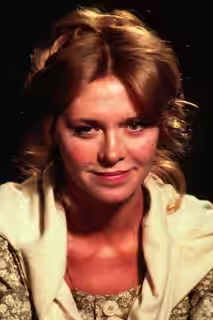
Darren McGavin is the other reason to see it. His Old Man is a man at war with a furnace, a neighbour’s dogs and a flat tyre, and he loses every battle in a stream of invented swearing that the narration calls art. McGavin plays him without a scrap of sentiment. He is short-tempered, vain, obsessed with crossword competitions, and plainly in love with his wife and children, though he would never say so. Melinda Dillon, as the mother, has the harder part, the one who says no, and she plays it tired and fond and knowing what her husband is like.
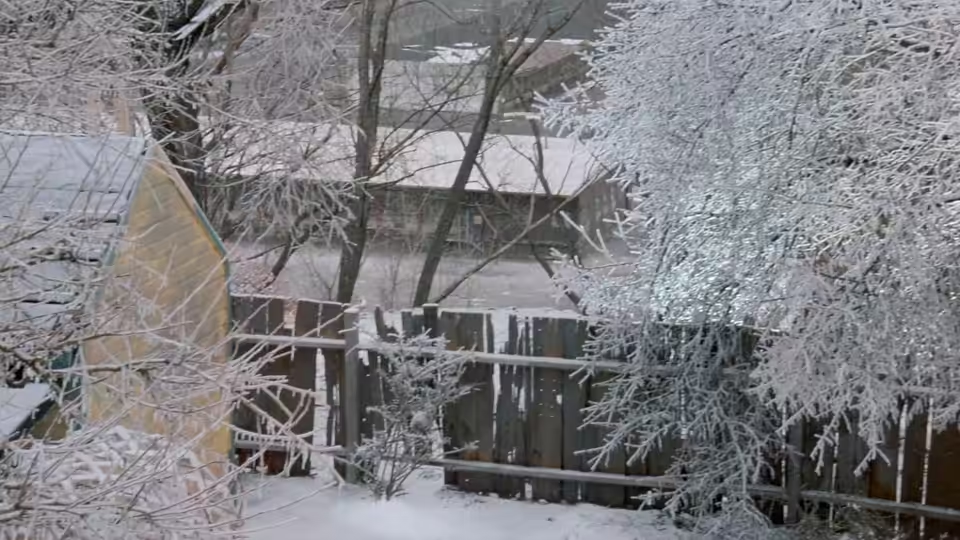
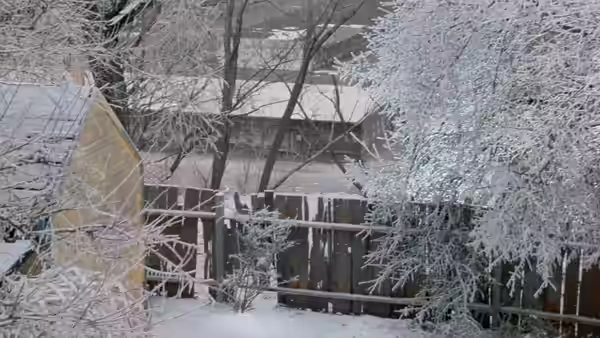
Reginald H. Morris shoots it in a soft, grey winter light, the snow flat and dirty at the kerbs, and the house lit warm and low as if the bulbs were forty watts. Reuben Freed’s Parker house is cramped and cluttered, the kitchen all patterned linoleum and steaming pots, the basement a black hole from which the Old Man’s voice rises. Mary E. McLeod puts Randy in a snowsuit so padded he cannot lower his arms, which is the best sight gag and costs nothing. Stan Cole cuts the anecdotes short and moves on before any of them outstays its welcome.
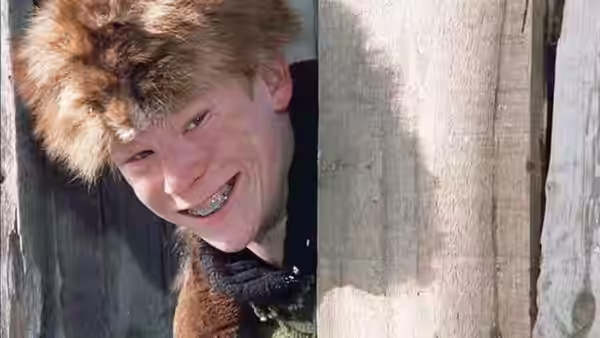
We laughed out loud at the flagpole. Schwartz issues a triple dog dare, Flick puts his tongue on the frozen metal, and Clark holds on the boy’s face while the bell rings and his friends drift away to class. The pay-off is the fire brigade and a teacher’s clipped questions, and Tedde Moore plays Miss Shields as though this has happened before. Later there is a fight in the snow, which we will not describe, and Dillon plays the aftermath at the dinner table without a word, and it moved us more than the film had prepared us for.
Not all of it works. Paul Zaza and Carl Zittrer’s score leans on borrowed carols and a honking, nudging comedy cue that tells us a joke is coming in scenes where the joke was already there. Ralphie’s daydreams, as a cowboy or a martyr to his parents’ cruelty, are shot bright and flat and run a beat too long, and the child actors around Billingsley are broad, as children are when told a scene is funny. Ian Petrella’s Randy is asked to whine constantly.
Against the usual Christmas comedy, which hurries towards a lesson, this one has none to teach. The parents are not reformed. The boy is not improved. Nobody learns the true meaning of anything. It is a film about wanting, the way children want, with the whole body, and it treats that wanting with respect and a straight face. It carries a PG.
It did not reach British cinemas until 16 October 2007, which is a long time to keep a Christmas present in the cupboard. See it at home, on a cold evening, with children old enough to be triple dog dared and adults old enough to remember losing arguments with a furnace.