King Hu’s A Touch of Zen gives its swordplay the attention usually reserved for landscapes, and the bamboo battle repays it. We recommend this absorbing three-hour film, though its expansiveness sometimes costs it urgency.
A Touch of Zen is worth setting aside an evening for, though we would hesitate to prescribe it as a straightforward action film. King Hu gives swordplay, adventure and fantasy room to develop across three hours, and the reward is a film whose surroundings matter as much as its combat. The expansiveness sometimes weakens the urgency. We recommend it warmly for the imagination of the staging, with the caveat that an appetite for fighting alone may not sustain the whole evening.
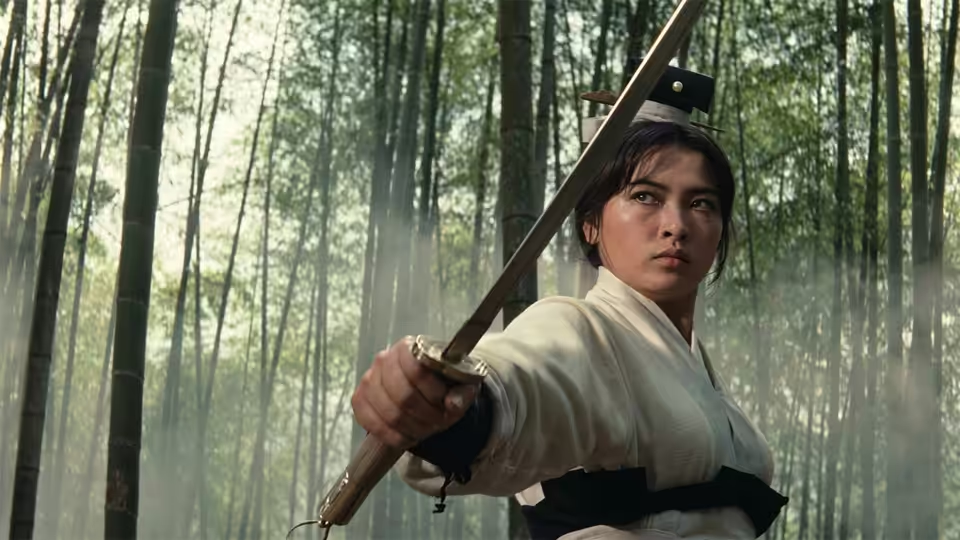
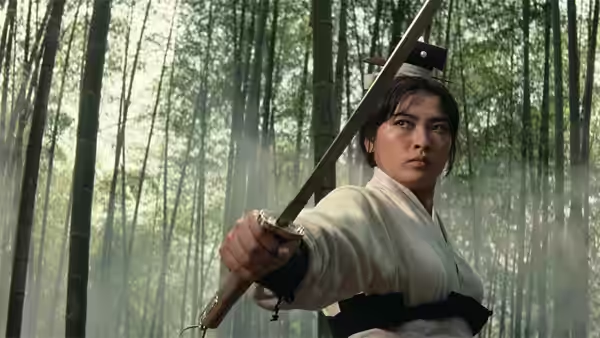
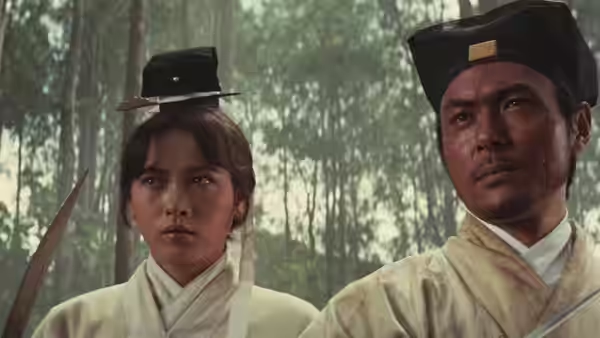
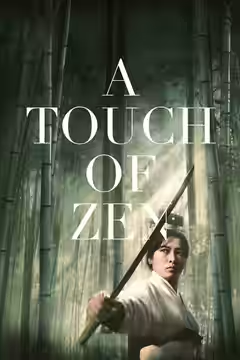
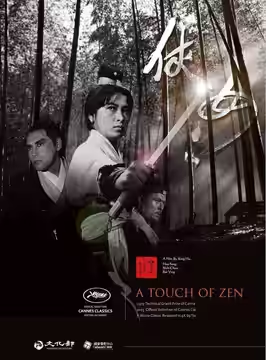
The bamboo battle makes the case. Cinematographer Hua Hui-Ying gives the forest such presence that concentrating only on the fighters would mean missing much of the pleasure. We were thrilled by the scene, specifically because the choreography made us attend to the bamboo as closely as the combatants. It is an unusually satisfying way to stage action: the setting keeps offering something to look at, without making the fighting seem incidental. The image deserves attention even when the immediate question of who has the advantage becomes less pressing.
King Hu and Wang Chin-Chen’s editing helps turn that visual richness into excitement. The rhythm of the cutting is a large part of the choreography’s appeal, and the scene rewards watching how a fight has been assembled. Wu Da-Jiang’s music supports the spectacle without becoming the chief reason it impresses us. That is a useful restraint in a film with so much else competing for attention, and leaves the images free to do most of the persuading.
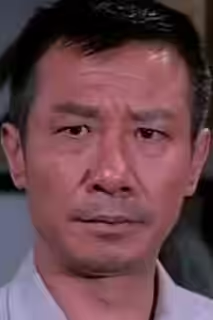
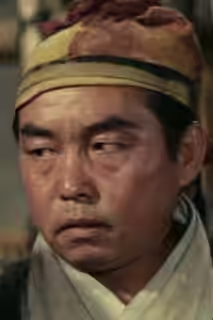
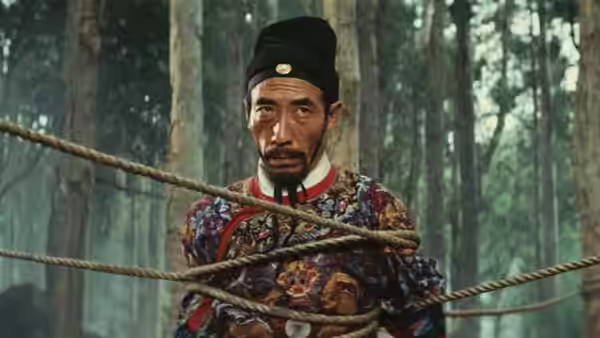
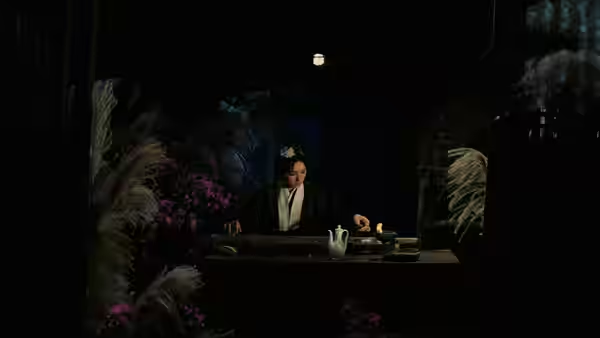
Hsu Feng’s Yang Hui-zhen has enough authority to hold our attention amid this visual competition. Shih Chun gives Gu Sheng-zhai a contrasting uncertainty, and the difference between their performances helps keep the people from being swallowed by the spectacle. King Hu, who also writes the screenplay, has more than a technical exercise in mind. Yet the images can remain more vivid than the characters, and there are stretches when the dramatic interest struggles to keep pace with the invention of the staging.
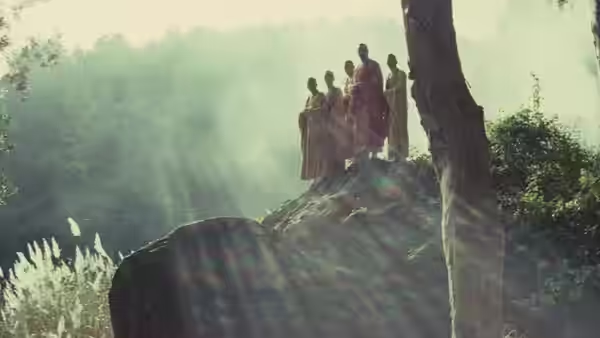
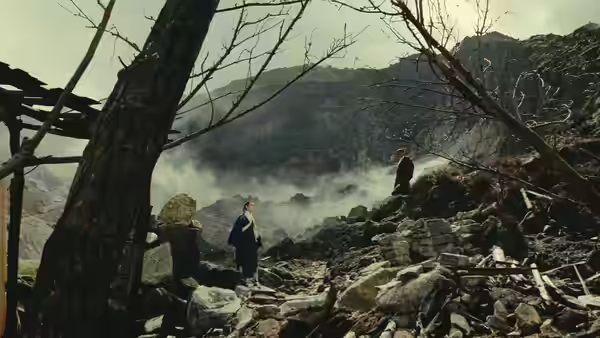
The haunted forest is a useful reminder of how far the film wants to range beyond swordplay. The fantasy gives the surroundings a different sort of interest, one that suits a filmmaker willing to spend time looking. But the full 180 minutes do not feel equally necessary, and the movement between kinds of pleasure can become less compelling than those pleasures are individually. A firmer sense of urgency would have helped away from the strongest set pieces. Some of those stretches could be shorter.
For a martial-arts film, it has an unusually generous idea of what counts as excitement. The pleasure of the bamboo battle comes partly from having so much to notice, and that interest in the surroundings gives the action its character. There is enough imagination here to justify the occasional wandering of attention. Choose it when the whole evening is free, rather than expecting a brisk succession of fights before bed.