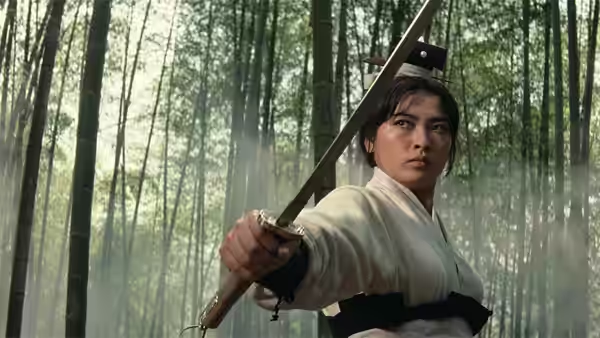
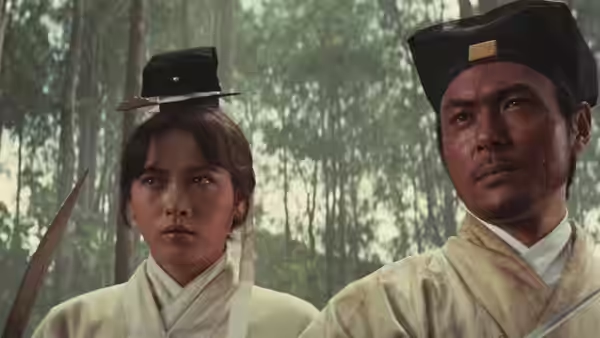
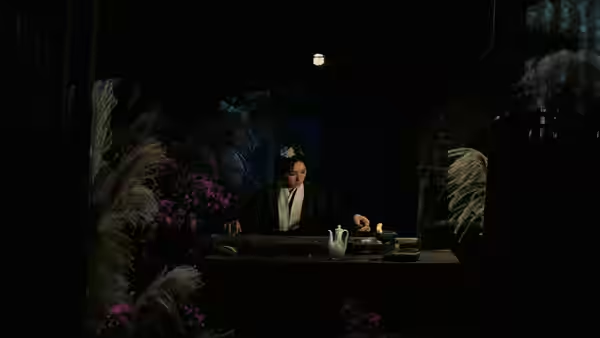
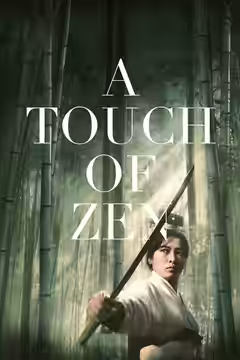
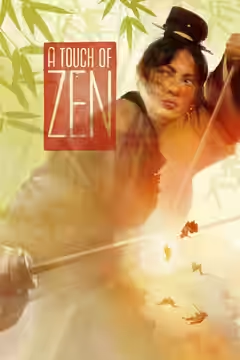
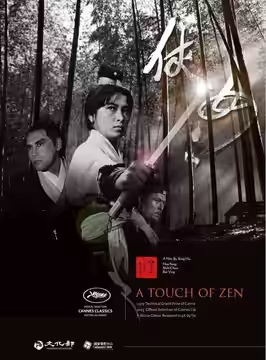
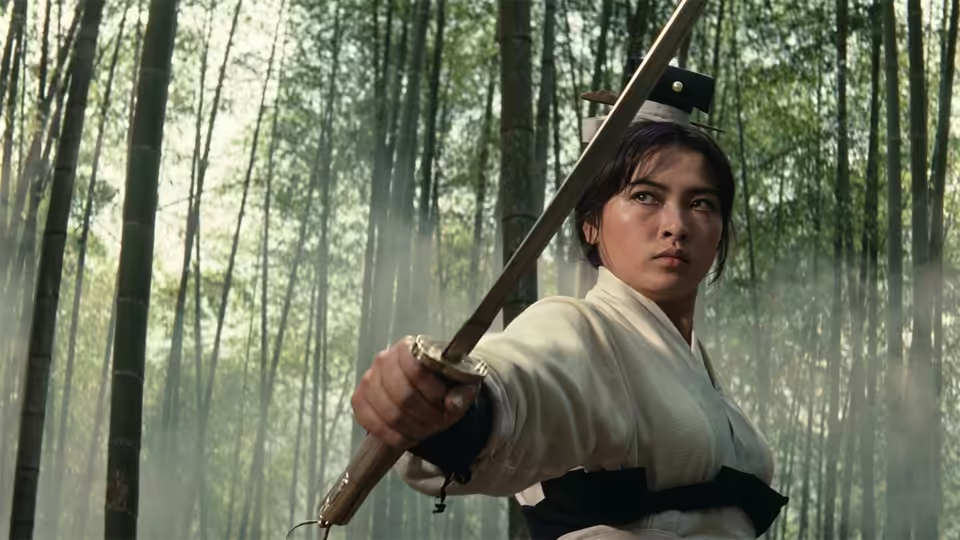
Yang Hui-zhen (Hsu Feng) raises a sword among the trees
Film review

A Touch of Zen

1970 · Directed by King Hu · 3h 00m

In a sentenceThree hours is a serious commitment, but the sword fight in the bamboo makes a persuasive case

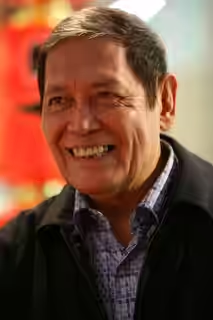
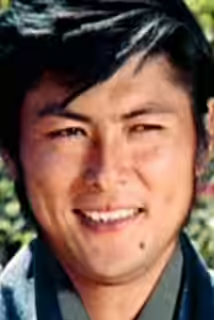
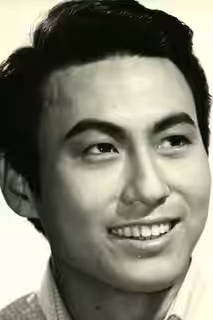
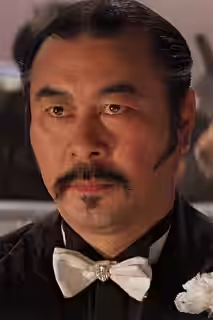
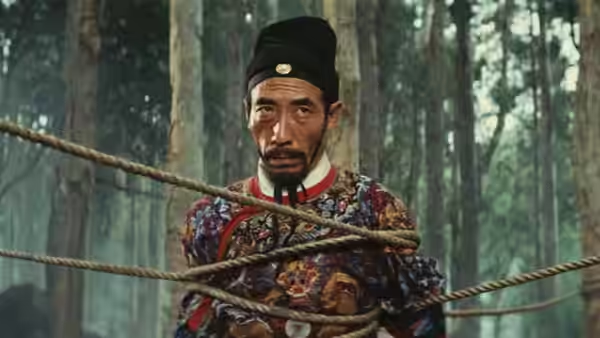
Yang Hui-zhen (Hsu Feng), Gu Sheng-zhai (Shih Chun) and General Shi Wen-qiao (Pai Ying) are the principal characters in King Hu’s A Touch of Zen, an action-adventure fantasy from 1970. The ensemble also includes Ouyang Nian (Tien Peng), Abbot Hui-yuan (Roy Chiao) and Gu Sheng-zhai’s Mother (Chang Ping-Yu). Generals, a commander and an abbot populate a film that runs for 180 minutes. King Hu directs and writes the screenplay, drawing on work by Pu Songling, and shares the editing with Wang Chin-Chen.

Plays from YouTube when you press play; nothing loads from them until then.

Fi1m review

King Hu’s A Touch of Zen gives its swordplay the attention usually reserved for landscapes, and the bamboo battle repays it. We recommend this absorbing three-hour film, though its expansiveness sometimes costs it urgency.

A Touch of Zen is worth setting aside an evening for, though we would hesitate to prescribe it as a straightforward action film. King Hu gives swordplay, adventure and fantasy room to develop across three hours, and the reward is a film whose surroundings matter as much as its combat. The expansiveness sometimes weakens the urgency. We recommend it warmly for the imagination of the staging, with the caveat that an appetite for fighting alone may not sustain the whole evening.

The bamboo battle makes the case. Cinematographer Hua Hui-Ying gives the forest such presence that concentrating only on the fighters would mean missing much of the pleasure. We were thrilled by the scene, specifically because the choreography made us attend to the bamboo as closely as the combatants. It is an unusually satisfying way to stage action: the setting keeps offering something to look at, without making the fighting seem incidental. The image deserves attention even when the immediate question of who has the advantage becomes less pressing.

King Hu and Wang Chin-Chen’s editing helps turn that visual richness into excitement. The rhythm of the cutting is a large part of the choreography’s appeal, and the scene rewards watching how a fight has been assembled. Wu Da-Jiang’s music supports the spectacle without becoming the chief reason it impresses us. That is a useful restraint in a film with so much else competing for attention, and leaves the images free to do most of the persuading.

Hsu Feng’s Yang Hui-zhen has enough authority to hold our attention amid this visual competition. Shih Chun gives Gu Sheng-zhai a contrasting uncertainty, and the difference between their performances helps keep the people from being swallowed by the spectacle. King Hu, who also writes the screenplay, has more than a technical exercise in mind. Yet the images can remain more vivid than the characters, and there are stretches when the dramatic interest struggles to keep pace with the invention of the staging.

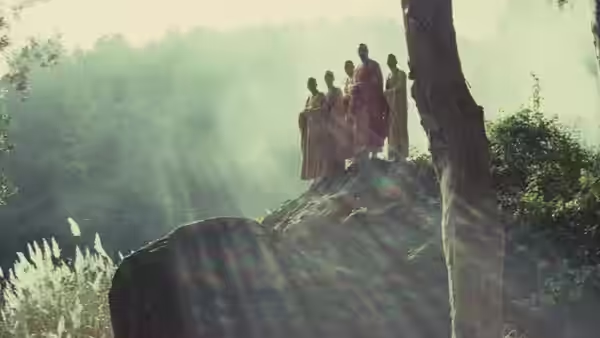
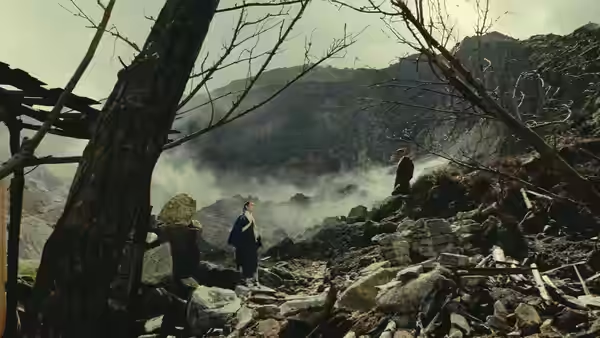
The haunted forest is a useful reminder of how far the film wants to range beyond swordplay. The fantasy gives the surroundings a different sort of interest, one that suits a filmmaker willing to spend time looking. But the full 180 minutes do not feel equally necessary, and the movement between kinds of pleasure can become less compelling than those pleasures are individually. A firmer sense of urgency would have helped away from the strongest set pieces. Some of those stretches could be shorter.

For a martial-arts film, it has an unusually generous idea of what counts as excitement. The pleasure of the bamboo battle comes partly from having so much to notice, and that interest in the surroundings gives the action its character. There is enough imagination here to justify the occasional wandering of attention. Choose it when the whole evening is free, rather than expecting a brisk succession of fights before bed.

Critical consensus AI synthesised

86
Positive
4
Mixed
0
Negative
0
Empire
1 January 2000 · Patrick Peters
90*

Peters regards the film as a classic, praising its imagination and cinematic mastery. He singles out the choreography, especially the bamboo battle, haunted forest, and finale.

Read the full review →
Time Out
15 March 2012
90*

The review presents the film as magnificent and difficult to classify. It singles out the martial-arts epic’s influence on Crouching Tiger, Hidden Dragon.

Read the full review →
The New York Times
24 April 2016
70*

The headline suggests a positive assessment of the film. It singles out the combination of swordplay and lyricism, though the article text was inaccessible.

Read the full review →
The Skinny
1 February 2016 · ★★★★★ · Michael Jaconelli
100

The critic calls the film a classic and a wuxia masterpiece. They praise its intoxicating cinematography and striking action, especially the bamboo-forest fight.

Read the full review →

Straight answers AI written, from our review

Is A Touch of Zen worth watching?
A Touch of Zen is worth watching for its imaginative swordplay and richly observed surroundings, and we scored it 86. We recommend it warmly to anyone willing to give an expansive martial-arts fantasy three hours, though the drama sometimes loses urgency and an appetite for fighting alone may not sustain the evening.
How long is A Touch of Zen, and what is it rated?
A Touch of Zen runs 3h 00m. It is an action and adventure film.
Where can I watch A Touch of Zen in Austria?
A Touch of Zen is available to rent from Amazon Prime Video from €3.99. Availability is checked daily; the links above go straight to each service.
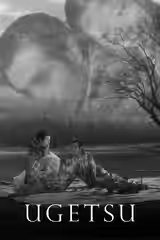
How does A Touch of Zen compare to Ugetsu?
A Touch of Zen offers more pleasure in swordplay and spectacle than Ugetsu, while we recommend Ugetsu more for its quiet attention to ordinary lives. Both reward patience with supernatural encounters and carefully considered images, though both can lose dramatic momentum. Choose the former for inventive action, the latter for unsettling human detail.
Is A Touch of Zen based on a true story or a book?
A Touch of Zen is adapted from a novel by Pu Songling, with King Hu writing the screenplay. We recommend it for the staging, fantasy and performances rather than its relationship to the book; familiarity with the source is not needed to appreciate those pleasures.
What should I watch after A Touch of Zen?
After A Touch of Zen, try Ugetsu (1953, Fi1m 89): For another patient encounter with the supernatural, grounded in recognisable human troubles. Then Crouching Tiger, Hidden Dragon (2000, Fi1m 90): For more bamboo, romantic longing and swordplay that makes gravity seem optional; and The Assassin (2015, Fi1m 82): A patient choice for those who enjoyed watching the spaces around the fighters.

Cast

If you liked this, try…

  1. Dragon Inn (1967) · not on Fi1m yetMore King Hu swordplay, with a tighter setting and less time to spare.

  2. Ugetsu (1953, Fi1m 89)For another patient encounter with the supernatural, grounded in recognisable human troubles.

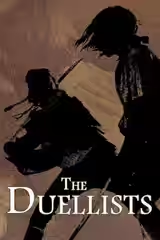
  3. The Duellists (1977) · not on Fi1m yetAnother film whose armed confrontations gain considerably from attention to their surroundings.

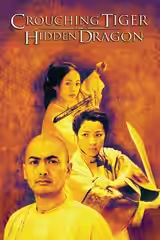
  4. Crouching Tiger, Hidden Dragon (2000, Fi1m 90)For more bamboo, romantic longing and swordplay that makes gravity seem optional.

  5. The Assassin (2015, Fi1m 82)A patient choice for those who enjoyed watching the spaces around the fighters.