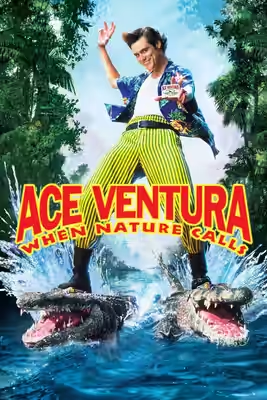
Steve Oedekerk’s sequel takes the pet detective to Africa, makes him louder, and gives him two or three of the best gags of Jim Carrey’s career. Between them it has nothing to do but wait, and the tribes it invents to wait among have not aged well.
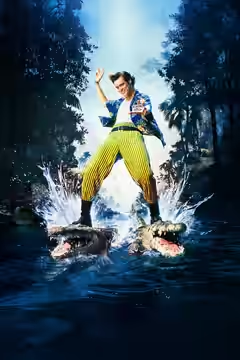
Steve Oedekerk, who writes and directs, has one idea for the sequel to Ace Ventura: Pet Detective (1994), and it is a sound one for about twenty minutes: take the same man, send him somewhere bigger, and let him do everything twice as loud. Jim Carrey arrives at this film off a run of three hits in a single year, and he plays it as a man who knows the audience is on his side before he has opened his mouth. He is right. The trouble is that Oedekerk knows it too, and builds a 90-minute film on the assumption that Carrey will fill it. He fills roughly half.
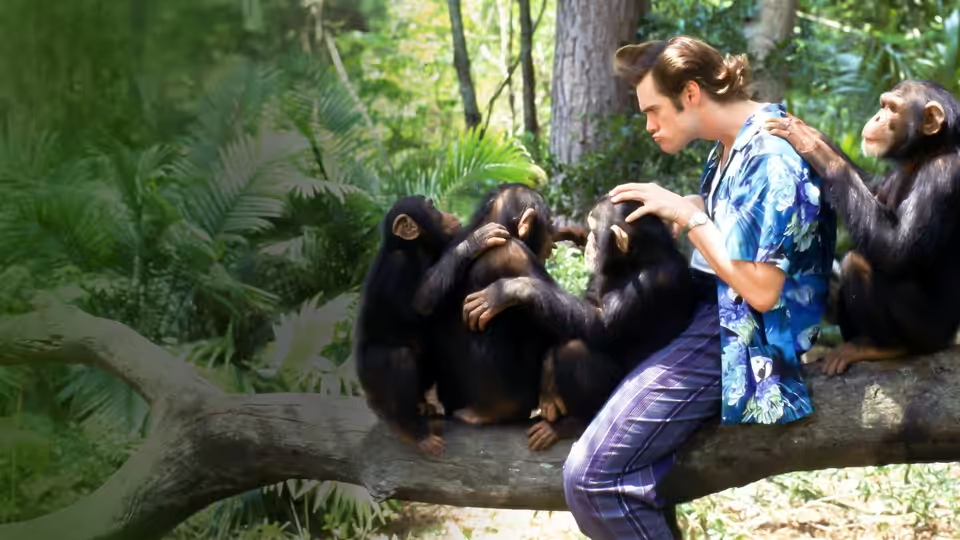
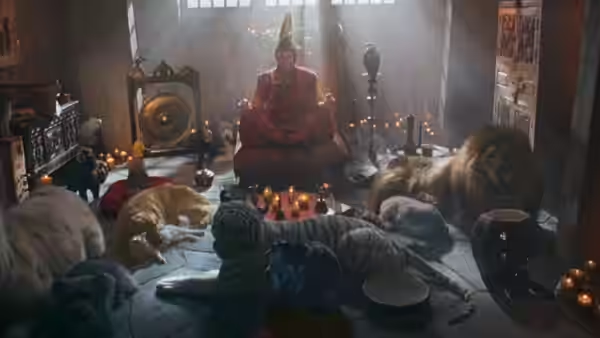
The opening is the good half in miniature. Ace dangles from a cliff face in a parody of Cliffhanger, straining to save a raccoon, and the sequence is shot and cut with a straight face, which is why it works. The raccoon does not make it. Ace takes himself off to a monastery in Tibet and is eventually asked to leave by monks who can barely hide their relief. We laughed hard at the monks. This stretch has a shape, a joke that builds and pays off, and the film does not find another shape like it until it reaches a rhinoceros.
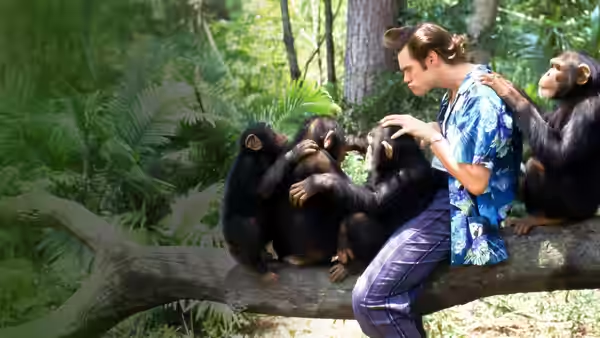
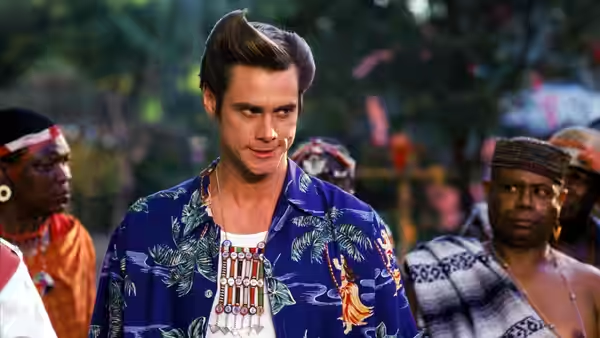
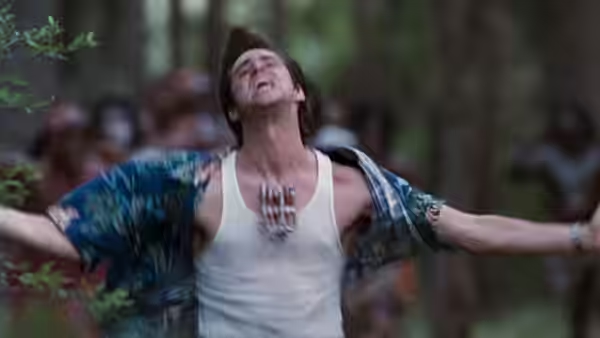
Donald E. Thorin shoots the plains in wide, warm, golden frames, as if for a wildlife documentary, and Robert Folk writes a big brass score in the manner of a 1950s safari picture. Both are doing the same job, which is to make the film look more expensive than its jokes. Stephen J. Lineweaver’s Wachati village is thatch and firelight, and his consulate is colonial white with ceiling fans. Elsa Zamparelli keeps the Hawaiian shirt and the hair and puts the two tribes in beads and paint from no country in particular, which is the film’s problem in a single costume rack.
When the gags land they land properly. The rhino scene, in which Ace hides inside a mechanical animal, overheats, and escapes through the only available exit in front of a jeep full of tourists, is as well-built a piece of physical comedy as Carrey has done, and Malcolm Campbell cuts it with patience, letting the horror on the tourists’ faces do the work. A briefing in a darkened room becomes a shadow-puppet show, bunnies first, then worse. These are the moments most critics point to and they are right to.
The rest is the Wachati and the Wachootoo. Oedekerk has invented two African peoples so that Ace can insult one and be threatened by the other, and the film never looks at either of them except through him. The Wachati exist to be grateful; the Wachootoo exist to be frightening; the Princess, played by Sophie Okonedo in an early role, exists to want Ace. Maynard Eziashi gets the only African character with a joke of his own, the guide Ouda, who repeats Ace’s abuse to the chiefs with an innocent smile, and he is good. Tommy Davidson’s Tiny Warrior turns up for a fight that goes on for some time.
Here is what we felt. We laughed at the rhino until we had to wipe our eyes, loudly and without dignity, and we were glad to be in a room full of people doing the same. About a quarter of an hour later we were watching Carrey mug at a circle of painted extras and found we were embarrassed, for him and for them, and that nothing in the scene was asking us to be anything else. The mystery, meanwhile, is not one. Ian McNeice is sweetly flustered as Greenwall, Simon Callow does suave and bored as Cadby, and Bob Gunton glowers in a safari hat, and none of them is given a scene that a reader of the synopsis could not predict.
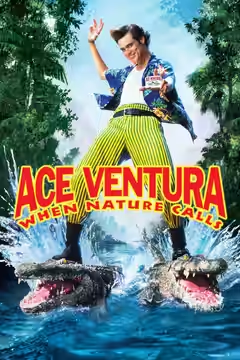
The first film was small and odd and seemed slightly surprised by its own star. This one is sure of itself from the first frame and has nothing underneath the certainty except the next set piece. It is for children on a wet afternoon, for anyone who wants the rhino, and for people who will forgive a great deal for a man who commits to a joke the way Carrey does. The tagline promises new animals, new adventures, same hair. Two of the three are true, and the hair is not the problem.