Nick Broomfield and Joan Churchill make a disturbing documentary worth seeing for its jail interviews. The reporting needs firmer organisation, and Broomfield is not nearly as searching about his own part in the spectacle.
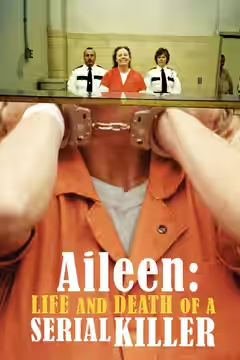
Nick Broomfield and Joan Churchill’s Aileen: Life and Death of a Serial Killer is worth seeing for its disturbing interviews, despite weaknesses in the reporting around them. It asks us to listen to Aileen Wuornos while questioning the legal and media handling of her case. The prospect of execution gives the questions an urgency that the filmmakers do not always know how to manage.
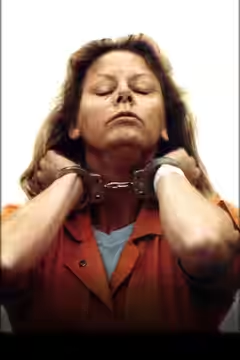
We were distressed by the jail interviews, because the question of Wuornos’s fitness for execution is so hard to square with her unsettled account of herself. Her testimony gives us reasons to doubt what we are hearing, and that doubt matters when the decision being contemplated is irreversible. A camera cannot settle a clinical question. The film makes the need for a convincing assessment feel urgent.
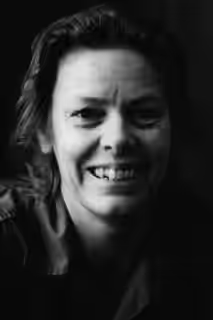
Churchill, also the cinematographer, gives the interview footage its force by keeping attention on Wuornos as a person answering questions. There is no way to separate the words from the distress of watching her deliver them. Broomfield’s restrained manner can be useful here, since an interviewer announcing his outrage would only get in the way. His reserve also becomes a liability when the film turns towards the institutions handling her case.
Claire Ferguson’s editing brings the interviews together with archive footage, but the inquiry needs a firmer sequence of explanation. The film raises substantial concerns about Wuornos’s defence and the media attention surrounding her case without always distinguishing a demonstrated failure from a troubling impression. There is enough here to demand scrutiny of the judicial process. We wanted a clearer account of how particular decisions were reached.
Broomfield’s own position is the more persistent problem. He is both filmmaker and participant, questioning the attention paid to Wuornos while making a film that depends on access to her. That gives him a responsibility to examine what his questioning is doing, especially when a distressed subject supplies his most compelling material. He does not pursue that responsibility with the same energy he brings to the failures of others. His involvement needs more scrutiny than the film supplies.
Rob Lane’s music registers less strongly than the interviews, which is appropriate for a film so dependent on what people say. The account of Wuornos’s troubled background also helps to explain why simple condemnation seems inadequate here. It does not make her account easier to trust. Within crime documentary, the film’s willingness to leave that difficulty exposed is valuable, even if we wanted a more disciplined investigation alongside it.
For viewers drawn to the uncertainties of a criminal case, there is enough here to justify 89 difficult minutes. Those seeking a clear explanation of the legal decisions will have more cause for frustration. We recommend it with reservations about the man asking the questions. Allow for an uncomfortable evening and an argument afterwards.