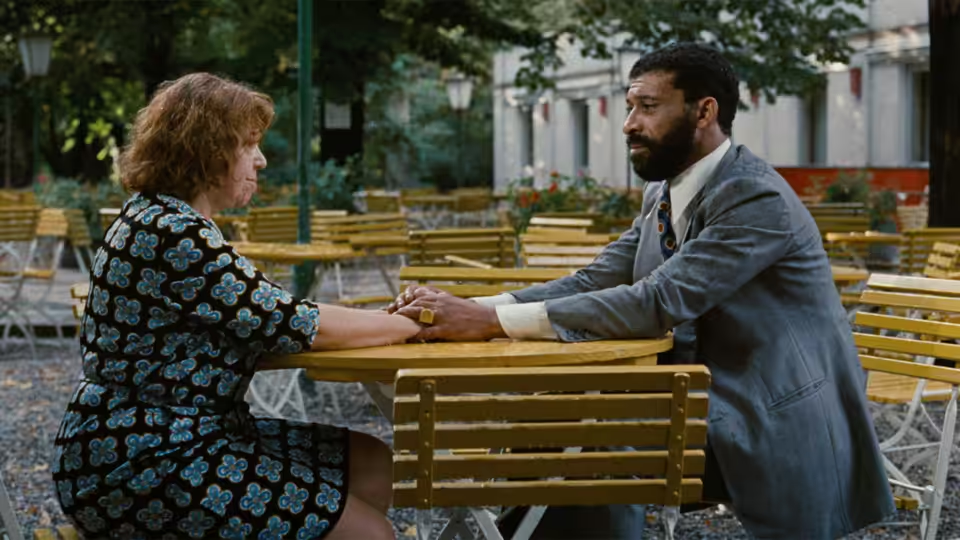
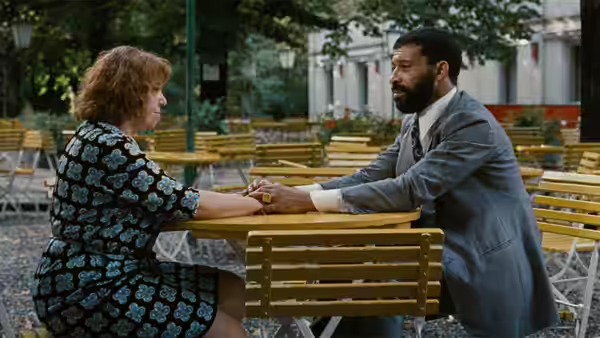
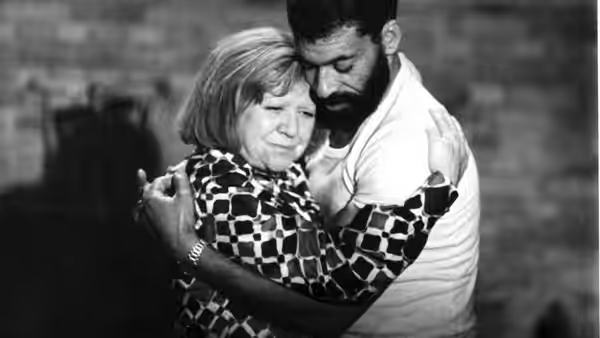
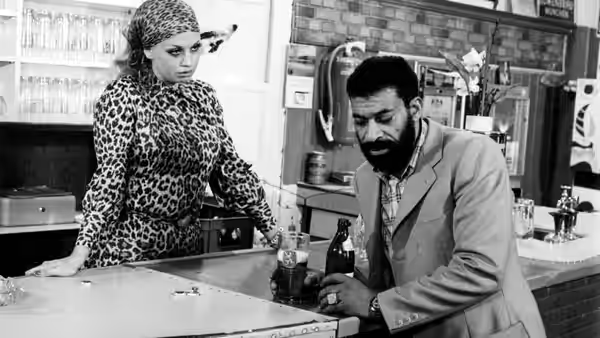
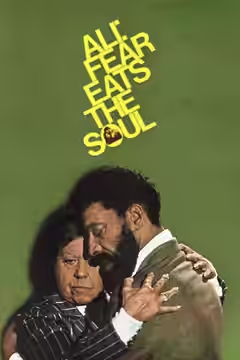
Brigitte Mira and El Hedi ben Salem make this romance painfully affecting, while the spare framing shows how thoroughly the couple are isolated. The staging sometimes feels over-insistent, but the tenderness is worth the discomfort.
Ali: Fear Eats the Soul is a moving romance, and its occasional stiffness is a small price for how closely it makes us look at the couple. Rainer Werner Fassbinder directs with a patience that can feel severe, but the affection between Emmi Kurowski and Ali never seems beneath his attention. Prejudice matters here because it makes loving another person harder. The film gives that difficulty enough space to hurt, without treating the relationship as an excuse for a lecture.
Brigitte Mira makes Emmi’s desire for companionship seem ordinary, which is essential to the film’s anger. There is nothing remarkable about wanting affection; the ugliness lies in other people’s objections to her finding it with a younger Arab man. El Hedi ben Salem gives Ali a gravity that prevents him becoming merely the answer to her loneliness. Both performances make the attraction credible within staging that offers little comfort.
Jürgen Jürges’s cinematography makes the couple’s isolation visible through spare framing, while the use of mirrors sharpens our awareness of how they are being seen. We were moved by how exposed they look. The images encourage us to study the separation between the couple and their surroundings, and to feel uncomfortable about it. That visual pressure is effective because the actors remain affecting even when the arrangement around them is conspicuous.
Rainer Werner Fassbinder also handles production design, and the surroundings matter as much as the positioning of the actors. Space around the couple feels unwelcoming, making their closeness seem harder won. The music, also credited to him, leaves less of an impression than those images, but we did not need it to supply feelings the performances had already made clear. The visual restraint keeps our attention on the couple and the space separating them from other people.
Thea Eymèsz’s editing is similarly unobtrusive; the staging, rather than the cut, commands our attention. The drawback is that some of these carefully arranged images explain the couple’s predicament a little too firmly. We can begin to notice how neatly exclusion has been demonstrated before we notice what either person is feeling. This is a limitation of the film’s method, and an occasional one, but the performances have to work against it.
Within romantic melodrama, the film distinguishes itself through the seriousness with which it treats both affection and the hostility surrounding it. The prejudice directed at an elderly white woman and a young Arab man remains ugly even when their relationship is gentle. The screenplay, also by Rainer Werner Fassbinder, is most persuasive when it lets that hostility press against an attachment we already believe in. We care about these people enough to resent the scrutiny they receive, rather than simply recognising that the prejudice is wrong.
At 93 minutes, the film asks for sustained attention without making endurance part of the bargain. The formal distance may trouble anyone who wants a romance to feel immediately welcoming, though the warmth of the central performances is worth allowing time for. Choose it when there is time afterwards to talk about why the couple have been made to feel so unwelcome.