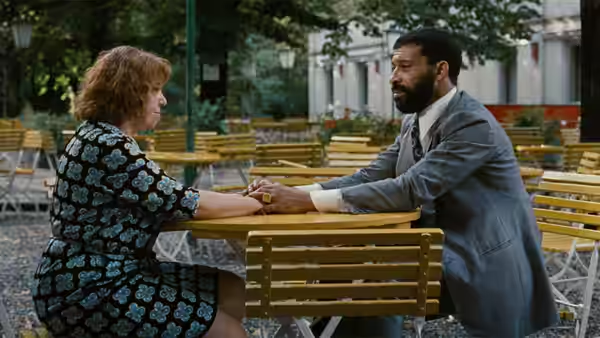
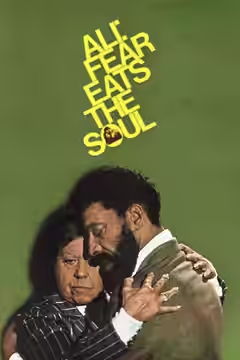
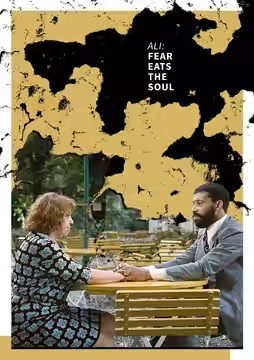
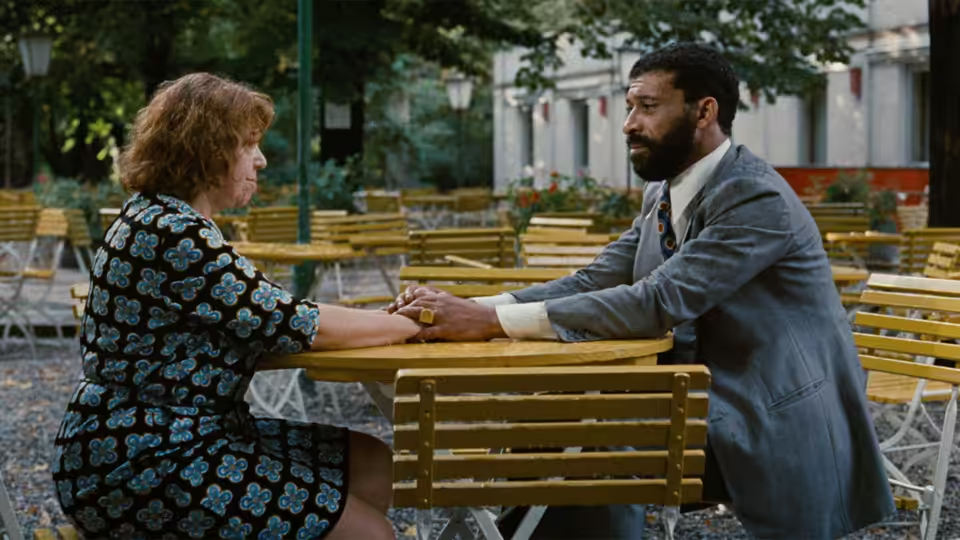
Emmi Kurowski (Brigitte Mira) and Ali (El Hedi ben Salem) hold hands across a café table outdoors
Film review

Ali: Fear Eats the Soul

1974 · Directed by Rainer Werner Fassbinder · 1h 33m

In a sentenceTwo people fall in love; everyone else seems to think they should have been consulted

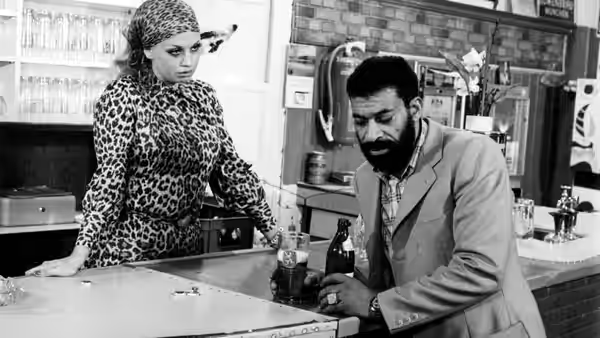
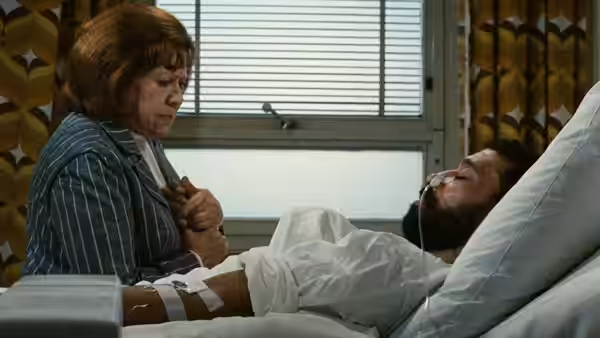
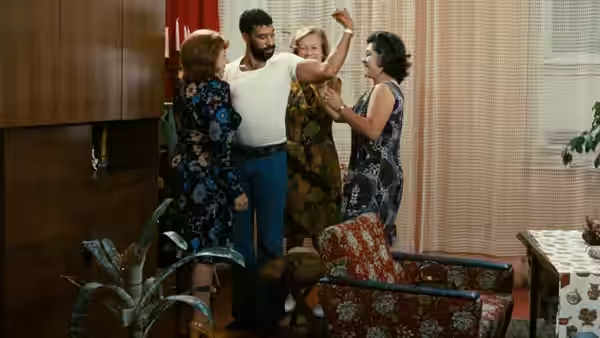
Emmi Kurowski (Brigitte Mira), an elderly white woman, begins a romance with Ali (El Hedi ben Salem), a young Arab man. Their relationship exposes them to racism and hostility towards a couple whose ages and backgrounds differ. Emmi and Ali want to be together, but the people around them make that difficult, leaving them isolated. What begins as a private attachment becomes something others feel entitled to judge, and the couple face the pressure of that scrutiny. The cast also includes Barbara Valentin as Barbara and Irm Hermann as Krista.

Plays from YouTube when you press play; nothing loads from them until then.

Fi1m review

Brigitte Mira and El Hedi ben Salem make this romance painfully affecting, while the spare framing shows how thoroughly the couple are isolated. The staging sometimes feels over-insistent, but the tenderness is worth the discomfort.

Ali: Fear Eats the Soul is a moving romance, and its occasional stiffness is a small price for how closely it makes us look at the couple. Rainer Werner Fassbinder directs with a patience that can feel severe, but the affection between Emmi Kurowski and Ali never seems beneath his attention. Prejudice matters here because it makes loving another person harder. The film gives that difficulty enough space to hurt, without treating the relationship as an excuse for a lecture.

Brigitte Mira makes Emmi’s desire for companionship seem ordinary, which is essential to the film’s anger. There is nothing remarkable about wanting affection; the ugliness lies in other people’s objections to her finding it with a younger Arab man. El Hedi ben Salem gives Ali a gravity that prevents him becoming merely the answer to her loneliness. Both performances make the attraction credible within staging that offers little comfort.

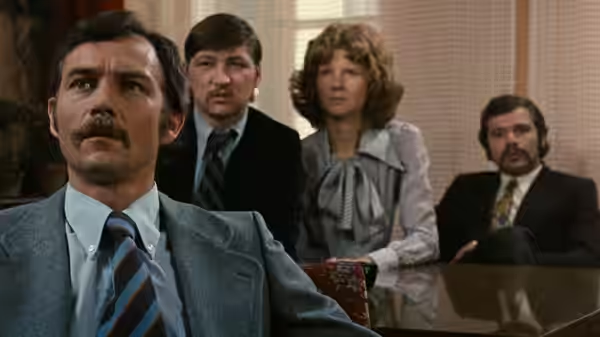
Jürgen Jürges’s cinematography makes the couple’s isolation visible through spare framing, while the use of mirrors sharpens our awareness of how they are being seen. We were moved by how exposed they look. The images encourage us to study the separation between the couple and their surroundings, and to feel uncomfortable about it. That visual pressure is effective because the actors remain affecting even when the arrangement around them is conspicuous.

Rainer Werner Fassbinder also handles production design, and the surroundings matter as much as the positioning of the actors. Space around the couple feels unwelcoming, making their closeness seem harder won. The music, also credited to him, leaves less of an impression than those images, but we did not need it to supply feelings the performances had already made clear. The visual restraint keeps our attention on the couple and the space separating them from other people.

Thea Eymèsz’s editing is similarly unobtrusive; the staging, rather than the cut, commands our attention. The drawback is that some of these carefully arranged images explain the couple’s predicament a little too firmly. We can begin to notice how neatly exclusion has been demonstrated before we notice what either person is feeling. This is a limitation of the film’s method, and an occasional one, but the performances have to work against it.

Within romantic melodrama, the film distinguishes itself through the seriousness with which it treats both affection and the hostility surrounding it. The prejudice directed at an elderly white woman and a young Arab man remains ugly even when their relationship is gentle. The screenplay, also by Rainer Werner Fassbinder, is most persuasive when it lets that hostility press against an attachment we already believe in. We care about these people enough to resent the scrutiny they receive, rather than simply recognising that the prejudice is wrong.

At 93 minutes, the film asks for sustained attention without making endurance part of the bargain. The formal distance may trouble anyone who wants a romance to feel immediately welcoming, though the warmth of the central performances is worth allowing time for. Choose it when there is time afterwards to talk about why the couple have been made to feel so unwelcome.

Critical consensus AI synthesised

84
Positive
7
Mixed
1
Negative
0

Most critics respond warmly to Ali: Fear Eats the Soul, with praise clustering around its tenderness, its attack on prejudice and Fassbinder’s precise visual staging. The reviews repeatedly describe framing, mirrors and camerawork that make Emmi and Ali’s isolation visible without overwhelming the romance. Performances and dialogue also draw praise, while several accounts stress how affecting the relationship remains alongside the film’s scrutiny of racism.

The spread runs from moderate approval to strong enthusiasm, though the available summaries contain few explicit complaints. Slant Magazine stresses the film’s hopefulness despite the persistence of racism; Empire places more weight on the social pressures constraining the couple. This is chiefly a difference of emphasis, rather than a clear dispute about the filmmaking. The single mixed score has no verifiable accompanying verdict, so it offers no firm basis for identifying a contrary critical argument.

Little White Lies
30 March 2017 · 5/5/5 · David Jenkins
100

Jenkins calls the film one of the great romantic films of the 1970s and among Fassbinder’s finest. He praises its bold romantic framing, eloquent dialogue and subtle poeticism.

Read the full review →
Slant Magazine
31 August 2003 · ★★★★/4 · Ed Gonzalez
100

Gonzalez views the film as a socially incisive, ultimately hopeful work that still recognizes how little racism has truly changed. He praises Fassbinder’s spare framing devices for making Emmi and Ali’s isolation visible.

Read the full review →
RogerEbert.com
· Roger Ebert
95*

The Great Movies URL identifies this as a retrospective review, though the page itself was inaccessible. The review’s specific praise cannot be verified from the available page text.

Read the full review →
The Guardian
2 April 2017 · Wendy Ide
85*

Ide presents the film as a searing, still-timely attack on prejudice. She singles out the flawless performances and immaculately staged drama for praise.

Read the full review →
Empire
5 April 2006 · David Parkinson
70*

Parkinson finds the drama affecting and moving, while warning that the social forces that bring the couple together will ultimately drive them apart. He singles out Fassbinder’s use of mirrors and visual style for making their relationship and its constraints resonate.

Read the full review →
Time Out
15 March 2012
70*

The page presents the film as one of Fassbinder’s less cynical works and describes it as a gentle romance. It singles out the relationship between an elderly white woman and a young Arab man as the story’s focus.

Read the full review →

Straight answers AI written, from our review

Is Ali: Fear Eats the Soul worth watching?
Ali: Fear Eats the Soul is worth watching for its painfully affecting romance and the tenderness of its central performances; we score it 88 out of 100. We recommend it to anyone willing to give a patient, sparely staged drama their attention, though the framing sometimes makes the couple’s isolation too insistently clear.
How long is Ali: Fear Eats the Soul, and what is it rated?
Ali: Fear Eats the Soul runs 1h 33m. It is a romance and drama film.
Where can I watch Ali: Fear Eats the Soul in Serbia?
Ali: Fear Eats the Soul is not on any streaming or rental service in Serbia at the moment. It is available in 5 other countries; change your country at the top of the page to see where. Availability is checked daily.
How does Ali: Fear Eats the Soul compare to All That Heaven Allows?
Ali: Fear Eats the Soul is the sparer, more severe romance beside All That Heaven Allows, though both show a couple facing other people’s disapproval. We favour it for the strength of both central performances, where Sirk’s film sometimes leaves Jane Wyman carrying too much of the emotional weight. Choose Sirk for rich colour and tenderness, Fassbinder for affection that remains moving despite the distancing staging.

Cast

Awards

Silver nugget for the best foreign film, 1975

Won
Silver nugget for the best foreign film

If you liked this, try…

  1. All That Heaven Allows (1955, Fi1m 86)Another romance made difficult by neighbours who confuse disapproval with moral authority.

  2. A Special Day (1977) · not on Fi1m yetTwo lonely people find company while public conformity makes private tenderness dangerous.

  3. The Lunchbox (2013) · not on Fi1m yetA gentler account of loneliness, with affection growing through an unlikely correspondence.

  4. Loving (2016) · not on Fi1m yetA couple’s ordinary wish for a shared life meets institutional racism.

  5. The Blue Caftan (2022) · not on Fi1m yetPatient performances make room for desires that a respectable marriage cannot easily accommodate.