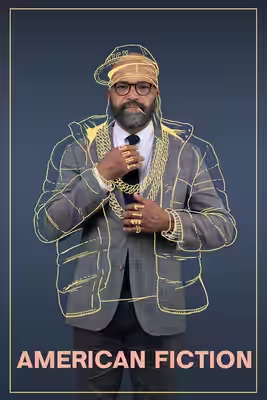
Cord Jefferson’s first film is a sharp, funny satire of a publishing trade that wants one kind of Black book, and Jeffrey Wright carries it with a scowl. The family drama around it is well acted and gentler, and the two never quite meet.
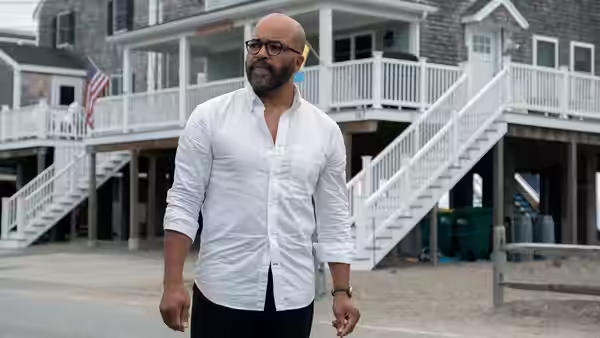
Monk Ellison writes novels that nobody reads. His latest has been turned down for not being Black enough, a phrase Jeffrey Wright receives with the face of a man who has heard it before. Cord Jefferson’s first film as director, from Percival Everett’s novel Erasure, follows what happens when Monk gives them what they want: a book of absent fathers, gunfire and misspelt dialogue, written in a fury under the name Stagg R. Leigh, a fugitive too wanted to give interviews. It sells at once. The film is good, it is often funny, and we recommend it to anyone who reads, with the caveat that the half set at home is the weaker half.
The publishing scenes are the best thing here. Jefferson shoots the white editors and producers as people trying so hard to be respectful that they cannot hear a word Monk says. Arthur (John Ortiz), his agent, relays the offers by phone with the rising alarm of a man watching a prank turn into a mortgage. The neatest idea is Monk at his desk: as he types, his characters walk into the study and play the scene out around him, and stop to complain about the dialogue. We laughed a good deal, then noticed the film was laughing at the people who buy books like Monk’s, which is to say the people in the cinema, and it was right to.
Wright plays Monk as a man whose intelligence has gone off into bad manners. He corrects people, he sighs, he moves his own novels from the African-American Studies shelf of a bookshop to Fiction while the staff watch. When he has to phone a publisher in character as Stagg, Wright drops his voice half a register and hates every second, and the hating is where the comedy is. It is a lead part, and he plays it without once raising his voice.
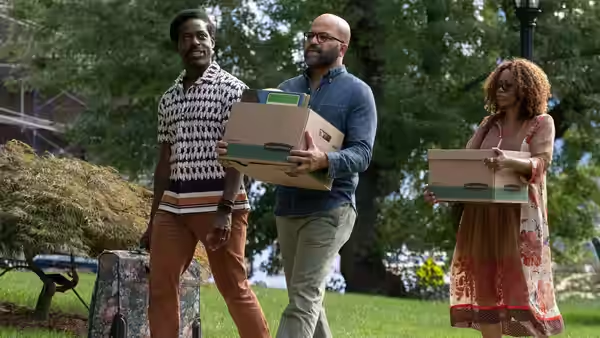
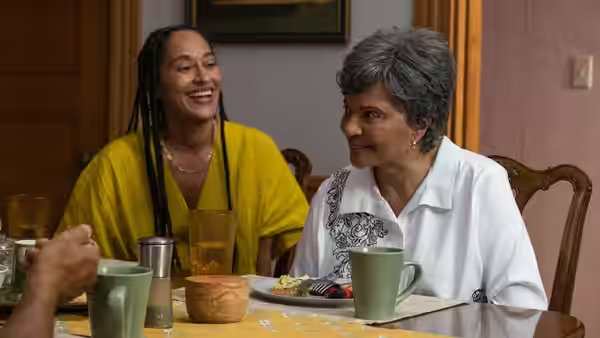
Half the film is elsewhere, at the Ellison house on the shore, where his mother Agnes (Leslie Uggams) and his brother Clifford (Sterling K. Brown) are waiting with troubles of their own. Brown is loose and funny and gives the film a jolt every time he walks in; there is a scene on the beach at night, which we will not describe, where he stops being funny and we were moved more than we expected. Uggams plays Agnes without asking for pity. Erika Alexander’s Coraline, a neighbour who has read Monk’s books, talks to him as an equal, which nobody else does.
The trouble is that the two halves are written in different keys and Jefferson never quite tunes them to each other. The satire is broad: a film producer who talks in pitches, a literary prize whose judges are exactly who you would guess. The family scenes are quiet and plausible and shot like a good television drama. Hilda Rasula cuts between them cleanly, but a joke about a marketing meeting followed by a hard conversation in a kitchen costs the second scene a minute of recovery every time.
Cristina Dunlap shoots it warmly, sun on the water, lamplight in the study, and it looks handsome without surprising you. Jonathan Guggenheim’s rooms are lined with books that look read. Rudy Mance keeps Monk in corduroy and cardigans and puts Stagg in a black hoodie and dark glasses, which Monk wears like a rash. Laura Karpman’s score is unhurried jazz piano, fitting for a man named after Thelonious Monk, and it does not push any scene harder than the scene needs.
Issa Rae’s Sintara Golden, who wrote the bestseller that set Monk off, is the sharpest writing in the script, because Jefferson refuses to make her the fool Monk takes her for. Their one long conversation is the closest the film comes to an argument rather than a row of targets, and we wished for more of it.
See it with someone who has opinions about books. You will argue on the way home about whether Monk is right; the film will not settle it. If you want the satire on its own, you cannot have it; Jefferson has stapled the family to it, and the staples show.