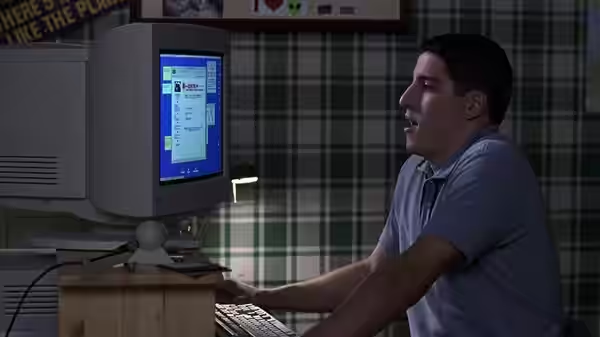
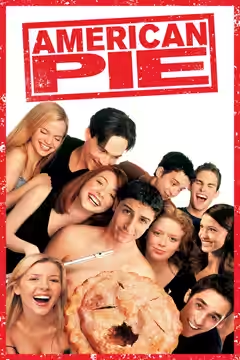
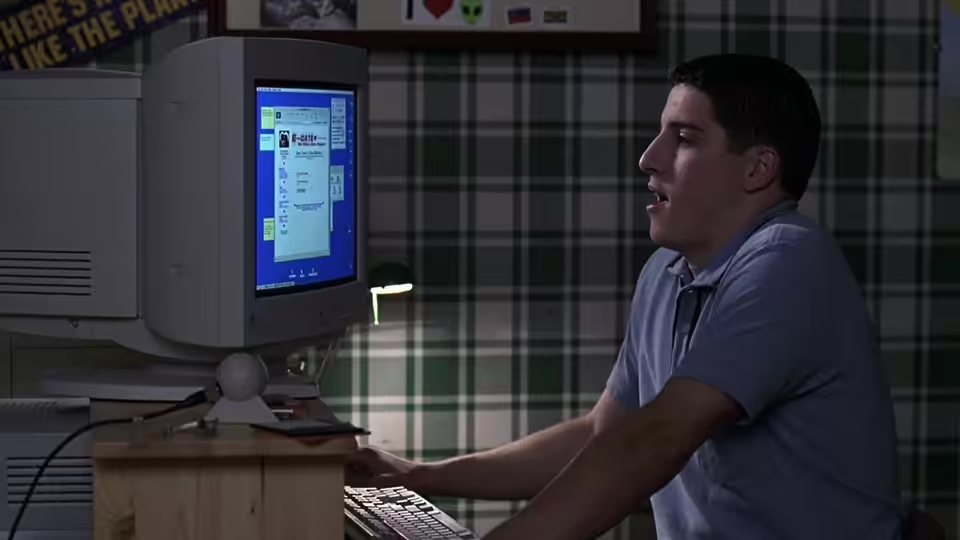
Jim Levenstein (Jason Biggs) types at a desktop computer in his bedroom
Film review

American Pie

1999 · Directed by Paul Weitz · 1h 35m · IFCO 18

In a sentenceThe teenagers want sex; we would settle for another conversation with Eugene Levy

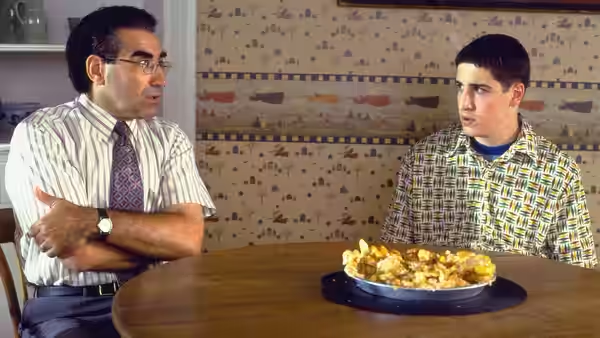
Jim Levenstein (Jason Biggs), Chris ‘Oz’ Ostreicher (Chris Klein), Kevin Meyers (Thomas Ian Nicholas) and Paul Finch (Eddie Kaye Thomas) approach sex with more curiosity than experience. The boys make a pact, turning a private worry into a shared undertaking. Their friendship offers reassurance, but it also means that embarrassment has an audience. Jim’s Father (Eugene Levy) brings a parent’s concern into a subject Jim would rather manage himself. The boys want to stop feeling inexperienced, while working out how to approach the people whose attention they want.

Plays from YouTube when you press play; nothing loads from them until then.

Fi1m review

Paul Weitz’s teenage sex comedy is fitfully funny, with an appealing cast and a welcome streak of kindness. Its familiar jokes and casual treatment of sexual privacy make it a qualified recommendation at best.

American Pie is a fitfully funny teenage sex comedy whose likeable cast makes a stronger case for it than the writing does. Paul Weitz keeps enough affection in the boys’ friendship to make their anxiety recognisable, even when their behaviour is difficult to defend. Adam Herz’s screenplay understands how easily sexual inexperience can feel like a public failure. It is much less interested in asking when a joke at somebody else’s expense ought to stop.

Jason Biggs gives Jim Levenstein an awkwardness that feels involuntary, as though the effort to appear at ease has exhausted him. Chris Klein, as Chris ‘Oz’ Ostreicher, lends the group a softness that stops its talk about sex becoming wholly tiresome. Thomas Ian Nicholas keeps Kevin Meyers grounded, while Eddie Kaye Thomas makes Paul Finch’s self-possession another source of insecurity. The performances let us recognise friends trying to reassure one another without acquiring much wisdom in the process.

Eugene Levy is the clearest reason to stay with it. As Jim’s Father, he makes the effort to be helpful almost unbearably awkward, but never suggests that the care behind it is foolish. We laughed, then felt unexpectedly fond of him: his earnest concern survives the embarrassment he causes. Paul Weitz gives that performance enough room to establish a parent worth listening to, however much his son might prefer not to.

The women are harder to account for so generously. Alyson Hannigan brings comic assurance to Michelle Flaherty, and Natasha Lyonne gives Jessica a welcome scepticism about the boys’ preoccupations. But the film’s willingness to treat an invasion of sexual privacy as entertainment makes its kindness feel selective. We were uncomfortable with that invitation to laugh: another person’s right to choose what others see hardly seems to concern it. Giving the women some confidence and good lines does not make that problem disappear.

Richard Crudo’s cinematography keeps faces readable and the comedy easy to follow, but offers little pleasure beyond that practical job. Paul Peters’s production design is similarly unobtrusive; the surroundings seldom give us anything funny to notice while the actors are talking. This is plain staging, dependent on a performer supplying the awkward pause or the sudden flash of alarm. That restraint suits the gentler exchanges, although it leaves the broader material looking rather flat.

Priscilla Nedd-Friendly’s editing is most effective when it gives embarrassment time to register on a face. Elsewhere, the jokes can be obvious well before the film has finished delivering them, and the wait becomes a nuisance. David Nessim Lawrence’s score supports the genial mood without doing much to distinguish one passage from another. The film runs 95 minutes, but the repeated insistence on sexual inadequacy makes parts of it feel longer.

The teen sex comedy needs some recognition alongside its dirty jokes, and the friendship here supplies it. The boys’ fondness for one another gives their foolishness a reason to matter, even when their conversation becomes wearing. But the film returns too readily to humiliation without much concern for who has agreed to be part of the joke. Try it if embarrassment comedy is your pleasure; patience with adolescent boasting will be useful.

Critical consensus AI synthesised

61
Positive
6
Mixed
3
Negative
3
Los Angeles Times
9 July 1999 · Kenneth Turan
85*

Turan finds the film surprisingly warmhearted and sincere beneath its gross-out comedy. He praises its decency toward its characters, especially the women, and its likable young cast.

Read the full review →
Empire
1 January 2000 · Andy Lancaster
80*

Lancaster views the film as an inventive, unexpectedly successful revival of the teen sex comedy. He praises its blend of John Hughes-style sensitivity with gross-out humor.

Read the full review →
Radio Times
★★★★ · Joanna Berry
80

Berry finds it a laughter-packed, crass comedy that should satisfy fans of gross-out farce. She also praises the young cast’s spot-on performances.

Read the full review →
Total Film
8 October 1999 · ★★★★ · Total Film
80

The review finds the crude teen comedy surprisingly funny and affecting. It praises the believable female characters and the warmth of the friendship story alongside the juvenile gags.

Read the full review →
Variety
25 June 1999 · Todd McCarthy
72*

McCarthy finds the film successful as blunt, raunchy comedy aimed at teenage audiences, though less inventive than a comparable recent comedy. He praises its frankness about teenage nature and singles out the bedroom scene witnessed by the student body as a comic highlight.

Read the full review →
The New York Times
9 July 1999
64*

The article URL labels this a film review of the matching 1999 film. The inaccessible page provides no readable verdict or specific praise or complaint.

Read the full review →

Straight answers AI written, from our review

Is American Pie worth watching?
American Pie is worth considering if embarrassment comedy is your pleasure, but our score of 64 reflects a qualified recommendation. We find the cast appealing and Eugene Levy’s earnest father especially funny, though the familiar jokes, repeated adolescent boasting and casual treatment of sexual privacy make it harder to enjoy.
How long is American Pie, and what is it rated?
American Pie runs 1h 35m and is rated 18 by the IFCO in Ireland. It is a comedy and romance film.
Where can I watch American Pie in Ireland?
American Pie is streaming on Channel 4 in Ireland, and it is also available to rent from Amazon Prime Video and Apple TV from €3.99. It leaves Channel 4 on 26 October. Availability is checked daily; the links above go straight to each service.
How violent or frightening is American Pie, and is it suitable for children?
American Pie has a UK 15 certificate and is not suitable for children; its teenage sex comedy centres on sexual anxiety, dirty jokes and humiliation. We would flag its treatment of an invasion of sexual privacy as entertainment for anyone choosing it for older teenagers, rather than suggest that its genial mood makes it harmless.
How does American Pie compare to Fast Times at Ridgemont High?
American Pie is the more qualified recommendation beside Fast Times at Ridgemont High, which gives the girls’ lives more attention while remaining a frank, funny school comedy. We favour the latter for that broader interest in its characters, despite its loose storytelling and occasional cruelty; American Pie suits a stronger appetite for embarrassment and boys reassuring one another about sex.
What should I watch after American Pie?
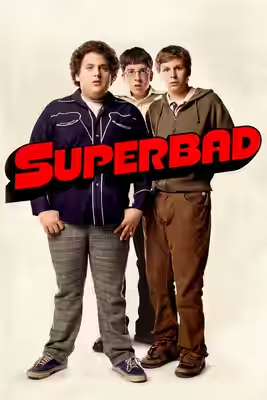
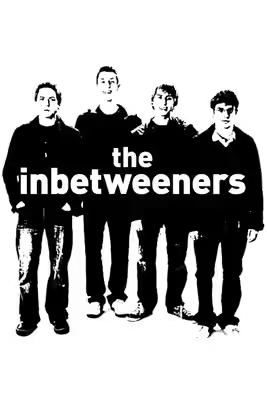
After American Pie, try Fast Times at Ridgemont High (1982, Fi1m 70): Another frank school comedy with more patience for the girls’ lives. Then Superbad (2007, Fi1m 82): Friendship and sexual panic collide, with a sharper sense of impending separation; and The Inbetweeners (2008, Fi1m 84): British boys turn sexual ignorance into an apparently inexhaustible supply of embarrassment.

Cast

If you liked this, try…

  1. Fast Times at Ridgemont High (1982, Fi1m 70)Another frank school comedy with more patience for the girls’ lives.

  2. Gregory's Girl (1980) · not reviewed yetAdolescent longing handled with gentle absurdity and considerably less public humiliation.

  3. Superbad (2007, Fi1m 82)Friendship and sexual panic collide, with a sharper sense of impending separation.

  4. The Inbetweeners (2008, Fi1m 84)British boys turn sexual ignorance into an apparently inexhaustible supply of embarrassment.

  5. Show Me Love (1998) · not reviewed yetA tender Swedish account of teenage desire, loneliness and the fear of gossip.

Free account

Know what to watch tonight

Two lists that know where things are streaming, collections you can share, your own score beside ours, and Discover that remembers what you have seen.

  • Want to see, sorted by what is streaming now
  • Seen, with your score out of ten
  • No adverts, ever