Kate Winslet’s physically convincing performance gives Francis Lee’s coastal romance its strongest reason to watch. The care is evident in the images and sound, but Charlotte remains too thinly written for the relationship to convince.
Francis Lee’s Ammonite is most convincing when Mary Anning has work to do. Kate Winslet makes the labour of searching among rocks absorb us without requiring much explanation or conversation. The romance with Charlotte Murchison, played by Saoirse Ronan, is harder to believe, despite the care both actors bring to it. There is enough here to reward an interest in restrained period drama, but the writing around Mary is frustratingly thin.
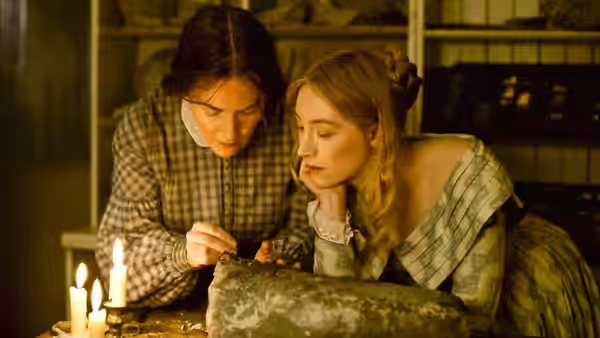
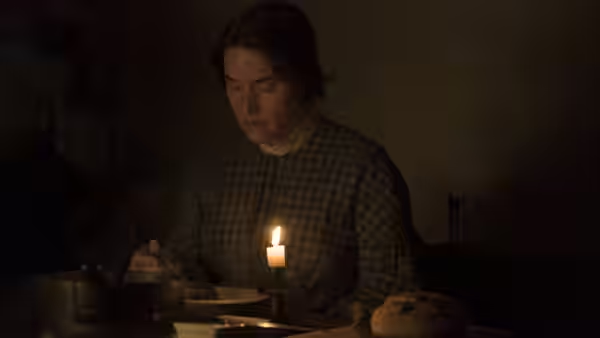
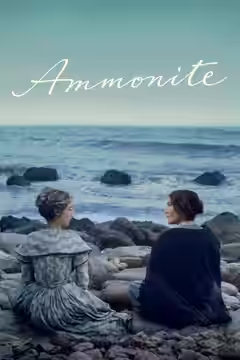
Mary’s solitude gives Winslet something substantial to play, and she resists making it merely picturesque. Her physical concentration during the fossil work suggests a person accustomed to relying on herself, while the sparse dialogue lets small changes in her bearing carry weight. We felt unexpectedly close to Mary as she worked among the rocks. Winslet makes that effort so persuasive that we wanted more time with the work itself, including the knowledge needed to do it.
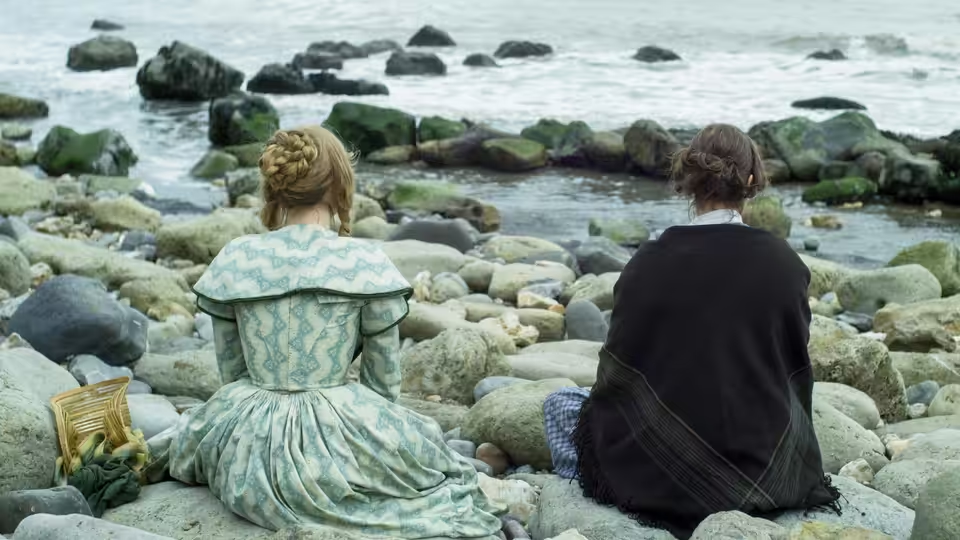
Stéphane Fontaine photographs the coastal rocks with enough attention to their rough surfaces that Mary’s labour feels physically demanding. Sarah Finlay’s production design belongs to the same sober period world, keeping the surroundings from competing with the actors. The attention to material detail works because it helps us understand how Mary occupies her days. There is pleasure in watching a period romance take the physical effort of working seriously, rather than treating it as something to establish before the important business begins.
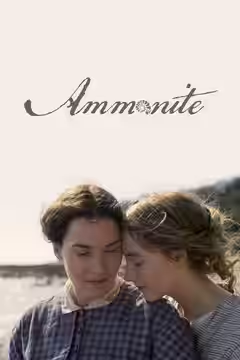
The difficulty is that Charlotte never becomes comparably distinct. Ronan can suggest feeling without spelling it out, but Lee’s screenplay leaves too little for that restraint to communicate. Her presence matters to Mary; her own wants deserve more attention than the writing gives them. The scenes between the women contain moments of tenderness, and the actors prevent the relationship from seeming merely dutiful. Yet we too often have to supply the reasons these particular people would want each other’s company.
The attention to everyday sound is more rewarding. Coastal noise and the insistence of clocks make the women’s surroundings audible, giving the quiet passages something to hold our attention beyond the faces. The music by Hauschka and Dustin O’Halloran cannot make the feelings much clearer when the writing has left them vague. Chris Wyatt’s unhurried editing gives Winslet room to work, but it also leaves stretches in which we are waiting for another detail of character.
A restrained romance need not explain every attraction, and Lee is right to allow physical desire its place without apologising for it. The frankness is welcome, and the actors bring conviction to the physical intimacy. But the film’s speculative use of historical lives makes us want characters who seem capable of existing beyond this relationship. The scientific work is compelling enough to make its limited place in the story a real frustration.
Lee’s seriousness is never in doubt, and the care taken over the performances and surroundings deserves respect. The solemn pace nevertheless makes the underwritten passages feel longer, particularly when Charlotte needs something more substantial to express. Anyone seeking a convincing love story may find themselves doing too much of the work. Watch it for Winslet, with some patience for the pauses.