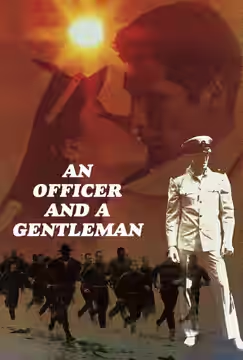
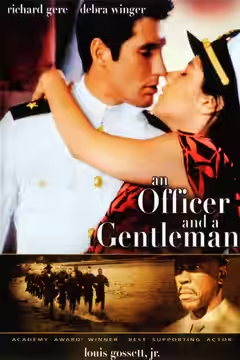
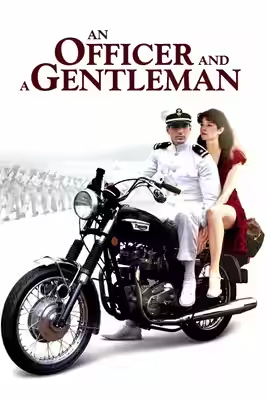
Taylor Hackford’s drill-school romance is as manipulative as its reputation says and better acted than it needs to be. Louis Gossett Jr. and Debra Winger make it worth the evening; the script around them keeps taking the shortest road to a tear.
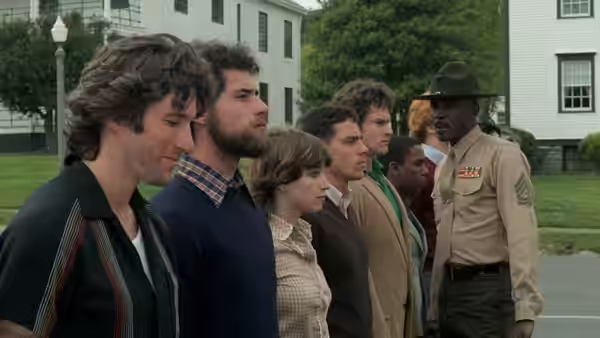
Taylor Hackford’s film takes a man with nothing and shouts at him for thirteen weeks until he becomes somebody. Zack Mayo (Richard Gere) has grown up in the bars of the Philippines with a drunken Navy father (Robert Loggia), and he arrives at officer candidate school wanting to fly and wanting nothing from anyone. Douglas Day Stewart’s script knows which buttons it is pressing and presses them in order. It is a manipulative film and a well acted one, and the second quality carries the first most of the way.
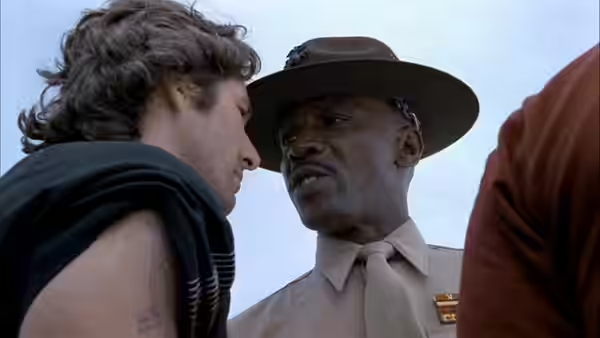
Louis Gossett Jr. plays Sergeant Emil Foley, a part played a hundred times and seldom better. He is not a sadist. He tells the recruits he will do whatever it takes to make them quit, and Gossett lets us see that he regards this as a kindness: a pilot who quits on the ground costs less than one who quits in the air. He spots Zack’s trade in polished boots and buckles and says nothing until it is useful. The scenes between the two men, Foley an inch from Gere’s face and Gere staring at a point past his ear, are the best in the film.
Debra Winger is the other reason to watch. Paula Pokrifki works in the paper mill across the water and goes to the candidates’ dances with her friend Lynette (Lisa Blount) because the town offers a woman two futures and an officer’s wife is the better one. The film could have sneered at that; Winger will not let it. She plays Paula as someone who has thought it all through and still means every word she says to Zack; when she tells him she wants nothing from him we believe her and know she is lying a little.
Gere is harder to warm to, and some of that is the point. Zack has been told since childhood that nobody will help him, and Gere plays him sealed and polite, with a small smile that gives nothing away. In the barracks that works; drill is something a man can get through alone. In the motel rooms with Winger it works less well, because she is handing him everything and he is handing back the smile. There is a scene on wet tarmac, late in the training, where Foley gets the smile off him, and it moved us more than we had planned. A minute later we were cross with ourselves, because the trap had been set so plainly and we had walked into it anyway.
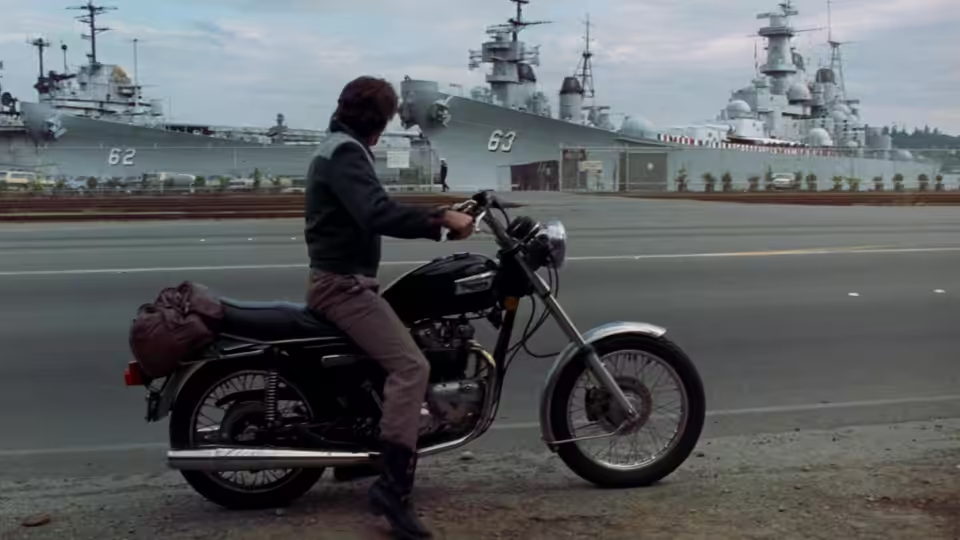
Donald E. Thorin shoots the Pacific Northwest in flat grey light, so the base looks like a place where it is always about to rain and usually is; the only warm colour is in the bars and the motel. Philip M. Jefferies keeps the barracks bare and the mill loud, and the contrast does most of the film’s thinking about class. Peter Zinner cuts the training as montage, weeks in minutes, and lets the quiet scenes run long enough for Winger to think. Jack Nitzsche’s score is synthesiser wash and does not help; the film builds to a song, Up Where We Belong, and the song does the work the score should have done.
The script is where the trouble is. Stewart gives every character one trait and one secret, and the second half unlocks them in order. David Keith’s Sid Worley, the decent friend from a Navy family, is well played and badly used; the film needs something from him and takes it. Lynette is judged more harshly than Paula for wanting the same thing, and nobody behind the camera noticed. Lisa Eilbacher’s Casey Seeger, the woman candidate who cannot get over the wall on the obstacle course, is set up with care and kept for one scene.
It runs 124 minutes and carries a 15 certificate. Beside The Last Detail (1973) or Full Metal Jacket (1987) it is a soft film, and it is not pretending otherwise. It wants two people on a sofa to feel something by the end, and they will. Watch it for Gossett and Winger, and go in knowing what it intends to do to you.