Stanley Kubrick’s powerful war drama makes military cruelty horribly entertaining. R. Lee Ermey dominates the training camp; the move to Vietnam loosens the film’s grip, but does not undo its force.
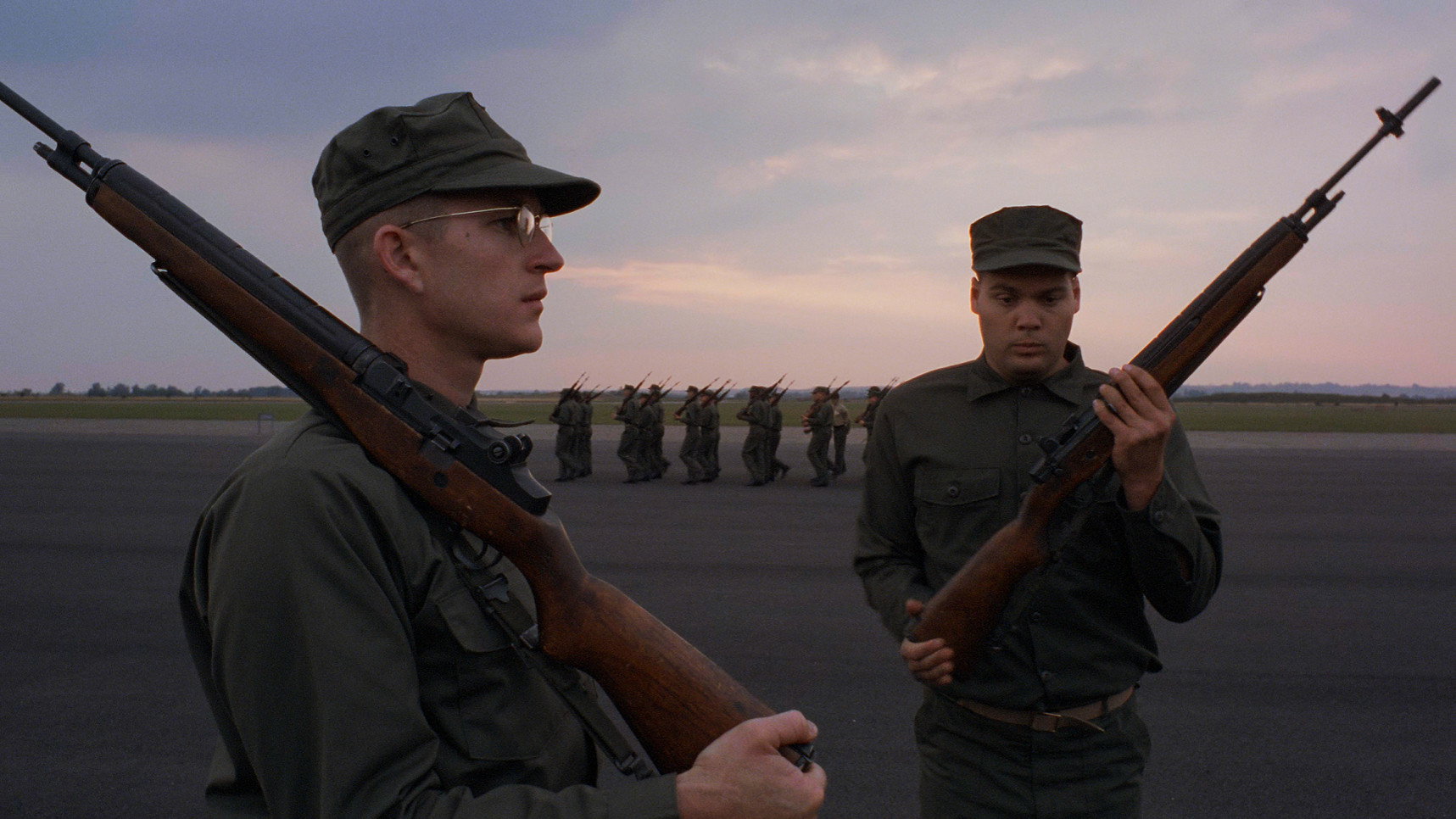
Full Metal Jacket is a powerful war film with a lopsided structure: the training camp is so concentrated that the fighting in Vietnam initially seems diffuse. Stanley Kubrick follows a Marine training programme with combat, asking what remains of a person after the military has taught him how to behave. Much of its force comes from the military language, which makes degradation sound routine. He directs from a screenplay written with Michael Herr and Gustav Hasford.
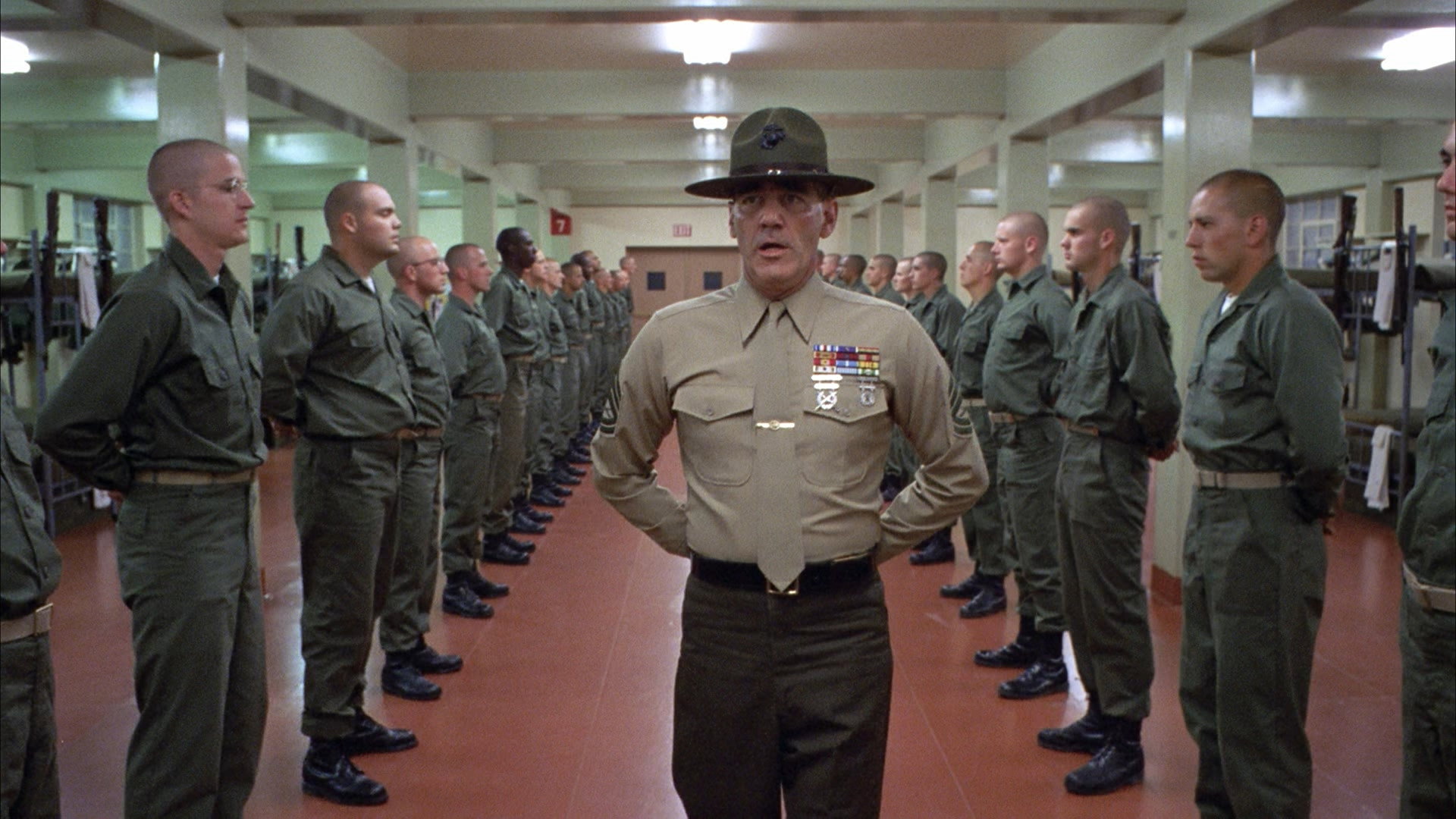
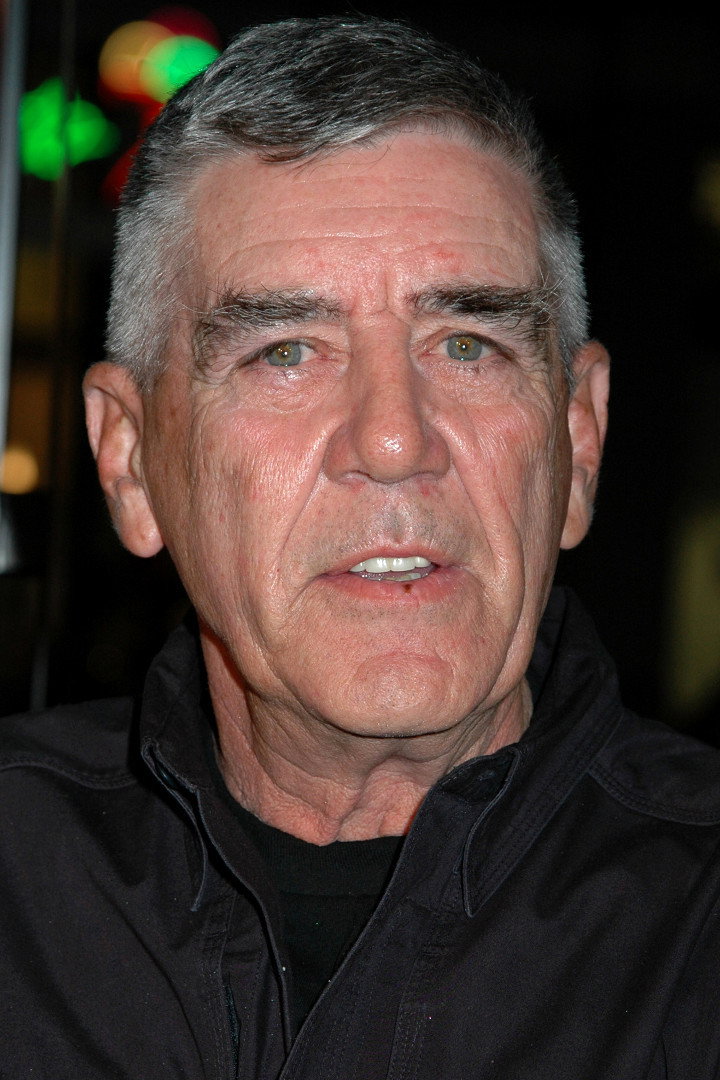
R. Lee Ermey’s Gunnery Sergeant Hartman gives that language an appalling fluency. The insults arrive with such assurance that there hardly seems to be a thought between one humiliation and the next. We laughed at his abuse, then felt ashamed of ourselves. Ermey makes Hartman’s treatment of the recruits entertaining enough for us to register the cruelty a moment late, and Kubrick lets that discomfort stand. Hartman dominates the training section, with Vincent D’Onofrio’s Private Pyle bearing its pressure most visibly.
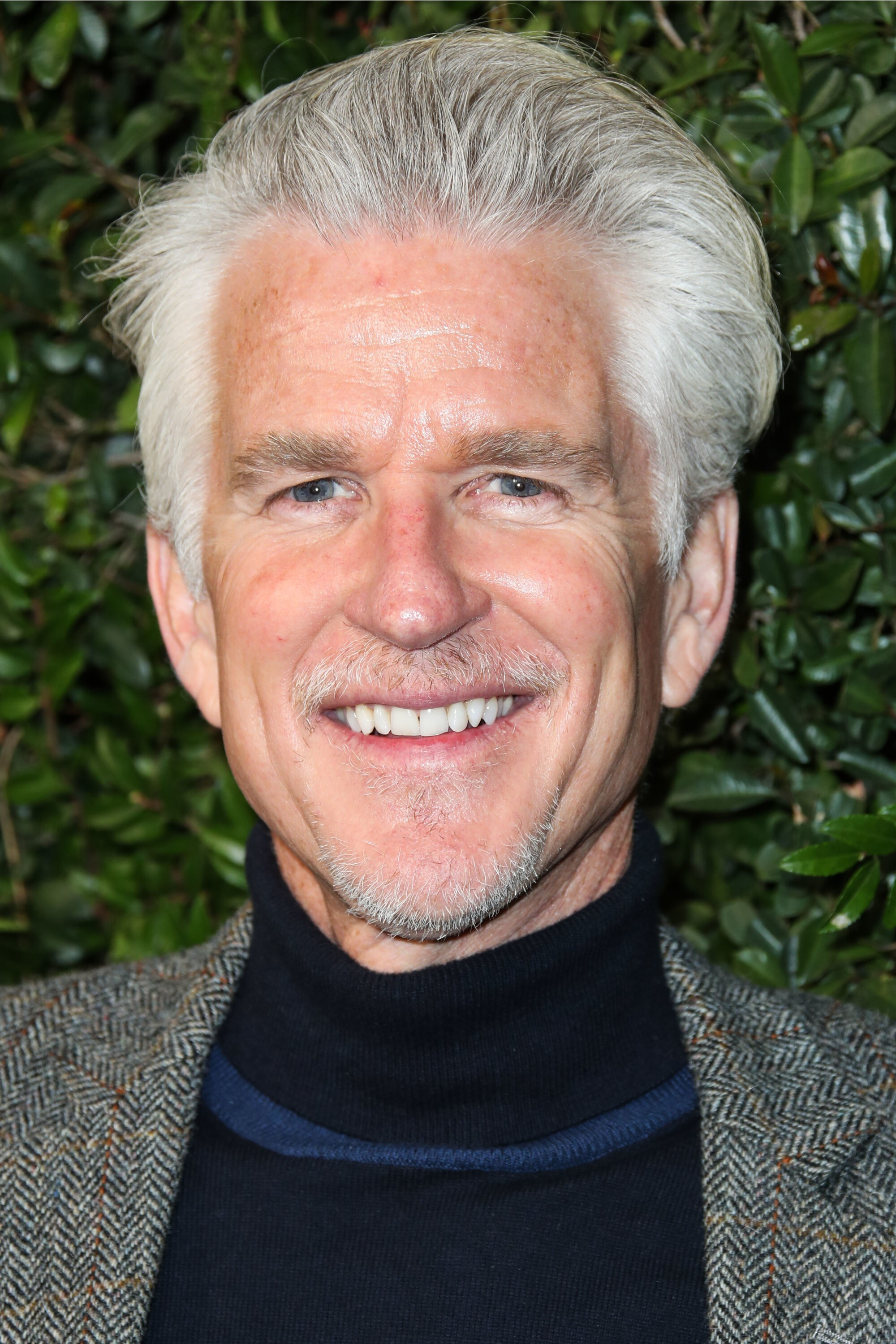
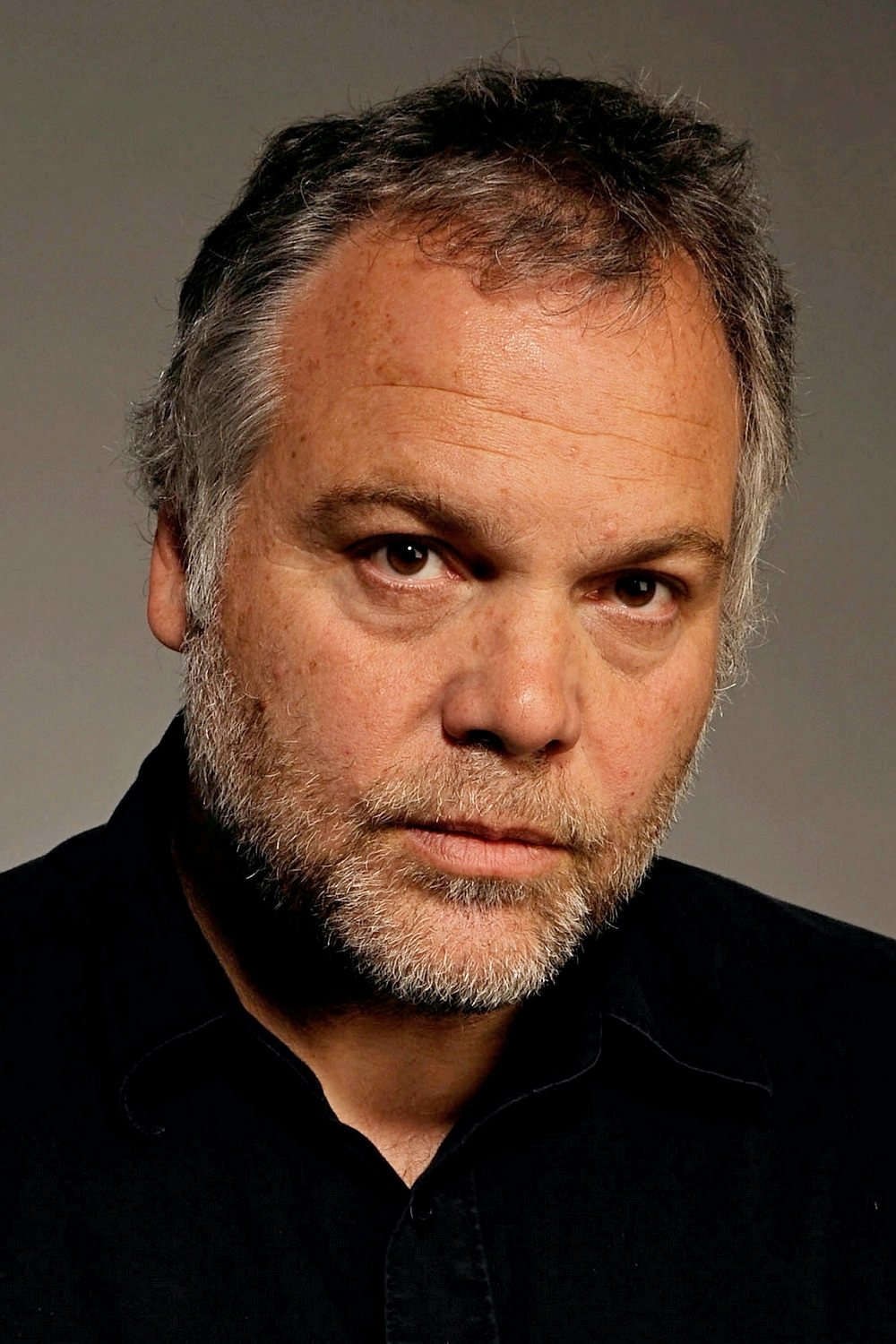
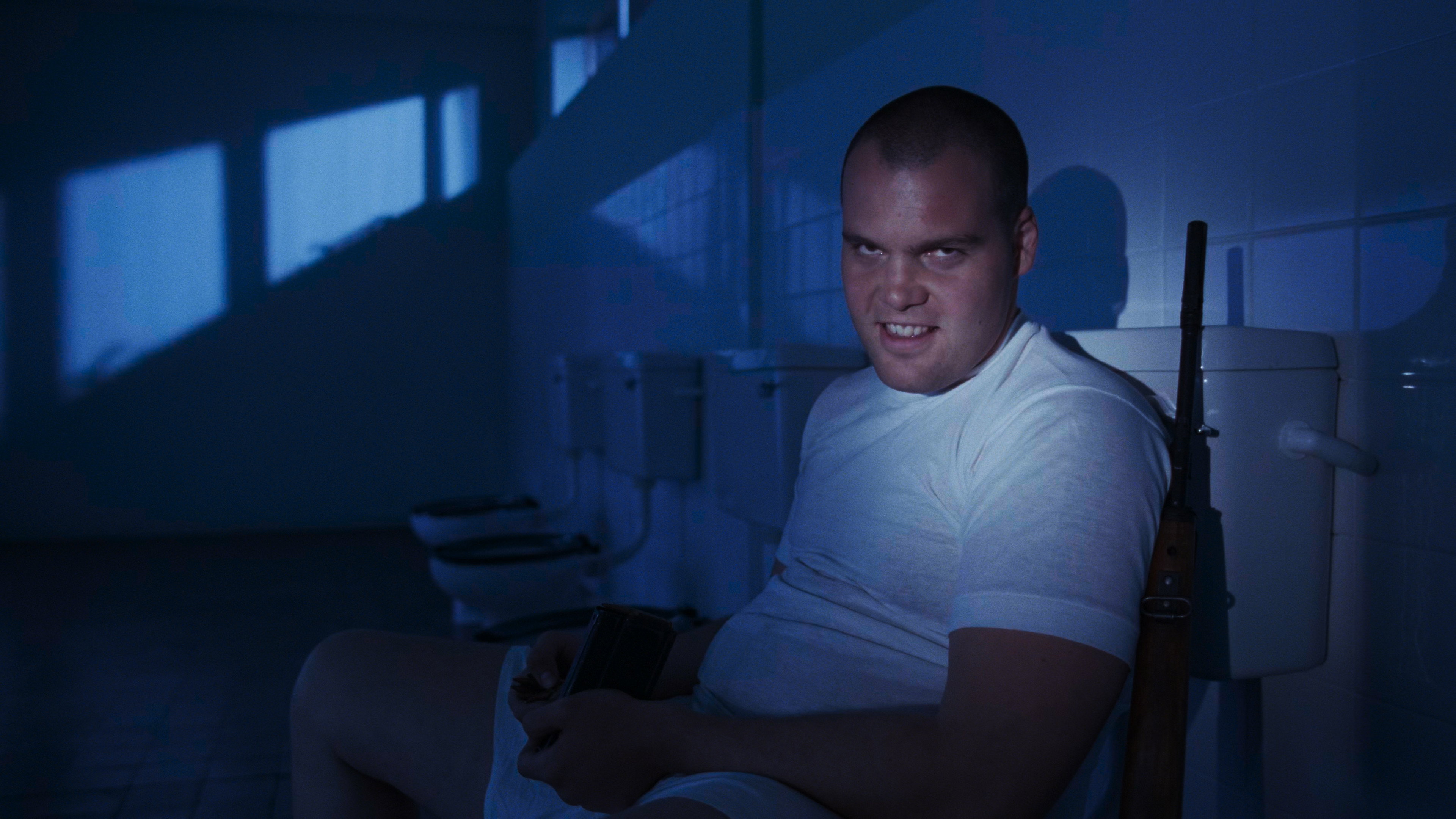
D’Onofrio gives Pyle a vulnerability that prevents the camp from becoming merely a display of Ermey’s verbal ingenuity. It matters that the training has a visible cost to someone, and that we can recognise the hurt without needing it explained. Matthew Modine’s Private Joker offers a less exposed presence, watchful enough to hold our attention without telling us what to think at every turn. Their performances make the recruits more than illustrations of the director’s point.
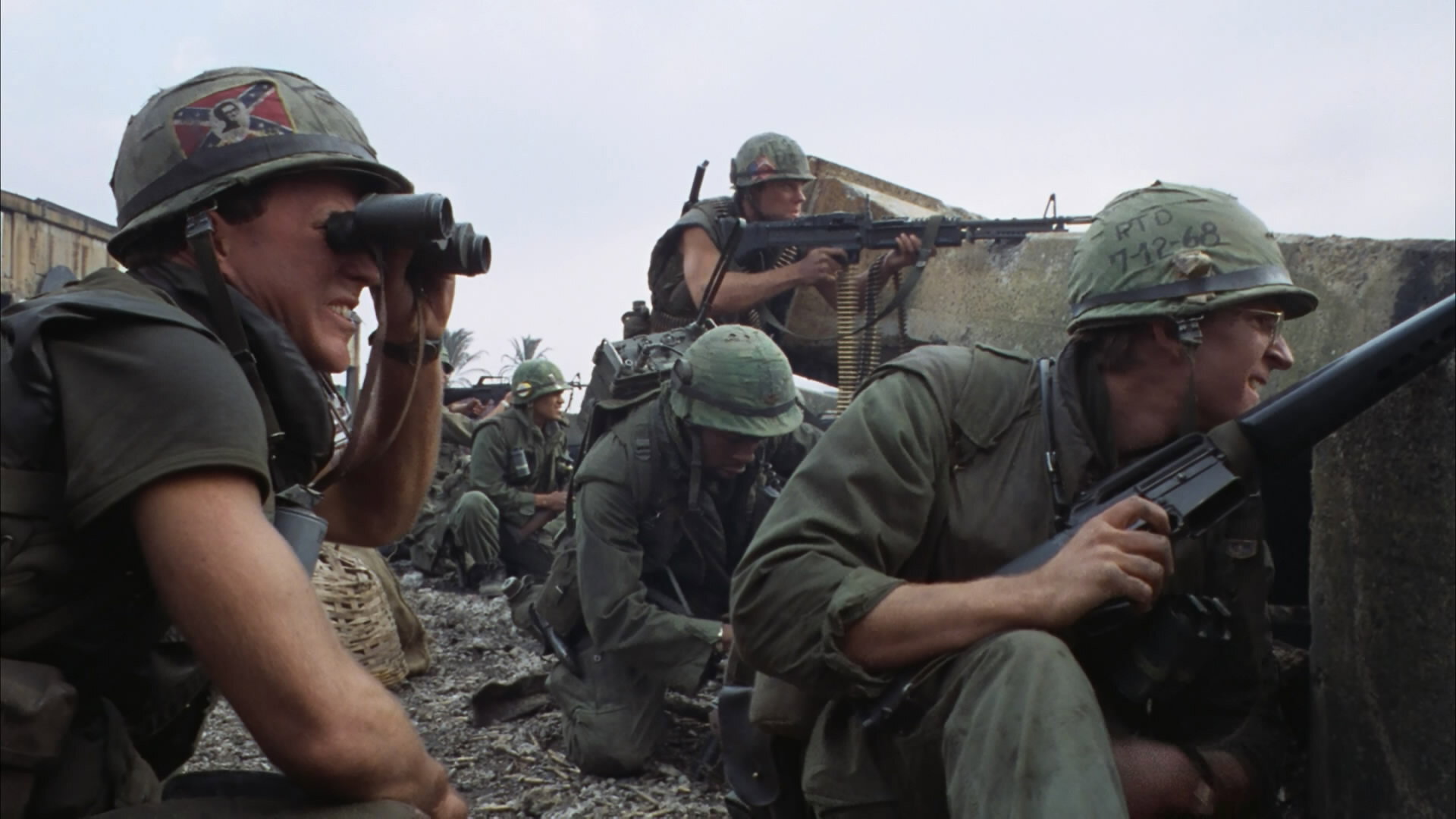
Douglas Milsome’s photography makes the fighting feel uncomfortably close, even when Kubrick’s careful compositions threaten to make it look too arranged. The control is useful in the training camp, where the whole purpose is to regulate men; in combat it can put a little distance between us and their fear. Anton Furst’s production design gives the bombed-out Vietnamese city a forbidding solidity. The surroundings are oppressive without inviting us to admire the destruction.
Martin Hunter’s editing gives the training section time to become exhausting, and the shift to Vietnam interrupts a rhythm we have learnt to dread. That break makes sense, though it takes the film a while to recover its grip. Vivian Kubrick’s music adds unease without competing with the voices for our attention. The pop songs are shrewdly chosen, their familiarity making the surrounding violence harder to settle into. Yet the sound we remember most clearly is Ermey’s speech, which needs little assistance.
As a war film, it is strongest when the military language becomes frightening without anyone explaining why. The screenplay’s political discussions are less effective, sometimes giving the men points to deliver rather than conversations to have. Its bitter humour helps: we cannot simply nod along with a lecture about the cruelty of war. The laughter in the training camp makes it difficult to pretend that the cruelty has nothing to do with us.
Set aside its 117 minutes for an evening when discomfort is part of the attraction. The 18 certificate is worth taking seriously, particularly if verbal humiliation troubles you as much as physical violence. Watch it with someone who will be honest about where they laughed.